

Why does Central Station need a £5bn overhaul?
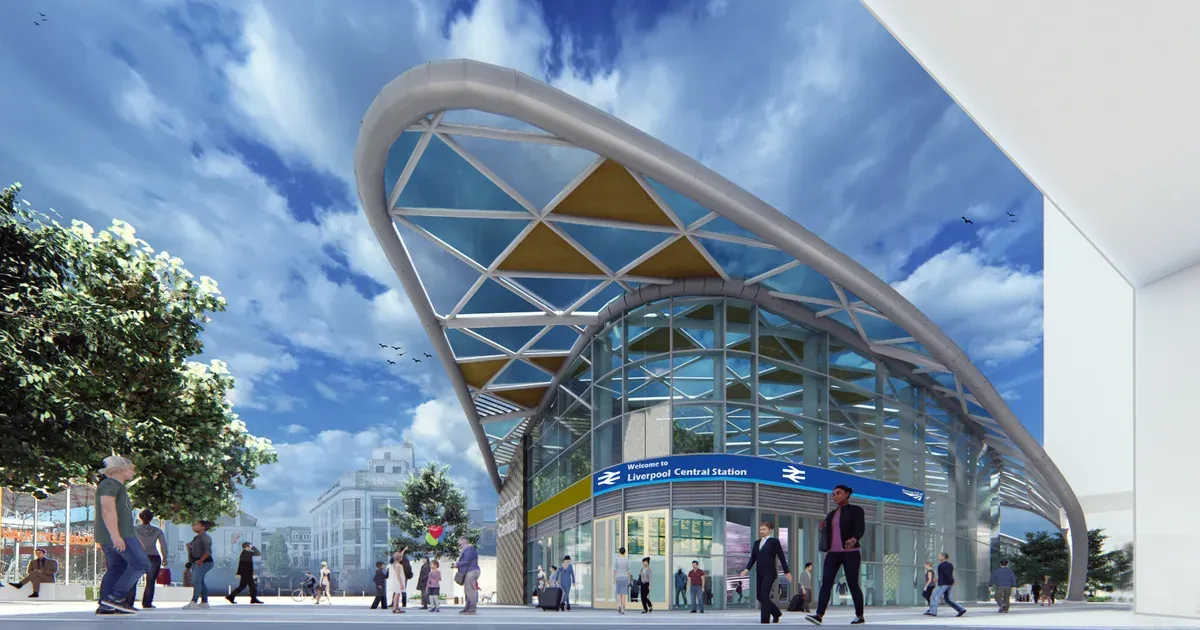
The proposed revamp shows ambition seldom seen outside of London. But will the project see completion?
Dear readers — Happy Friday. Last week, the Liverpool City Region (LCR) Combined Authority announced that £5bn could be spent transforming Liverpool Central railway station and the surrounding area (“could” may seem like quite a critical word here, we’ll get into that in a moment).
Although a few eyebrows have been raised, especially concerning the price tag (£5bn), this announcement perhaps hasn’t received huge amounts of scrutiny as of yet. Is it another forever-project like Littlewoods Film Studios, New Chinatown or the Baltic Station, or a coherent, achievable endeavour? What problem is this solving? And why exactly is it costing so much? For your latest edition of Answers in The Post, Laurence attempts to get to the bottom of the Central Station conundrum. But first, your regularly scheduled Post briefing.
Your Post briefing
Writing’s on the wall for Writing on the Wall? Some of the self-described founders of the Writing on the Wall (WoW) organisation, who took part in its very first literary festival way back in 2000, have written to WoW to express their astonishment and outrage. Regular readers will know that WoW became embroiled in an industrial dispute with members of staff who discovered their WhatsApps had been read; this led to four of the women being sacked. “WoW has undermined its own reputation”, the letter reads. “No writer or activist is likely to support an organisation that flies in the face of its own stated principles.” It is signed by, among others, Cracker writer Jimmy McGovern and Trainspotting author Irvine Welsh.
And from sunshine to thunder storms: Earlier this week we reported on disruptions caused by the country’s heatwave; now, it’s Wednesday night’s lightning storm that’s making the news. According to Network Rail, lightning damaged signalling systems on the West Coast Main Line at Weaver Junction near Runcorn, causing reduced, delayed or cancelled services where the Liverpool line connects to the North Wales coast. This left just one train an hour running between Crewe and Liverpool. The thunder storms, which lit up the skies over Merseyside, Lancashire and Greater Manchester in dramatic scenes, followed record temperatures that climbed to 30C in some places.
Today's piece about the potential future of Liverpool's city centre is paywalled partway down. Maybe you're thinking you don't need to know about potentially the biggest development in the city's modern era. But what about the next piece of crucial journalism about Merseyside's infrastructure? Or the next internet-breaking profile of a controversial city figure? Or a vital breaking news story? At just £7 a month, the Liverpool Post brings you every genre of high-quality journalism, and you'll be helping us produce the best local newspaper around. You can't afford not to sign up to such a premium service.
Why haven’t I heard of this before?
Good question. After its announcement by the mayor’s office last week, this potentially enormous project did receive some coverage: by Place North West, the Wirral Globe and even the BBC. But considering the sheer cost we would have expected more. These things are always subjective, of course, but it could be because of the computer-generated imagery put out by the city council, which looks a bit… uninspiring.
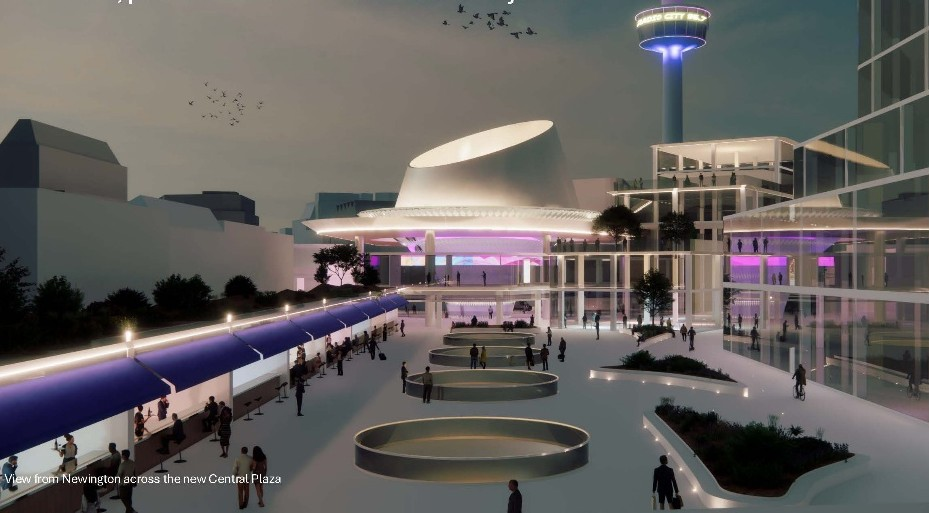
The Post decided to find out how wedded LCR and Liverpool city council (LCC) are to this Sims aesthetic, which looks a bit like what a futurist in the 1960s might have pictured the 2000s looking like. An LCC spokesperson said that these are very rudimentary designs for a project that hasn’t even been approved yet.
Potentially another reason why there hasn’t been much discussion is because Central itself has seldom been a big talking point: the part that’s over-ground is mostly hidden away behind shops and eateries, and seems to function as well as any other station. Which leads us to ask…
Why Central?
Oddly, the answer may date back to the 19th century. The original Liverpool Central railway station opened in 1874 and facilitated trains to Manchester, Hull, Essex and two alternative routes to London.
When Britain’s railways were nationalised in the 1960s, Central fell afoul of the Beeching Axe, a major series of route closures and service changes. Most services were redirected to Liverpool Lime Street and by the 1970s the High Level building (pictured below) was demolished. Today Central is only part of the Merseyrail network while Lime Street facilitates all trains leaving the city region.
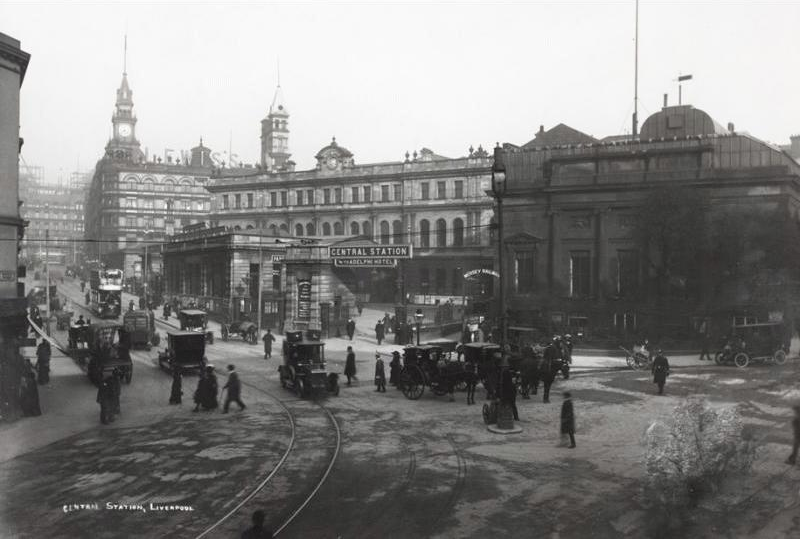
Despite this loss of prestige, Central remained the busiest rail hub in the city: to this day, it apparently welcomes nearly 15mn passengers a year. In fact, that makes it one of the busiest underground-style stations outside of London. Something like 45% of all Merseyrail journeys pass through it. From the day it replaced Brunswick station in the 1870s, there’s been an argument that Central was always “meant” to be Liverpool’s main transport hub.
So from 2006, there was a proposal to develop “Central Village”, a shopping, leisure, commercial and residential development around the railway station. But by 2024, this project had seemingly been replaced by a new potential initiative: to redevelop land and buildings on Renshaw Street, Bold Street, and Ranelagh Street to create “an enhanced gateway” to the city centre. This is what you can see in the CGI render above.
So this isn’t just about the station itself?
It is and it isn’t. The proposal is to develop the 86-acre region around Central and to “seamlessly integrate” it with Liverpool Lime Street. This will, in theory, connect Merseyrail services with national rail, “in a similar way that King’s Cross and St Pancras operate together as a transport hub.”
In recent decades, other British cities have revamped their main railway stations. See, for instance, the £44mn refurbishment of Manchester Victoria completed in 2015 and which included new mezzanine floors, retail outlets, three new tracks, and an energy-saving 100,000 square foot roof. Or the £750mn transformation of Birmingham New Street that same year, increasing the capacity of the busiest interchange station outside London to five times what it was when first designed.
But even £750mn is chicken-feed next to £5bn. At that price tag, the only comparison to the Central project that makes sense is King’s Cross-St Pancras.
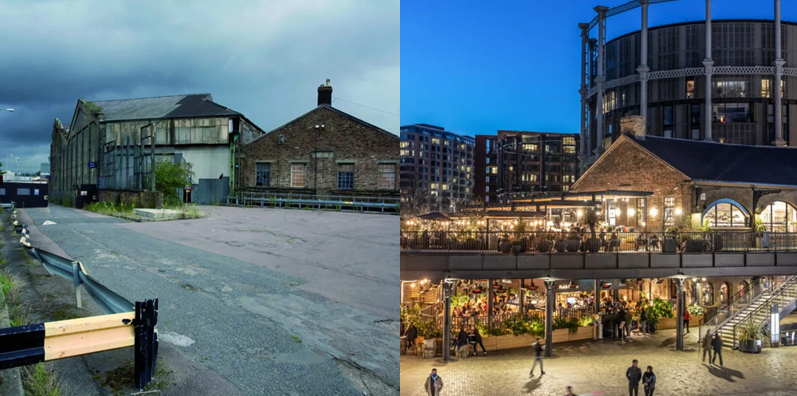
Once, as then-transport secretary Patrick McLoughlin noted when cutting the ribbon on revamped railway stations in 2015, the notorious King’s Cross was “no place to linger”. According to Financial Times journalist John Gapper, in the 1980s it was “a byword for squalor.” The picture above gives you a pretty good idea of what they meant.
£3bn of public and private investment later, and the 68-acre site now includes bars, restaurants, ten new public parks and squares, 1,700 homes (40% of which are affordable), capacity for 30,000 new office jobs and the European headquarters of American technology companies OpenAI, Anthropic and Google DeepMind. King’s Cross-St Pancras doesn’t just link Cambridge with Paris: it’s now a massive cog and catalysing agent in the UK’s economy.
And it’s navigable, too. According to architectural journalist Rowan Moore in the Observer, the Kings Cross-St Pancras regeneration was inspired by the principles of 19th century urban theorist Camillo Sitte: the idea being you are “invited” from one space to another like “the way in which a church tower might come into view along a winding medieval street.” That level of forward-planning — prioritising the experience of everyday people — would be welcome in Liverpool.
Liverpool deserves great journalism. You can help make it happen.
You're halfway there, the rest of the story is behind this paywall. Join the Post for full access to local news that matters, just £7/month.
SubscribeAlready have an account? Sign In
Latest
Flights of Fancy: the debunked Liverpool Airport migrant conspiracy
Are we finally getting the 'new Baltic Triangle'?
Send us your tips
Why is the Wirral the most depressed place in England?
Why does Central Station need a £5bn overhaul?
The proposed revamp shows ambition seldom seen outside of London. But will the project see completion?