

Their bosses read their WhatsApps. Then their jobs were on the line
Exclusive: Literature festival Writing on the Wall says employees committed gross misconduct. Staff say they’ve had their privacy “violated”
Editor's note: The following story is one of the most popular Post articles of the past year, and it sparked a lively debate among our readers and in the city about who was in the wrong in the dispute at Writing on the Wall. Please note that some names have been changed.
It was a quiet Tuesday in September. Pamela* could feel her stomach rumbling; she was ready for lunch. She wasn’t going alone; during the better part of the year that Pamela had worked for Liverpool’s biggest literature festival, Writing on the Wall, she’d made firm friends with her colleagues, all women in their twenties and thirties. They socialised outside the office: coffee dates, dog walks and weekend cocktails. And they regularly got lunch together.
So it went that day. But when Pamela returned to Writing on the Wall’s Toxteth office with her colleagues, ready to settle in for an afternoon of work, something immediately felt off. Her colleague, Lucy*, pulled her to one side, panicked. She swore her computer had previously been positioned at the front of her desk. Now it was pushed back, her office chair swung to one side. When she checked her internet history, it showed the instant messaging platform, WhatsApp, had been opened and closed on her browser — while the women were out to lunch. Unease crept in.
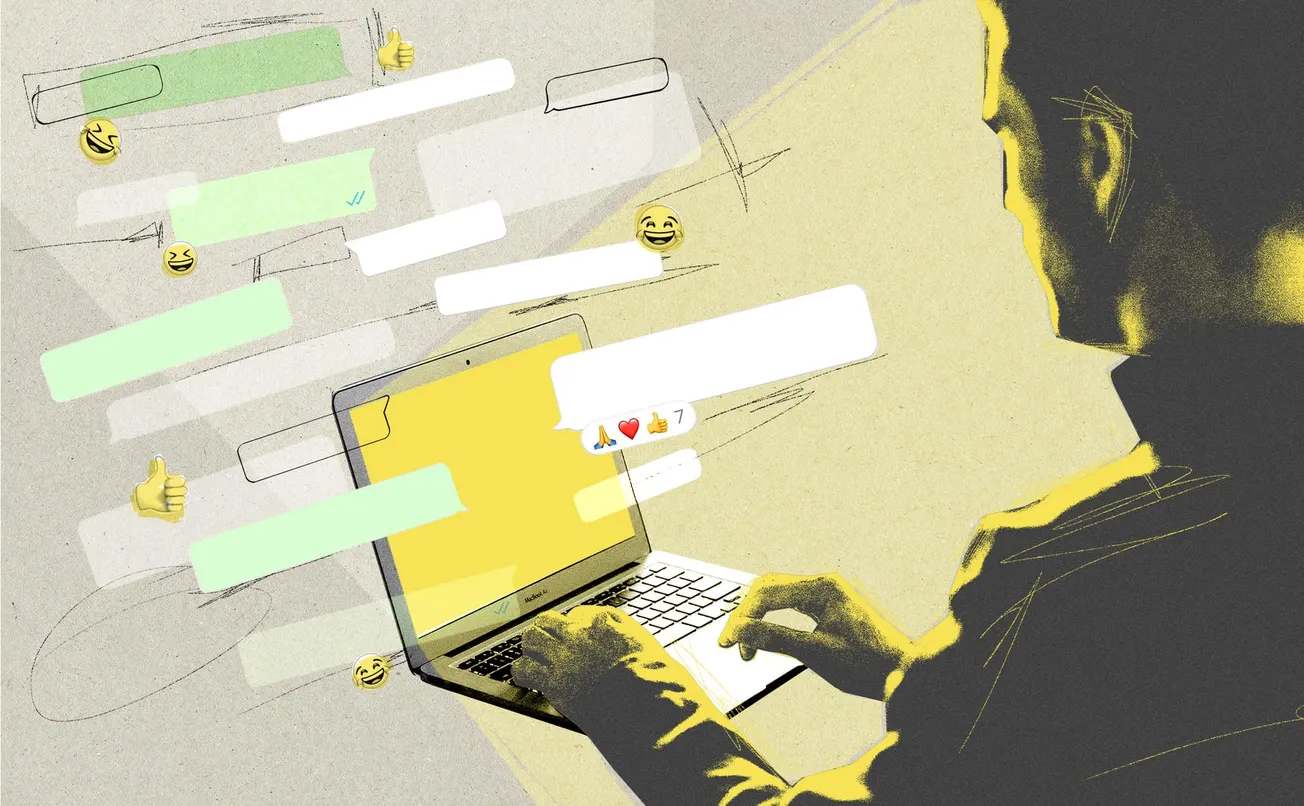
Like many people, staff at WOW used WhatsApp as their work communications platform, as well as for personal messages to friends and family. And, like many people, they were participants in a number of group chats.
When Pamela thought about why someone in the office might be accessing her colleague’s WhatsApp, one group chat in particular kept coming to mind. It was called ‘Employees Of The Month’; its members were a handful of past and present WOW staff. While the chat was used to share memes, photos of pets and organise shopping excursions on days off, it was also used to vent about Writing on the Wall and its co-directors: Mike Morris and Madeline Heneghan. Could one of her bosses have read the chat, wondered Pamela? No, that would surely be a huge violation of privacy. She tried to put the incident out of her mind.
But her suspicions were right — within weeks Pamela and her five colleagues were hauled into meetings with a HR consultant. Their bosses had seen the WhatsApp chat and now the women were being accused of gross misconduct — including alleged sexual discrimination against their male boss. They had two options: sign a non-disclosure agreement and accept a settlement to leave the company, or fight the charges.
“It’s heart-breaking, and the way this has all escalated has totally shocked me,” Pamela says. She and two other affected staffers we spoke to for this story asked not to be named, out of fear it would affect their job prospects going forward. Megan*, one of the employees impacted, tells The Post that she and her colleagues feel “violated” by the interception of messages that were — for all intents and purposes — privately exchanged.
In response to the allegations in this story, Writing on the Wall told us that they follow “fair, transparent, and lawful procedures in all employment matters, working with an independent HR provider to ensure best practice”. They added that as internal processes are “ongoing and confidential, it would be inappropriate to comment further at this time”.
Arts Organisation of the Year
Founded in 2000, Writing on the Wall is the longest-running literature festival in Liverpool, and one of the longest-running in the UK. While it started out as a five-day event, it quickly became a crucial part of the city’s culture and expanded to a month-long annual festival in 2008.
Over the years, the festival has run dozens of community writing projects, talks, workshops and anthologies, welcoming star studded talent along the way. Beyond celebrity, Writing on the Wall also plays an important role in championing under-represented voices in Merseyside, priding itself on a programme centred around social justice and diversity each year.
Its significance for the city cannot be overstated. Earlier this year, Writing on the Wall was awarded Arts Organisation of the Year at the Liverpool City Region Culture & Creativity Awards for the second time. Author and festival alumnus Irvine Welsh has said: “There isn’t another writing festival in England as good as Writing on the Wall.”
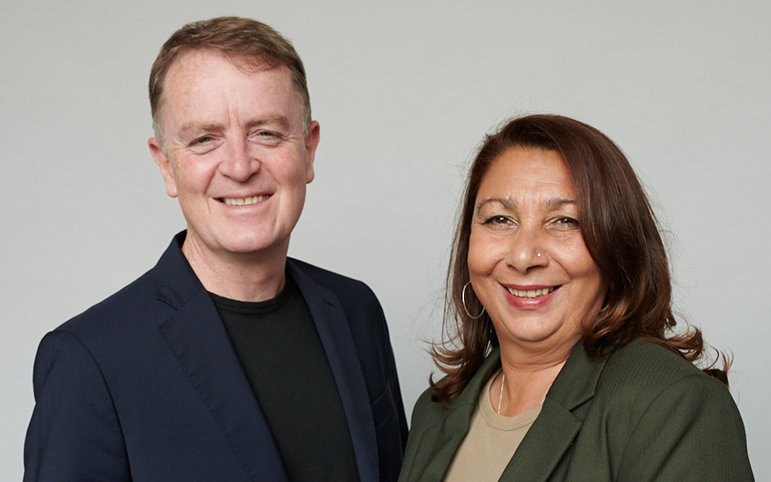
At the helm of the organisation are two directors: Madeline Heneghan and Mike Morris. Morris founded Writing on the Wall, while Heneghan joined the team in 2005, leaving her role at Liverpool’s Black and Racial Minority Network to serve as festival director.
Up until recently, working alongside them in their office was a team of just six, responsible for managing events, projects, writing competitions and ensuring the festival runs smoothly each year. Now, after the discovery of WhatsApp messages in September, the office is all but empty.
The WhatsApps
When Lucy discovered her computer had been tampered with in September, she and her colleagues shared their suspicions about who might be responsible. The most obvious culprits remained the only other people in the office that day: their bosses, Morris and Heneghan. The staff were on edge, waiting for the potential axe to fall. “It [became] a harsh environment,” Megan says. A chatty office became silent overnight, employees “too scared to talk,” Pamela adds. They worried about being monitored and were hyper-alert to clues that might confirm or assuage their hunch.
It took nearly three weeks of stress for the shoe to drop. On 17 September, just past 10am, an email arrived in their inboxes, signed by WOW’s co-director, Mike Morris. It informed the recipients that an external HR consultant would be coming into the office that day to conduct an “informal”, “open and honest” conversation with each employee about “an issue [that] has recently come to light”.
While the meeting wasn’t exactly a shock, the timing was. “[We were] blindsided,” says Megan. Within an hour of Morris’ message, the first woman was called into a glass panelled meeting room next door. The whole office watched in horror as she returned half an hour later in floods of tears. Then it was the next person’s turn.
This story is free to read - you just need to join our mailing list. And why wouldn't you? By becoming a Post subscriber, you'll get our scoops, features, and insights, in your inbox, the second we hit publish. No card details required.
Already have an account? Sign In
Latest
Flights of Fancy: the debunked Liverpool Airport migrant conspiracy
Are we finally getting the 'new Baltic Triangle'?
Send us your tips
Why is the Wirral the most depressed place in England?
Their bosses read their WhatsApps. Then their jobs were on the line
Exclusive: Literature festival Writing on the Wall says employees committed gross misconduct. Staff say they’ve had their privacy “violated”