

Meols Gold: How a two-piece with a tape recorder from the Wirral sparked a global movement
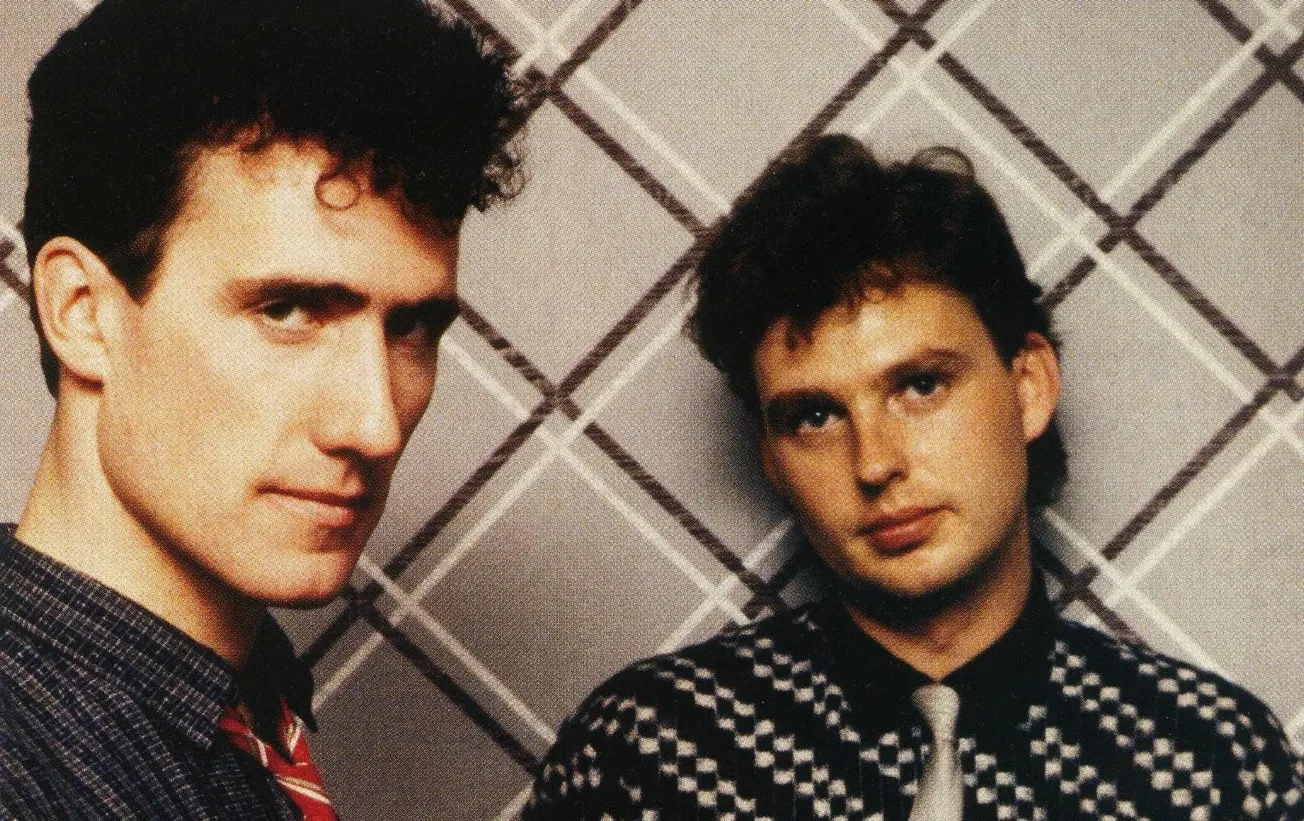
Andy McCluskey of OMD chats to The Post
By now you probably don’t need reminding of the finer details of our mini-campaign to pay off our final legal bill from fighting off Laurence Westgaph in the courts. What you might need reminding of is the fact we are about to enter the final week.
We need to reach 300 backers by next Sunday to cover the full cost of that bill, and show Westgaph that his attempts to bully us into making us reveal the identities of our sources has fully failed.
At the time I write this we stand at 165 people who have got behind us. We’ll need a big push to make it to 300. If you do sign up in this time period though you’ll get the first two months of your membership at a significant discount — just as a little extra prompt. It would be amazing to have you on board.
They had the audacity to come from Meols. They didn’t play guitars. And they harboured a curious fixation with Joan of Arc. Yet when the dust settles on Liverpool’s musical legacy of the past half-century, one name comfortably eclipses the rest: Orchestral Manoeuvres in the Dark. While much of the city spent the late 70s and early 80s lost in a reverb-soaked guitar haze, two Wirral teenagers quietly rewired the circuitry of pop itself.
"We were from a suburb of Liverpool, but there wasn't very much of Liverpool in our sound," OMD's Andy McCluskey says. We’re speaking via Zoom as McCluskey is halfway through the band's series of sold-out summer festival headline slots, but he still lives in Frankby, not so far from me. He’s never left the Wirral. "I suppose we frightened people a bit,” he adds.
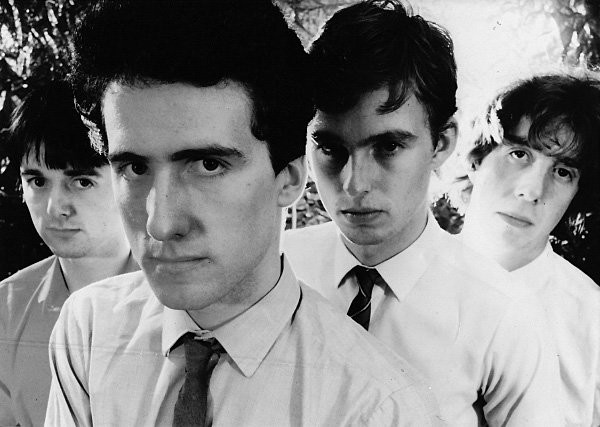
The fear was clearly contagious. Today, OMD's fingerprints are everywhere: Brooklyn's Nation of Language has built an entire career in their image (right down to covering Electricity). Vince Clarke, of Erasure, Depeche Mode and Yazoo, has repeatedly cited Electricity as the record that made him buy a synth. A shrewd purchase, given how it sparked the entire 80s synth-pop explosion. Pet Shop Boys, Talk Talk, Tears For Fears and even rock acts like U2, Nine Inch Nails and the Killers have all named OMD among their key influences, and you can hear their gleaming melancholy today in acts from LCD Soundsystem to Future Islands.
Define influence not by who you loved most when you were 14, but by how many bands simply wouldn't exist without their particular blueprint, and OMD has a quietly overwhelming case. "When I look back,” he says. “I guess the reality is that this crazy idea hatched in Paul's mum's back room in Meols by these two teenagers kickstarted a genre that swept the world in the early 80s. Ourselves and the Human League were the first two on the bus."
Welcome to The Post, the quality newspaper for Merseyside and the Liverpool city region. Sign up today and get two completely free articles per week delivered directly to your inbox.
That means a Monday briefing with cultural tips, top stories and everything else you need to know, and a weekend read diving deep into a subject, whether that’s lost department stores of local yore or bungled political promises. No card details required, just good journalism: click below for more.
If you weren't there, it's hard to describe just how alien OMD sounded. The dark ruminations of their second album, Organisation, featured a synth elegy to the Stanlow oil refinery and a cut-and-paste collage of sounds called Introducing Radios which blew my cheap Tandy headphones apart. The whole album was a kind of darkly experimental puzzle that dared you to piece it together.
I remember buying it after lapping up Enola Gay (that’s the 1980 single about the Hiroshima bomb for non-OMD-heads) and being caught off guard by the sheer strangeness of everything else. I remember thinking: Wait, what…? Is pop music allowed to sound like this? Two school friends from Meols with a battered synth and a tape deck called Winston? I was sold.
Not that everyone was as easily won over. Somehow, underneath the textures and the drones, the bleeps and the brooding, OMD were very much still creating pop music. It was Kraftwerk with the melodic nous of ABBA. Which wasn't the best way to endear yourselves to the post-punk crowd at Eric's.
"It was bloody terrifying," McCluskey laughs. "Hands down, the scariest gigs we ever played were Eric's. Because every other person in the audience was in a contemporary band. And, of course, nobody would ever come closer to the stage than the pillars, which were at least 15 feet away, so there was this cavern between you and the audience. I say 'audience'…" McCluskey pauses. "I mean there was hardly anyone there on the Thursday nights we played."
So far, so unlikely to be the most influential band of the past 50 years. But then, that was never the plan. The plan, as McCluskey tells it, was to have something to do on a Saturday afternoon, when Paul’s mum was at work. When they eventually dared themselves to get up on a stage, all they wanted to do was to “show people that we were not punk, not rock and not reggae”.Hard to grasp now, but around here that was about as radical a manifesto as you could imagine. The boys didn't just sound removed from the city; they sounded removed from reality.
It wasn't just the band's Peter Saville-designed covers that hinted at their otherness, or McCluskey's wind-turbine-in-a-hurricane dance moves: there was an industrial aesthetic to OMD far more associated with Manchester than the breezy guitar pop of Liverpool – which goes some way to explaining how the band's first single, Electricity (the best 8-bit game soundtrack there never was), debuted on Tony Wilson's Factory Records.
Not that the primary inspiration was coming from anywhere as humdrum as a city in the north west. "Our inspiration was never Liverpool. It was Düsseldorf," McCluskey says of the band's early fascination with all things Krautrock – Can, Neu!, and above all Kraftwerk, whose Autobahn became the teenage pair's Rosetta Stone.
Mutual respect soon followed, as did a visit from Kraftwerk's Karl Bartos: "I remember taking Karl to the State Ballroom, and we could hear them playing a remake of one of his songs by Afrika Bambaataa, and the bouncer wouldn't let him in because he had white jeans on. Those were the days…"
Despite the wilful experimentation, the band's knack for an irresistible pop hook meant they were seldom out of the charts in the 80s. But even then, they got there with songs about genetic engineering, telephone boxes, nuclear bombs and not one but two laments for Joan of Arc. Unless I’m mistaken, and Sonia's You'll Never Stop Me From Loving You is secretly a paean to the drowning of the Covenanter martyrs, that's not a sentence you can write about their Scouse chart contemporaries.
"We just wanted to do our thing," McCluskey shrugs. "Our raison d'être was that it's always got to be different. We've got to find a new sound, a new direction, a new thing to write about…"
Which is why those first four albums change sound so decisively – and brilliantly – from one to the next.
"You can imagine how pleased our record company was," McCluskey says. "After Architecture & Morality went platinum, they actually said to us: you've got your formula now, just make another one like that. And we went, right – we're definitely not doing that then."
And 'definitely not doing that, then' is exactly what they did. Forget Bold Street's timeslip; if ever there was an album that came to us directly from the future, it was Dazzle Ships. The band's high-water mark of inventiveness and chutzpah, it took a critical and commercial nosedive on release. It's taken forty years to reveal its true artistic genius.
"At the time, we'd been blindsided by the apparent Midas touch that we'd had," McCluskey says. "Whatever we decided to do, no matter how radical and crazy, we still sold lots of records. Enola Gay was a song about the aeroplane that drops the atom bomb. It wasn't exactly Tony Blackburn fodder. Even Souvenir and Joan of Arc and Maid of Orleans were all quite weird songs…
On the 25th anniversary of Dazzle Ships, when it was re-released, McCluskey wrote a press release. He described it as the band’s “fractured masterpiece”, a handy line for lazy journalists who didn’t fancy coming up with their own phrase.
The phrase stuck. Because it was true – and because journos are lazy. That too.
Even at their most angular and unrepentant, OMD couldn't write a bad melody. From the hypnotic thrum Of All The Things We Made to the giddy joy of Telegram, the band smuggled earworms into their most obtuse experiments. McCluskey calls their approach “scattergun”, but scattergun landed 17 top 4- singles, and even when tasked with re-writing a song for the film Pretty in Pink in four hours because the ending had changed, scattergun landed the band’s biggest US hit (that’s If You Leave).
McCluskey captained the ship singlehandedly through the glorious Sailing on the Seven Seas era of the early 90s, before a complete downing of tools. Returned and refreshed, OMD mark II has spawned four albums every bit as critically lauded as those early masterpieces.
Forty-eight years and 300-odd songs later, though, it doesn't get any easier. "You're asking yourself to do something that, again, you haven't done before. You sit down and go: that one sounds a bit like… oh no. I've used those lyrics before. It's like throwing a hook down the well of inspiration, constantly pulling it up and going: no, there's not a lot left down there."
There are more prosaic obstacles too. The great synth pioneers of the Wirral are now separated by 800 miles and a cot.
"My kids are grown up. I'm a single man - I have the time to be creative. But Humphreys has become a father twice in his sixties. He also lives in the South of France, so it's quite hard to get him to find the time to be creative with me. And I need him, because he can do things I can't. I'm quite happy to have the nutty idea, the crazy start. But then I need his natural musical genius to weld it into something a bit more listenable than I'd manage on my own.”
Next year, the band will debut an ambient set at the Liverpool Philharmonic – a project McCluskey suspects may be the beginning of the long goodbye.
"We're planning an album of requiems," McCluskey says. Of course they are.
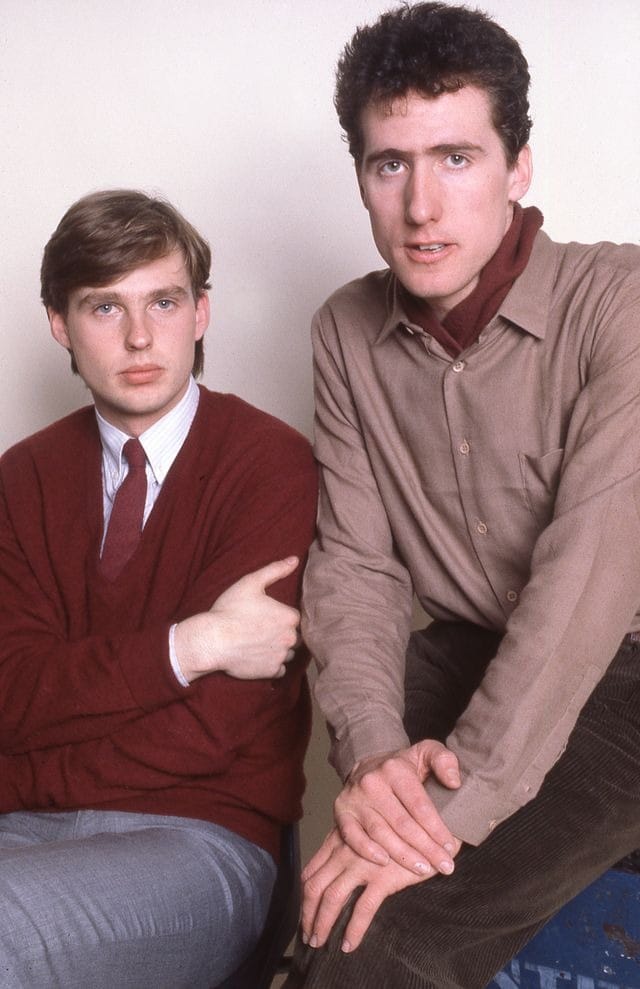
When they started, as just a two-piece and a tape recorder, McCluskey would joke that if Lennon and McCartney had had a tape recorder, they wouldn't have needed the other two. “Really it was because none of our mates wanted to play our songs with us,” he laughs. “Yet, somehow, beyond our wildest expectations, we made a living out of it. It’s insane.”
Thanks for reading today's wonderful piece by Dave Lloyd. Remember: as part of our campaign to pay our legal costs from fighting Laurence Westgaph in court, we need to reach 300 backers by next Sunday.
At the time I write this we stand at 165 people who have got behind us. We’ll need a big push to make it to 300. If you do sign up in this time period though you’ll get the first two months of your membership at a significant discount — just as a little extra prompt. It would be amazing to have you on board.
Comments
Latest
Are we finally getting the 'new Baltic Triangle'?
Send us your tips
Why is the Wirral the most depressed place in England?
I wasn't the female Brian Epstein
Meols Gold: How a two-piece with a tape recorder from the Wirral sparked a global movement
Andy McCluskey of OMD chats to The Post