

The watcher of Hilbre Island
Looking out over sparkling waters, grey seals and ancient ruins, Chris Williams finds a connection with nature — and with his father
Editor's note: We hope you're excited for Christmas! Today, we wanted to pull one of our favourite pieces from the archives that many of you who joined The Post in recent years will have missed. Back in 2022, staff writer Jack Dulhanty took a trip to Hilbre Island to meet its chronicler, Chris Williams. We loved this piece when it was first published — and we hope you enjoy revisiting it today.
🎁 We’re sorry to induce feelings of dread, but it’s only a few days until Christmas. If you’re struggling to escape the unholy trinity of chocolate/candles/cash, then why not give something much more interesting and long-lasting: a subscription to The Post? They’ll get beautiful writing and all of our best investigations, so you’ll almost certainly notice them becoming more interesting as the year goes by.
Best of all, we’ve set up some great discounts to make your Christmas shopping easier, with a whopping 50% off an annual subscription (just £49.90). Or you can buy three-month (£19.90) or six-month (£39.90) options for less. It’s all for a good cause — supporting proper local journalism in Liverpool.
Chris Williams really loves islands. He loves the isolation, he loves the wildlife, he loves the serenity of handing control over to the whim of the tide.
During the pandemic — in one of the rare gaps between lockdowns — he finagled his way on to the Isles of Scilly, off the coast of Cornwall, by offering help to a resident he knew there with odd jobs. His electrical company is called Island Electrical. He loves islands.
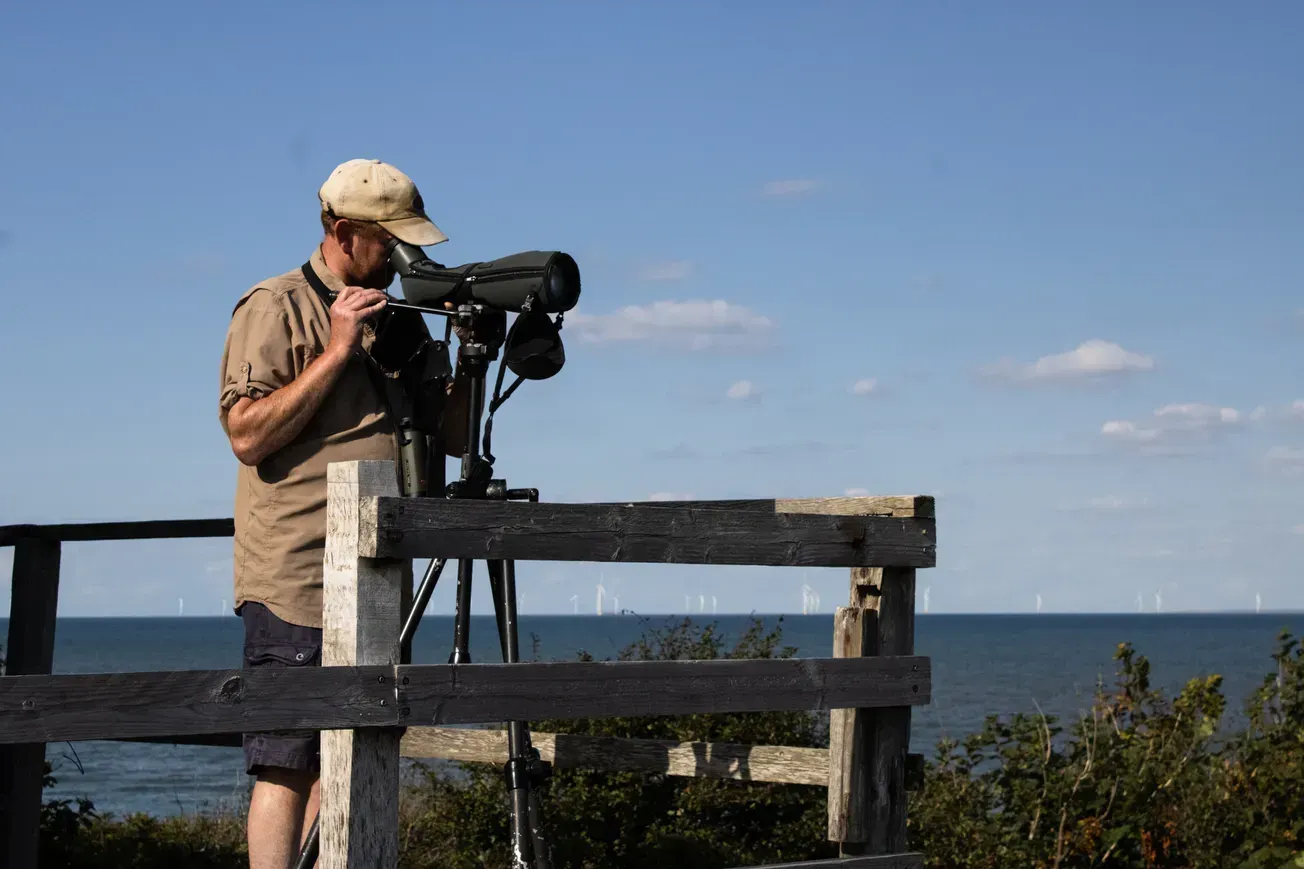
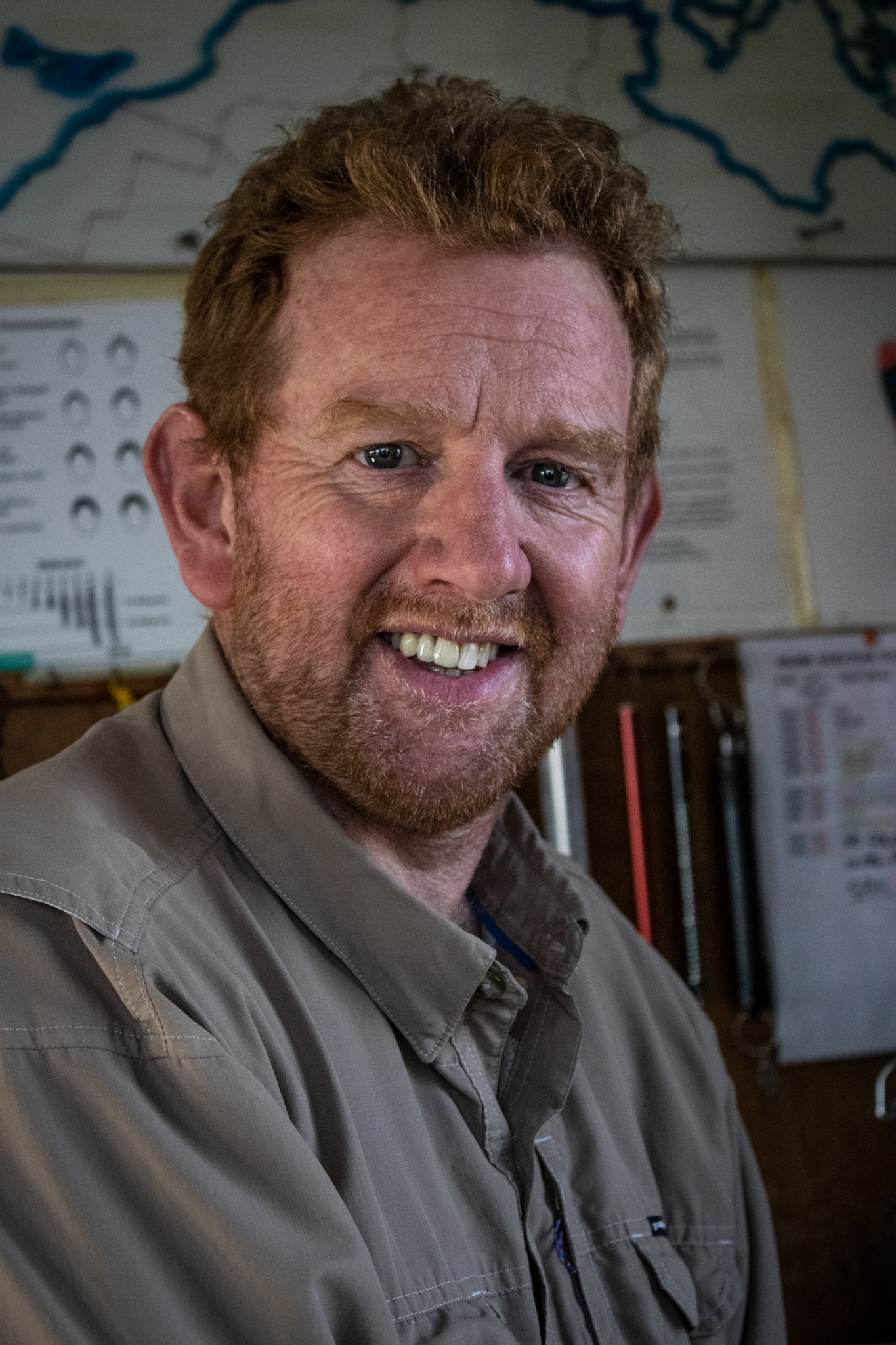
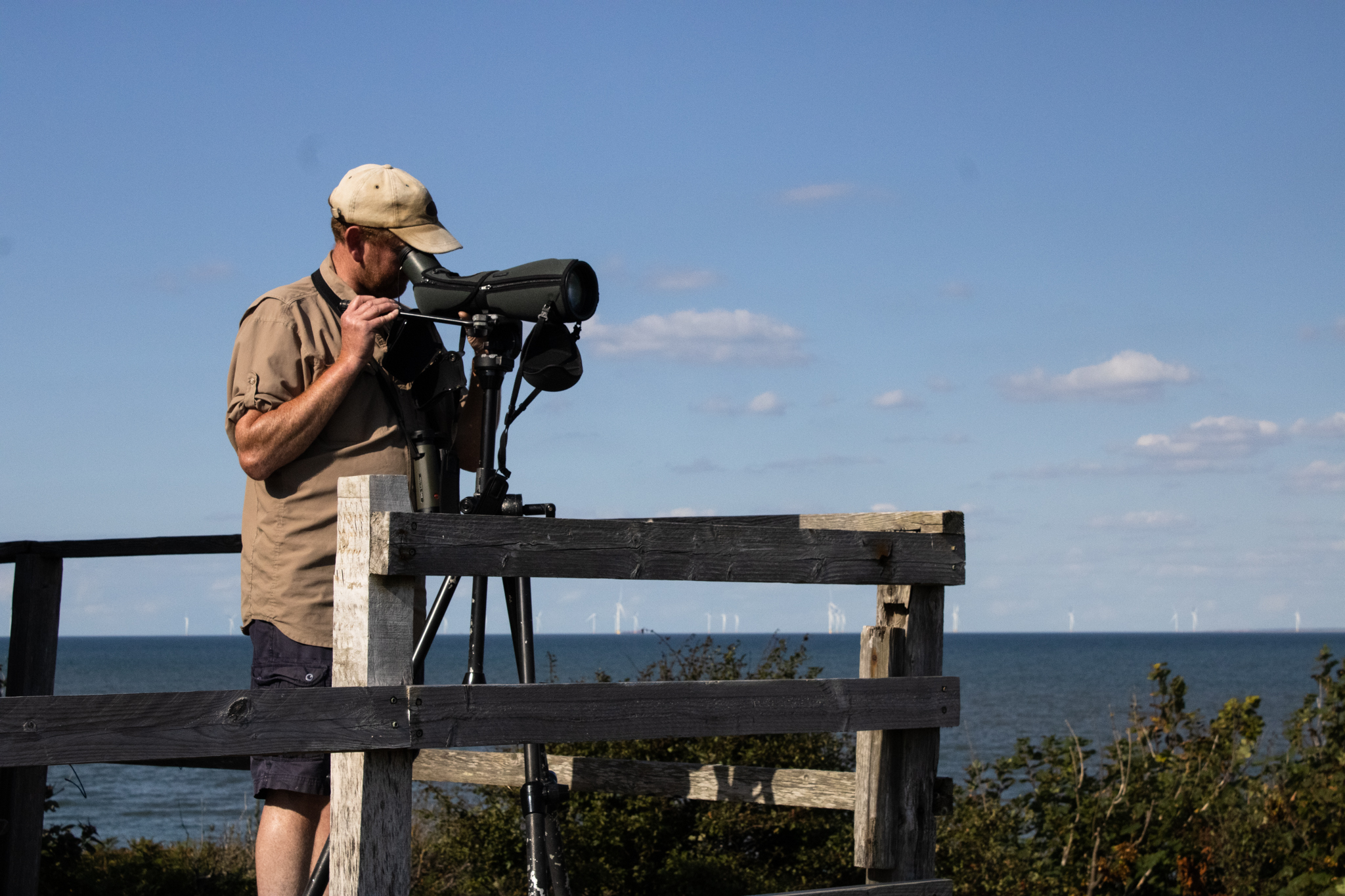
“It’s like coming back in your living room after a load of hassle,” he says, stood beside his telescope, wearing the garb of an outdoorsman — all light beige — and sporting a ginger beard. He’s on the balcony that hugs one side of the Hilbre Bird Observatory, off the coast of West Kirby, watching the tide come in.
Hilbre Island (pronounced hill-bree) is the largest of three tidal islands that form an archipelago in the Dee estuary. When the tide is out, you can walk the two miles or so from the shore to the islands. When the tide comes in, it maroons you, and there’s no way off until it recedes.
Chris has been a member of the observatory his entire life — his dad first carried him to it when he was a few months old — and spends days at a time here monitoring wildlife, checking traps and updating the observatory’s blog.
He picks me up first thing one morning, along with his mum, Doreen, in an old unpainted silver land rover that makes the barren seabed leading to the island look even more lunar and strange. On the way over, he points at things and explains what they are with what I realise is his trademark alacrity.
“So that’s where they found stuff from the Vikings and that sort of thing,” he says as he points at Little Eye, the smallest of the three islands. “The tide will come up this gutter here,” he says, now pointing at a deep wrinkle in the sand. Later, we stand looking at the pockmarks in some ochre sandstone: “you can imagine little people living in them, little cities.” And then, of course, there are the birds: Egrets, Warblers, Waders, Meadow Pipits, Oystercatchers, Wheatears, you get the idea.
If you're enjoying today's piece and want to read more stories like this, then please subscribe to The Post. We're an award-winning email newsletter that sends you heartfelt features, proper local journalism and peerless writing about life in Merseyside. 35,000 people have already joined our mailing list. Hit that button below to join up for free.
When the observatory was officially opened in 1962, it was housed in what was essentially a shed, built by the founding members, whose number included Chris’s dad, Pete. Its current headquarters is a century-old wooden lodge donated by a couple who used to holiday on the island.
Inside, there’s a spill of sunlight on Chris’s desk alongside piles of paper folders, books and clipboards. Already, I can see the tide creeping in. I throw it intermittent glances throughout the morning, like I’m playing ‘Red Light Green Light’ with the entire ocean.
I realise later there was no point. Being enveloped by the tide is a bit like going bankrupt or witnessing the collapse of democracy — it happens very gradually, then all at once. By the time I sit down for lunch with Chris and Doreen (who Chris calls Dee, as if the estuary were named after her) we’re water bound. In the distance, West Kirby looks like a quaint Mediterranean seaside town.
To Chris, the island is a haven. Where he can, literally, be isolated from the pressures and stresses of normal life, including his business and his work volunteering on the lifeboats. Having somewhere that provides such solitude is a blessing.
Which isn’t to say life is always easy here. “On an island, everything takes a lot of extra effort,” he explains. "If you go to do a job and you haven't got something, you're knackered, because you can't just nip to B&Q to get it.” Although, that loss of control inspires a kind of calm and acceptance. "On the mainland it causes you more stress, whereas on here you can't do anything, so you just accept it”.
It's all very idyllic and tranquil. Taken by the journalistic desire to find problems, conflicts and general doom and gloom, I ask: does he ever worry about the island? Is it threatened in any way? Beyond the obvious climate change implications of being an island — the tides have been coming in higher and higher — the short answer is no. Although Chris still worries about the council, what specifically they might do is never really made clear. “But like the Nirvana lyric goes: just because you’re paranoid, don’t mean they’re not after you”.
Sometimes Chris just comes to the island to work. Fire off a few invoices, spot a few birds. If he’s forgotten about a job and someone calls him from the mainland, they’re usually understanding: “They’ll ring me up and ask me where I am, and I’ll just say: ‘I’m in the middle of the Dee’ and they’ll be like ‘in the middle of the Dee? Oh of course, Island Electrical, oh well what are you doing on the phone to me? You crack on!’”
His kids have also spent a lot of time on the island, although nowadays, entering their twenties, they have other things they’d rather do. “When you’re young, you don’t realise how lucky you are to have this on your doorstep, do you?”
After lunch, I do a round of the island. The observatory is on the island’s southern tip, so I first work my way up to the other side. It’s 11 acres of rock, so this takes maybe five minutes. I walk around the ruins of an old lifeboat station, built in 1849 and operated for exactly 90 years.
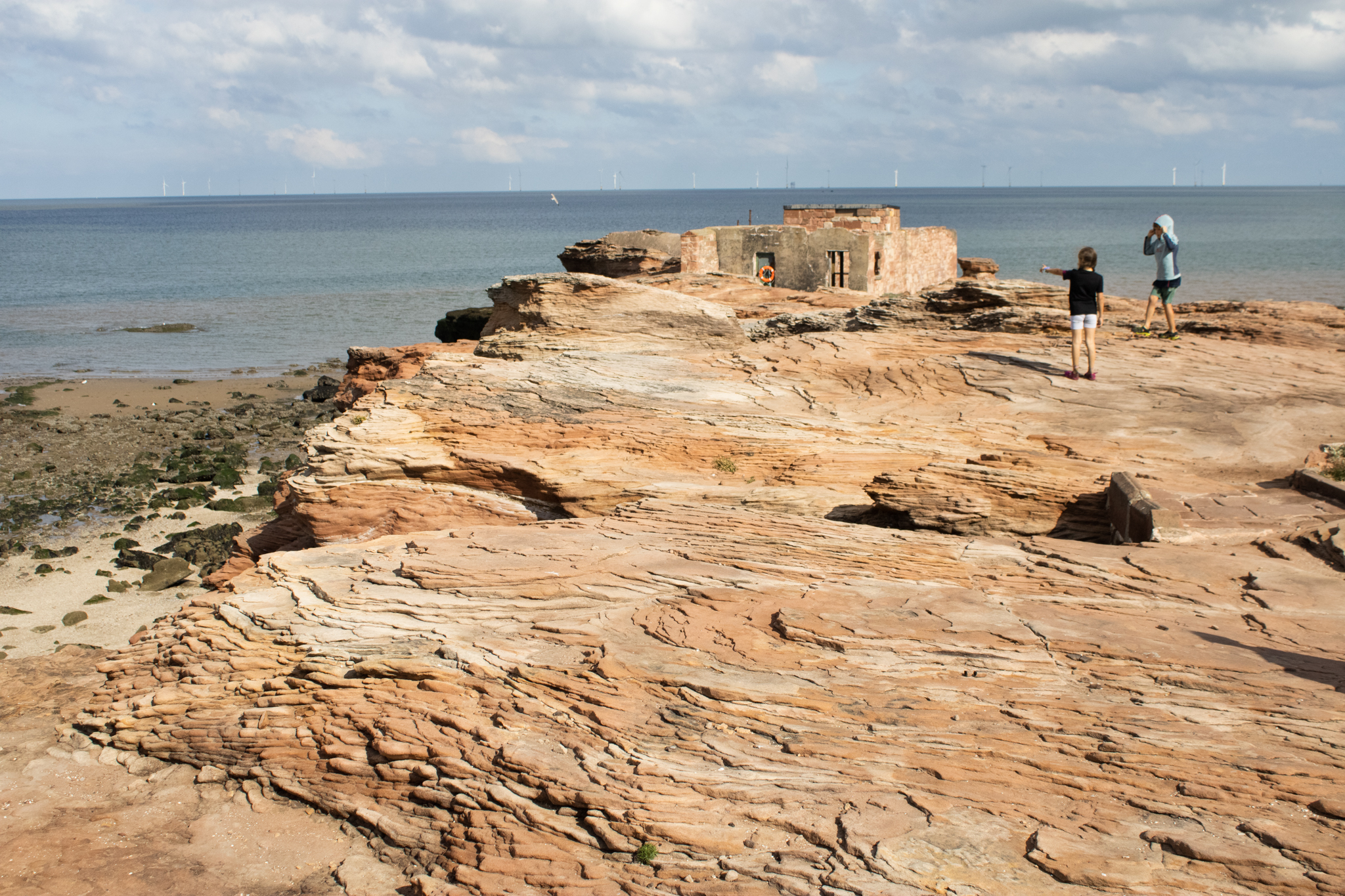
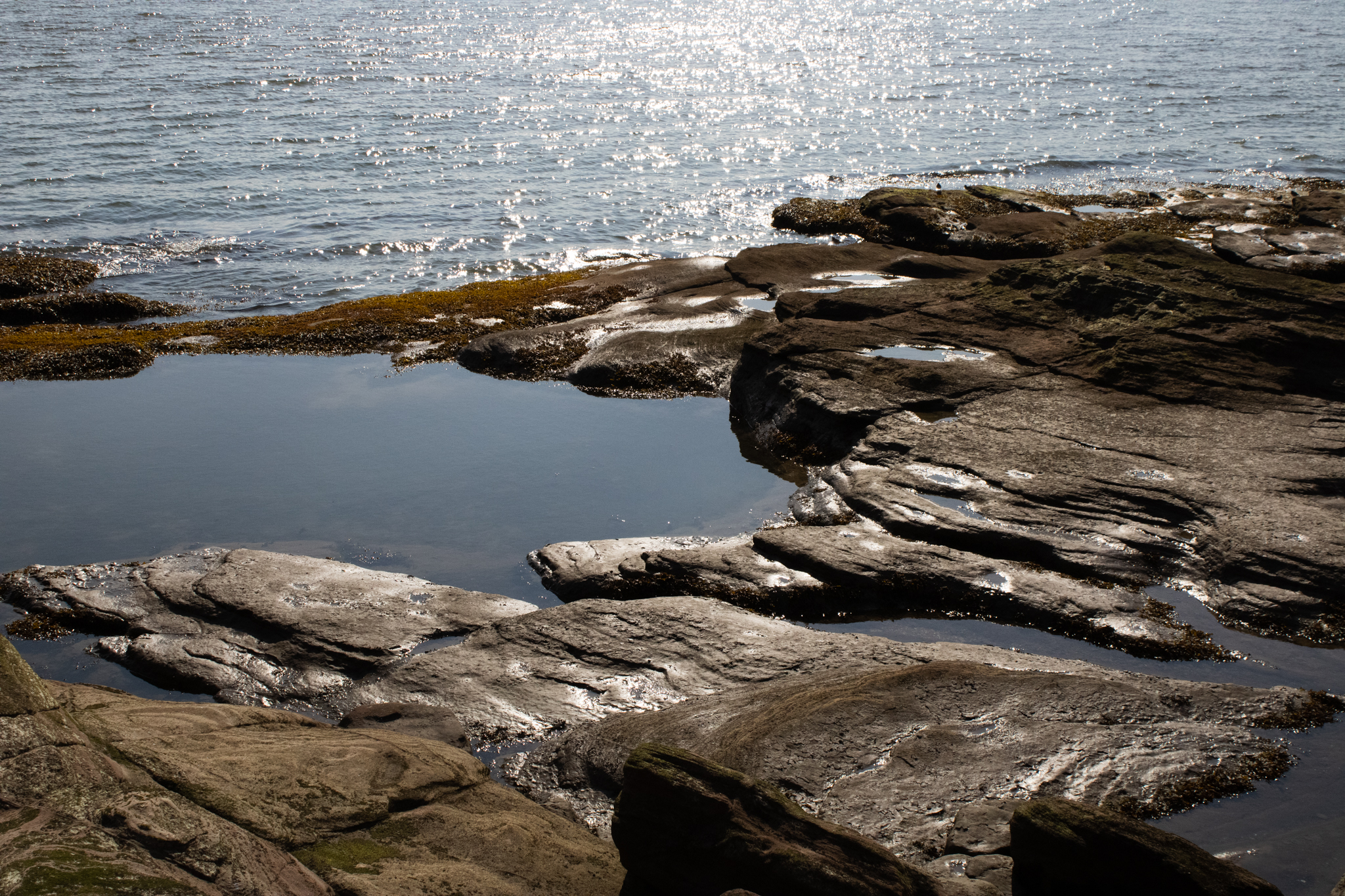
I find a neat cove on the northeast edge and climb down to sit. The sun has been falling on the rocks like a blacksmith’s hammer and the red sandstone is warm to touch. Bobbing in the water are a dozen North Atlantic seals who look like slippery, grey bald men with eyes as black as cherries.
Two women sit on a shelf of rock above me and try their best approximation of seal sounds. It doesn’t really work. I check my watch and 40 minutes has passed. I remember this is my job, so I get up.
Out of the cove, I find Chris with a long lens camera, trying to capture the black flash of a Wader. Including me and Chris, there are five people on the island. “Shall we check the traps?”
The Post is best in your inbox. Never miss an edition and hear from us as soon as we publish. Just sign up for free by clicking below.
The observatory uses Heligoland traps to catch birds. They are essentially big funnels made of wire mesh that lead to a small box. If a bird flies into the funnel, it’ll be guided toward the box and from there, retrieved and ringed. Ringing birds — where small metal rings are attached to one of their legs — is a way of mapping migration patterns and tracking the age of birds flying over and nesting on the island.
Chris tells me the story of one Meadow Pipit they ringed in 2010. It was ringed on 10 April, then exactly six months later it was hit by a car in France. The driver happened to be an ornithologist, so he pulled the bird out of the grille, noted its ring number, then set it free “instead of throwing it in a hedge or, like, eating it,” says Chris. Then, another six months later to the day the same Meadow Pipit was re-caught on Hilbre. "You've probably got better odds on winning the lottery.”
The traps are couched in thick bushes that appear to be mostly nettles and Blackthorn, so shorts were a mistake. We see dragonflies that just look like flying candy canes, butterflies with frescoed wings, but find no birds in the traps. We march on to the island’s southern coast, tracing our fingers through the deep striations in the rocks.
I bump into two recently retired teachers who are après-swim. It just so happens that I have visited the island on the day the kids go back to school. “We tried to think,” says one of them, “where is the nicest place we could go on what would usually be such a terrible day?”
The tide starts to recede as we enter the late afternoon. The sun is low and light is dancing on the walls and picture frames inside the observatory. We’re drinking tea, eating a scone and talking about family. "I suppose I would lie to my dad,” says Chris. “Because he would always want to solve your problems because he was worried about you. He was that sort of fella. And sometimes we’d clash about that.”
He goes on. "He'd say, you know: 'are you busy? Are you alright for money?' And I'd always say yeah, because I didn't want him to worry about it. And it didn't bother me, because I weren't busy, and I didn't have any money. But when he died, I don't know. It's like, I lost my bottle a little bit? Because I didn't have that, like-"
"Support,” says Doreen.
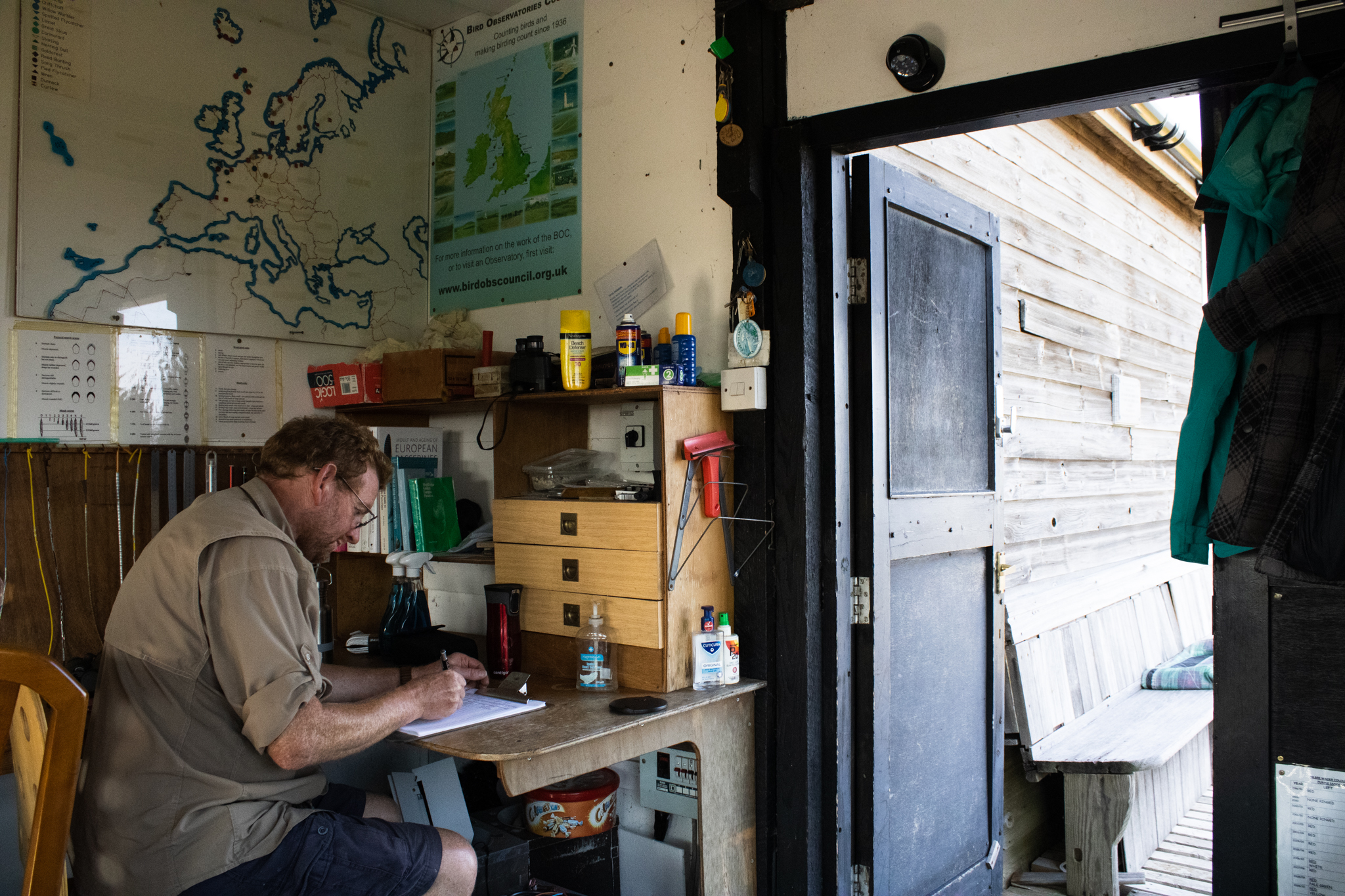
Pete was, by all accounts, a constant source of encouragement for Chris and other younger members of the observatory. "My dad was the sort of person who would absolutely match your enthusiasm. He was always interested. Say I got into a band, my dad would have it. And it wasn't claustrophobic, he just wanted to be interested, because he thought: 'well, if you like it, it must be good.’”
He'd help show them how to ring and identify birds, and how to use light traps to catch moths. He and the other founders, blending the scientific study of birds with the practicality of catching them, imbued the island with a kind of magic. When Pete died, Chris says: “I think the first thing I did was come over here, to the island.”
“Pete and the others made it feel like a really special place,” says Gavin Broad. He is the lead curator of entomology — that’s the study of insects — at the Natural History Museum in London. He was born in Liverpool and grew up in Heswall on the Wirral. He first visited the island in 1988 — when he was 12 years old.
“The council used to run these summer courses. I was on the birdwatching course, and we went to Hilbre, which was quite mind-blowing, really.” He started going over regularly, and it proved fundamental in what he would go on to do, with Pete introducing him to ringing and light trapping. “He was just a sort of wired, force of nature.”
Drafted on Gavin’s desk, yet to be submitted, is a paper. It concerns a “lovely, little parasitoid wasp,” he says. “It’s kind of orange — it looks like many of the others, to be honest — but it’s a nice little thing.” It actually came to a light trap in his garden, and it turned out to be a species that had been overlooked, never recorded.
When someone discovers a new species, they can help name it. It still has to reach zoological standards, so it has to fit into a certain genus to help other scientists identify it, but aside from that it usually comes down to whoever discovered it. Gavin found the wasp not long after Pete died, so decided to take the opportunity to commemorate him. He named it Netelia Williamsi, after Pete Williams.
If you’d like to read these stories and access our full back catalogue of long reads, investigations and beautifully-written features, please consider signing up as a paid member of The Post today. Right now, it’s £4 a month for your first three months – that’s just £1 a week, so you can treat yourself to an early Christmas present at a big discount. Just hit the button below.
Comments
Latest
A dish best served cold: Laurence Westgaph sued us to reveal our sources - and lost
Steve Rotheram’s friends in high places
The children in the Travelodge
A slippery slope
The watcher of Hilbre Island
Looking out over sparkling waters, grey seals and ancient ruins, Chris Williams finds a connection with nature — and with his father