

The unexpected auction: A London fund manager is selling Merseyside homes from under their tenants

…and residents are being offered £2,000 to move out
Dear readers — Last week, residents of properties across Merseyside received a strange knock on their doors. They were informed their homes were being auctioned off in just two weeks time, and were offered £2,000 to move somewhere else.
The news came as a shock. Before last week, nobody had told these residents — many of whom were previously homeless or struggling with mental health and addiction issues — that their houses were being sold. As a result, one resident told The Post they felt so distraught they'd been unable to get out of bed for days. “I’ve just cried and cried and cried,” they said.
For the residents, the story is intensely local and personal: it’s about their lives potentially being upended. But we’ve been examining the details of the auction, and found that it connects to a financial scandal in the City of London that has seen vulnerable tenants treated as an afterthought by financiers chasing property profits.
It also might be an indication of something broader: what one leading housing lawyer told us is a “a race against time” for landlords to evict tenants before new renting rules come into force this year.
But before we get into today’s story — here is your Post briefing.
Your Post briefing
Remember when 90% of people opposed the plan to end city centre parking, but the council went ahead anyway? Well, Nick Small, the cabinet member for growth and economy, says the council "has listened to hospitality, especially around Hope Street and pre-theatre venues". The city council has now approved a plan to increase parking charges, with the cost of on-street parking rising by up to 20% in some areas. The price of a two-hour stay will increase from £6 to £6.50, and parking before 6pm will be limited to four hours, and five hours after 6pm. The results of a statutory consultation done by the council in 2023 revealed that nearly 90% of respondents opposed plans to end free city centre parking after 6pm, with businesses in the food, drink and leisure sectors particularly vocal in their opposition. The council went ahead with the change anyway, and now the cost of a five-hour stay after 6pm will rise from £10 to £10.60. Cheers, Nick! 🥂
A new 10-bed ward for terminally ill patients has been opened by Liverpool University Hospitals NHS Foundation Trust and the Cheshire and Merseyside Integrated Care Board (ICB). It follows the closure of Marie Curie’s 26-bed hospice inpatient unit in Woolton last year despite the efforts of staff and campaigners, including specialist palliative care nurse, Garston councillor and now Your Party affiliated Lucy Williams, who helped lead a vigil to Marie Curie’s London headquarters. Marie Curie staff have been seconded to work on the new 10-bed ward, which is temporary. Your Party issued a statement welcoming the news but reiterating that the closure of the Marie Curie inpatient unit was “a huge betrayal [of] our city” which “should never have been allowed to happen.” A spokesperson for the charity said it was committed to working with the ICB to "provide the people of Liverpool with high quality palliative and end-of-life care".
And finally, Eat the Rich (but maybe not me mates x), the play by Wirral comedienne Jade Franks, has received this glowing review in the New York Times. The semi-autobiographical one-woman show, which debuted to great acclaim at the Edinburgh Fringe last year, concerns the character of Jade, a chatty 20-year-old from Liverpool who chucks her call centre job to go to Cambridge. Eat the Rich is playing at the Soho Theatre in London through 31st January and will soon be adapted for Netflix — following the same Fringe-to-streaming path as Fleabag and Baby Reindeer. The Times’ critic Houman Barekat describes Franks’ treatment of a “quintessentially British ambivalence about social status” with a “charismatic blend of righteous indignation and self-effacing wit”, and places Eat the Rich in the tradition of Brideshead Revisited and Shirley Valentine as British drama dealing with class.
The City of London asset manager selling Merseyside homes from under their tenants
*name has been changed at the request of the deceased’s family
It was just past 1pm last Monday when Rosey Edwards received a loud knock on her door. Nearly 60 years old, Rosey is the kind of person who lives by an ordered routine, and she’d spent the morning doing dishes and folding her laundry. She wasn’t expecting visitors.
When she opened the door, she was greeted by a slim man in his late 20s, wearing a baseball cap. Her home, he said abruptly, was up for auction, and he was here on behalf of a prospective buyer to see if she’d move out in return for a £2,000 lump sum.
Rosey stood there, shellshocked. An auction? Her home?
She immediately broke down in tears. The man, surprised at her reaction, said he was under the impression she knew about the sale. As reality dawned on him, his expression changed from one of indifference to panic.
Rosey invited him inside for a cup of tea, anxious to hear about this auction and the prospective buyer he was representing. He told her that his boss, a private landlord in Liverpool, found her house listed on the auction website Allsop, along with 16 other properties in Merseyside. His boss had instructed him to go to these houses, and offer each tenant £2,000 to move out. His plan was to lease these properties to councils as supported accommodation (publicly-funded housing that provides vulnerable people with support and supervision) once the purchase had gone through, so he needed them empty.

You may not recognise Rosey’s name, but for some Post readers, her story might ring a bell. I’ve been speaking to her every month or two for the past three years, and she appeared — albeit via a pseudonym — in the first story we wrote about the Big Help group back in 2024. That story turned out to be one of the most consequential pieces we’ve ever published, setting off a whole investigative series that has brought down the interlocking firmament of charities and companies operated by former Labour councillor Peter Mitchell.
To read today’s story in full, you’ll need to be a paying member of The Post. As a member, you’ll get access to an incredible range of stories, including great pieces about the city’s restaurants, arts scene and politics. You will also be supporting the only outlet consistently publishing high-quality investigative journalism in a city (and region) that badly needs it. Today’s story is the latest in a long sequence of award-winning reporting, and it’s only possible because of our 2,000 paying members.
When we first met, Rosey had been a tenant of the Big Help Project, and then one of its connected companies, Big Help Homes. Over a coffee on Bold Street, she told me how she moved to Liverpool from Milton Keynes to flee an abusive relationship, and was placed in a Big Help Project property in Sefton. It was here that her troubles began; her flat was riddled with damp and mould, and her mental health suffered.
Then, her closest neighbour and fellow Big Help Project tenant, Sam*, killed himself after Big Help’s welfare officers seemingly failed to assist him. His body was left in the property for nearly a week before he was found.
When she first told me this, she asked me to keep her anonymous out of fear of retribution from Mitchell. After her traumatic experience in Sefton, Big Help had moved her into a new terraced house in a quiet suburb in north Liverpool, though that came with its own damp issues. Behind her wardrobe, thick layers of black mould sprouted and spread onto her clothes.
Now, two years later, she has decided to speak out using her real name.
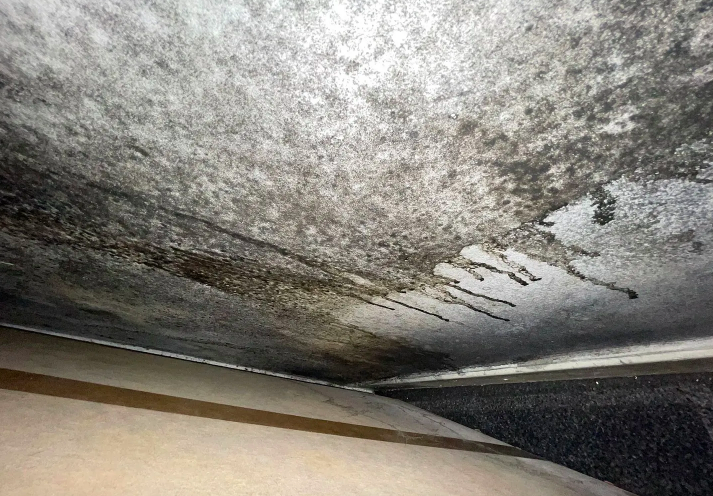
Since receiving the knock on the door last Monday, Rosey tells me she has remained in bed nearly every day. From Sam’s tragic death to the exhausting fight to get the damp fixed in her home, the unexpected auction feels like the last straw. She tells me that her mental health is at an all time low, and she’s barely been able to look after herself. “I’ve just cried and cried and cried,” she says, “this is the reality of what [Big Help] has done to me.”
In response to today’s story, Joe Birley — the sole remaining director of Big Help Group and Big Help Homes — told The Post he has “huge sympathy” for tenants. He says he is now in the process of surrendering the leases Big Help has for the properties, so that another organisation can take over responsibility for the residents.
A fraud office probe
To understand how tenants of Big Help can have their homes sold without their knowledge, we must rewind to 2018. That’s when a city fund management firm called Alvarium spotted an opportunity ripe for exploitation.
Alvarium saw it could raise money from investors such as pension funds to buy residential properties. The pension funds could then lease their properties to charities like Big Help Project for between 20 and 25 years. The charities in turn would cover this rent by housing and supporting vulnerable people, for which they could get paid much higher-than-average housing benefit from the state.
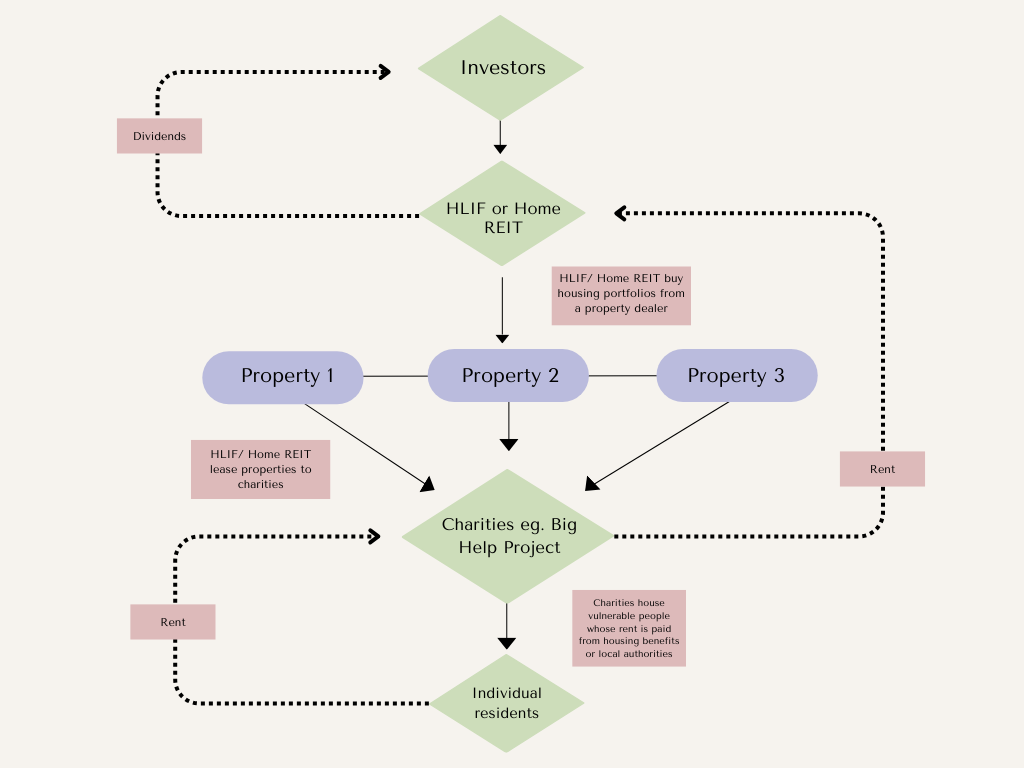
The first fund like this that Alvarium put together was called Home Long Income Fund (HLIF). Because HLIF was private, little is known about it except that it bought around £400mn of housing. HLIF investors included the Marks & Spencer pension fund. By 2020, HLIF had been successful enough that Alvarium launched a second, similar fund on the stock market called Home REIT. Home REIT was a blowout success, ultimately raising £850mn from both individual investors and City funds which it spent on around 2,500 properties. Both HLIF and Home REIT mainly bought housing in poorer parts of the country, which they then leased to Big Help Project and similar organisations.
But the business model was flawed from the start. Many of the property vendors that sold houses to Home REIT and HLIF inflated the prices of their portfolios – sometimes selling houses for double their market value. Our sister publications in Manchester and Birmingham have documented specific examples of this: Manchester City Council described one sale to HLIF as “market manipulation”.
To make matters worse, the properties were often in terrible condition. Many of the charities — including Big Help Project — were also incapable of delivering the support they had promised for vulnerable clients. For one or both reasons, local authorities often refused to pay the rents the charities needed in order for them to pay the ultimate landlords (HLIF and Home REIT). Not surprisingly, both funds have gone on to implode.
Because Home REIT (unlike HLIF) was quoted on the stock market, it quickly became a high-profile scandal. Three years ago, Home REIT’s shares were suspended from trading on the London Stock Exchange after concerns surfaced about its finances. The Financial Conduct Authority later opened an investigation into possible misconduct.
In August 2023, Alvarium — which had created HLIF and Home REIT — was sacked as Home REIT’s manager. A new manager soon started selling off Home REIT’s properties (at big losses) in order to return cash to investors. In November 2025, Home REIT entered into an exclusivity agreement to sell the majority of what remained of its portfolio, about 700 properties, with a completion target of early 2026.

Last week, the Serious Fraud Office (SFO) arrested six people as part of an estimated £300mn bribery and fraud investigation into Home REIT. Officers raided six addresses across the UK — including in Altrincham, Maidenhead and Manchester — as well as searching a property in Venice.
Because HLIF was always smaller and lower-profile than Home REIT, its implosion has taken a bit longer but it is following a similar path. In mid-2025, HLIF replaced Alvarium as its manager with a firm called Atrato. Just as already happened with Home REIT, Atrato is in the process of selling off HLIF’s housing. Our estimates indicate that about a third of the 432 properties listed in the Allsop residential auction scheduled for the end of January may belong to HLIF — including the house Rosey lives in.
A race against time
Jody Gill is a small-framed woman in her early 40s, with perfectly straight long black hair. She currently lives in a small terraced house on a quiet residential street in Anfield. She moved back to Liverpool in early 2023, after suffering a nervous breakdown and ending up homeless. She got in touch with homelessness service The Whitechapel Centre in July that year, who quickly connected her to Big Help Project. By the end of August, she’d been rehoused into one of Big Help’s properties near Walton Lane, sharing the space with another woman in her fifties who had just come out of prison.
While she tried to make the house as homely as possible, “it was so cold and there was damp growing up the walls and up everything,” she says. Black mould began to appear on the back of her wardrobe and cabinets, transferring onto her clothes. She tried to get in touch with Big Help to fix the disrepair, but was “always told the repairmen were on leave”, she says. “It was just excuse after excuse”.
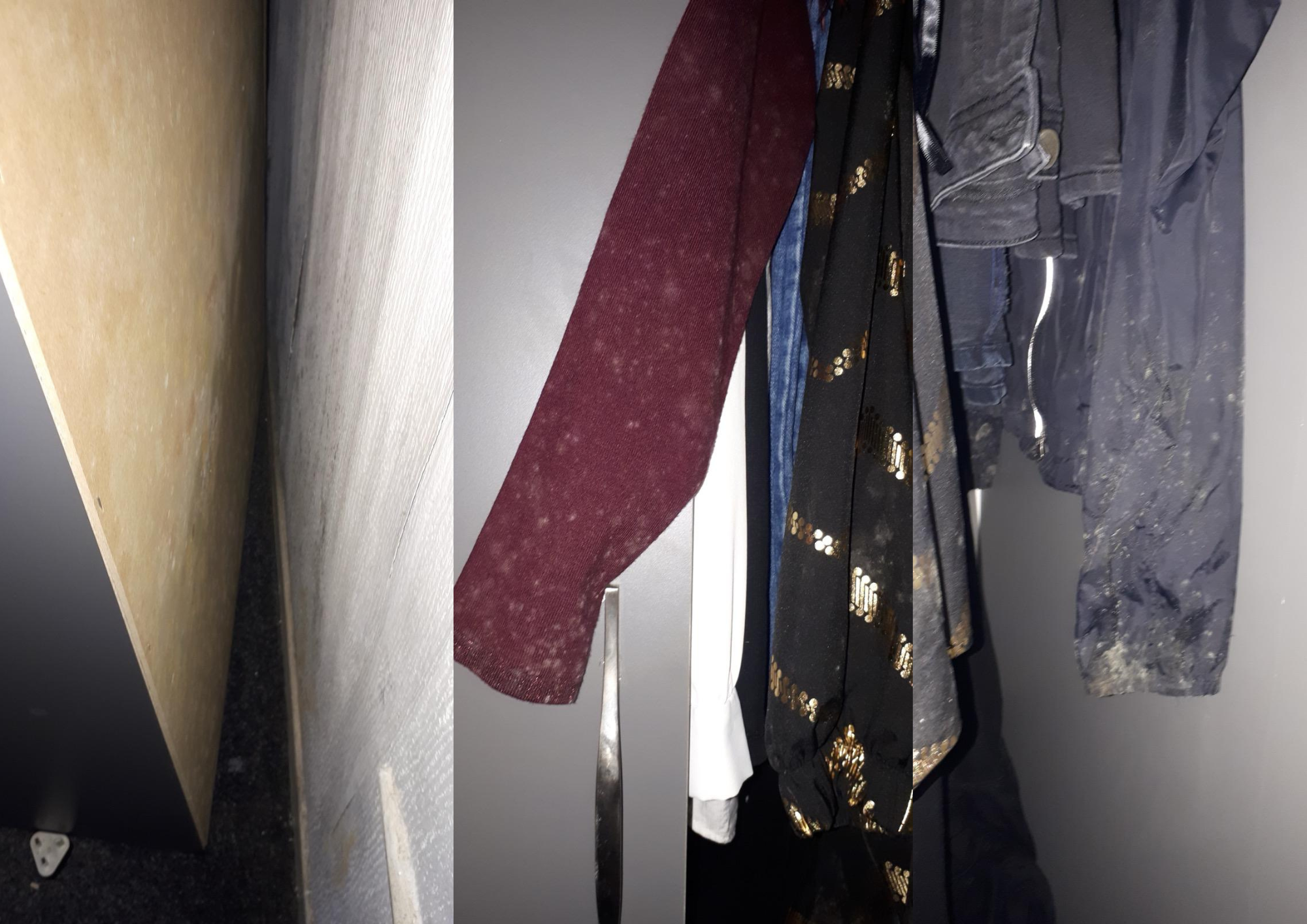
Despite this, she was still grateful to have a place to call her own. She scrubbed the walls clean and bought new furniture, investing in what she thought would be her forever home. She hadn’t seen our stories about Big Help Project, and was none the wiser to the financial peril her landlord was in. That was until last week, when — just like Rosey — she received a knock on her door. A man representing a potential buyer offered her £2,000 to move out. “I couldn’t believe it was happening,” she says, “I was like, how could they do this?”
As we speak over the phone, her voice shakes as explains her biggest fear. “I’ve invested so much [in this house],” she says, “and I’m frightened now, I really am.”
To find out what the future will look like for tenants like Rosey and Jody, we contacted housing lawyer Nick Bano. He specialises in social housing at Garden Court Chambers in London, and is the author of the critically acclaimed book, Against Landlords. He says that when the houses are sold at auction next week, the buyer will “effectively step into the shoes of [HLIF] and become the new landlord”, inheriting any previous tenants. If they wish to remove these tenants, they’ll need to apply for a court order to do so.
Nick points out that in May this year, the Renters Rights Act 2025 will come into force, making it harder for landlords to evict tenants. The act will completely abolish no fault evictions, as well as short-term tenancy agreements in favour of rolling (or month-by-month) contracts. This, he says, is perhaps why both Rosey and Jody have received knocks on their doors offering them a cash incentive to move out. “It’s a race against time for [the prospective buyers],” Nick says, adding that it is much easier to buy renters out of their homes than attempt to evict them come May.

I ask him about the mould and damp in both Jody and Rosey’s homes. He says that any buyer will likely inherit the responsibility to fix these issues, and that tenants may be able to sue the new landlord over disrepair if works are not done. His advice for tenants? “Don’t do anything without some legal advice,” he says. Though this is easier said than done when so many of the tenants in former Big Help properties are vulnerable, suffering from mental health or addiction issues.
We asked Joe Birley, the sole remaining director of Big Help Homes and Big Help Group, about the situation tenants now find themselves in. He explains that since the Charity Commission launched its inquiry into Big Help Project in 2023, many of the bank accounts connected to it have been frozen, and the charity has effectively been “wiped out”. “I’ve turned around to the Charity Commission and said we cannot physically manage these [houses] anymore,” he says. “We are not in a position — we've got no staff, no money and no support.”
He says that as a result of this, in November 2024 he met with HLIF to surrender the leases to all the properties Big Help had taken on. HLIF allegedly refused.
We asked HLIF's fund manager, Atrato, why they refused to take back the leases when they were aware the Big Help enterprise did not have the resources to support its tenants. They did not respond to any of our questions, and gave the following statement instead:
“[HLIF] is the ultimate owner of the properties, but the properties are leased to local housing providers who are responsible for the property. The local housing provider sublets the properties to local residents. If [HLIF] decides to sell a property, it is typically sold with existing resident tenancies in situ.”
We understand that as of December 2025, HLIF (through Atrato) are in provisional talks with Big Help to take back the leases.
Atrato’s website says the company prides itself on “responsible investment”. But Allsop lists many of the HLIF properties it is auctioning as "Occupied on Terms Unknown". This suggests that in the five months Atrato has been officially managing the HLIF fund, Atrato has not troubled to find out who is living in HLIF’s properties. We also asked Atrato if this is in line with their ethos of "responsible" investing — again, they did not answer this question.
Since that first knock on the door last Monday, Rosey has received a further seven visits from prospective buyers, and multiple letters – one of which told her there was over a dozen other tenants in Liverpool, all of whom had their houses up for sale without their knowledge.
“I’m angry, I’m so angry that people can be treated like this,” she tells me. Jody feels the same. “I feel like the ground is moving from under me,” she says, “all I’m asking is why?”.
Most of the people who could answer that question are not based in Liverpool, and some of them may never have even visited the properties in question. For now, the clever financiers and investors who sought to benefit from the “social impact” opportunity of supported housing are keeping pretty quiet.
If you’re affected by this story, or live in a property being sold as a result of the collapse of Home REIT, HLIF or Big Help Project, please email abi@livpost.co.uk.
Revisit our investigation:
- Part One: Special investigation: The collapsing world of Liverpool’s charity kingpin
- Part Two: ‘I don’t give a shite about your auditors’: A secret recording and the growing questions about Big Help
- Part Three: Exclusive: The mystery £5m loans to companies owned by a Liverpool councillor and disgraced charity boss
- Part Four: Exclusive: Peter Mitchell’s company claimed to be a government partner. Unsurprisingly, that was a lie
- Part Five: Exclusive: The Big Help empire has collapsed. Now, Peter Mitchell looks to Ukraine
- Part Six: Exclusive: How a food bank siphoned £195,000 into private hands
- Part Seven: A place in the sun: How do a bankrupt charity boss and his councillor partner afford a “luxury” flat abroad?
Comments
Latest
Flights of Fancy: the debunked Liverpool Airport migrant conspiracy
Are we finally getting the 'new Baltic Triangle'?
Send us your tips
Why is the Wirral the most depressed place in England?
The unexpected auction: A London fund manager is selling Merseyside homes from under their tenants
…and residents are being offered £2,000 to move out