

Southport has traded an Art Deco treasure for a glittering new events venue. But do the sums add up?

The many problems besieging the Marine Lake Events Centre
In 2022, Andrew Mikhail nearly died of Covid. When he recovered, he decided Southport needed a skyscraper.
The businessman unveiled plans for a vast 48-storey Art Deco tower rising from his Grade-II listed Grand Hotel. Clayton Architecture, until then best known for home conversions, sketched a great glazed monolith tinted in brushed brass. It would house a rooftop restaurant, a wedding venue and a 109-room "health-themed" hotel honouring the hospital staff who saved Mikhail's life.
At 180 metres, it would be the tallest building in Merseyside, sportingly planned to best the Blackpool tower. Mikhail proclaimed it The Tower of Hope.
"New York City started with a single brick once upon a time," he said. "A great philosopher once said that the secret of change is to focus all your energy on not fighting the old but on building the new."
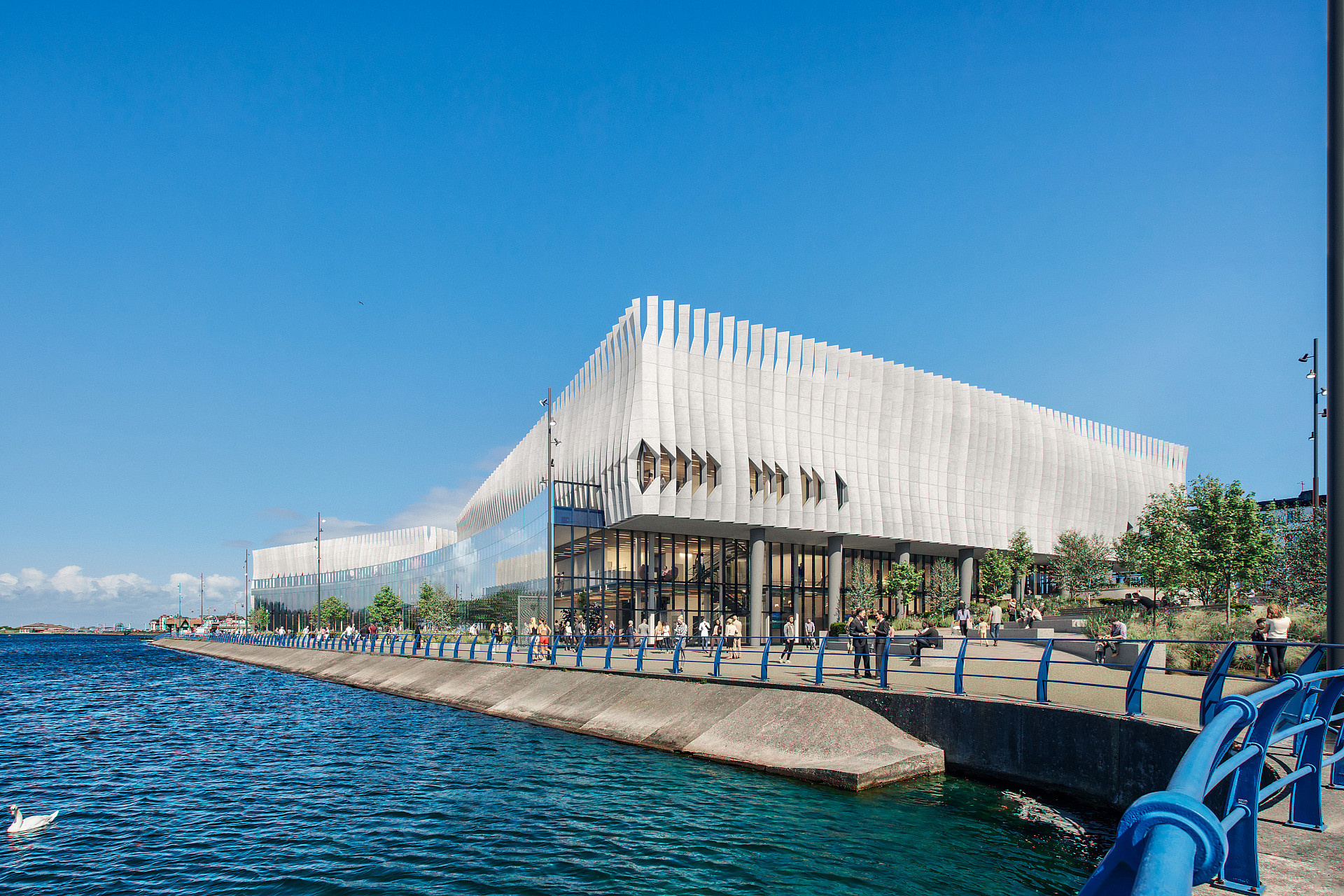
It could have been the town’s motto. Buoyed by government cash, Southport was planning a renaissance. A disused park and ride would become a world-class artificial lagoon and leisure beach. Pleasureland would get a hotel. And on the hollowed-out site of the old theatre would rise the crown jewel: the Marine Lake Events Centre (or MLEC). A glittering new home for theatre, music, conferences and events right on Southport’s seafront.
The Tower of Hope never made it to a planning meeting. Pleasureland dropped its hotel plans. The tide went out on the promise of an artificial surf lagoon. The great philosopher Mikhail quoted was actually a fictionalised Socrates from a bestselling self-help book.
But, on Wednesday, Sefton council announced that main construction had begun on the Marine Lake Events Centre, with engineering works finished, somehow, ahead of schedule. Southport, it seems, will get its venue.
I hoped that this would be a rousing story of Southport’s bright hospitality future. But when I dug through the details, things looked much less rosy, with the Marine Lake Events Centre being besieged by various problems.
‘The biggest conversation the town has ever had’
Like the Tower of Hope, the MLEC can trace its birth to the anguish of the pandemic.
In May 2020, the owners of the old Southport theatre and convention centre found that they couldn’t weather the storm of a collapsing footfall. Millions in debt, they filed for insolvency and handed the keys to the building back to Sefton council. Surveys found that the building was unfit for purpose. Swathes of netting were cast over the ceiling to catch loose tiles. When the safety curtain collapsed, it brought down chunks of asbestos from the roof with it.
A fearsome band of local notables and council apparatchiks assembled to turn around Southport’s fate. The Town Deal Board, as they were known, were tasked with drafting a bid for regeneration funding from the government’s Town Deal fund. After undertaking “the biggest conversation the town has ever had” – its chair’s description of a 7,000 person consultation on new developments – it lodged plans for a new building on the site of the old theatre and convention centre.
Rishi Sunak’s March 2021 budget awarded Southport £37.5 million for regeneration projects. The board took the vast majority - a £33.3m chunk - of the town’s entire award, for a new events centre.
The rest was divided between investment in a new business hub, customer service training for hospitality workers, and “Les Transformations de Southport” – a pedestrianisation and connectivity project named for the 1853 reconstruction of Paris which was itself reputedly modelled on Southport, which we covered back in 2024.
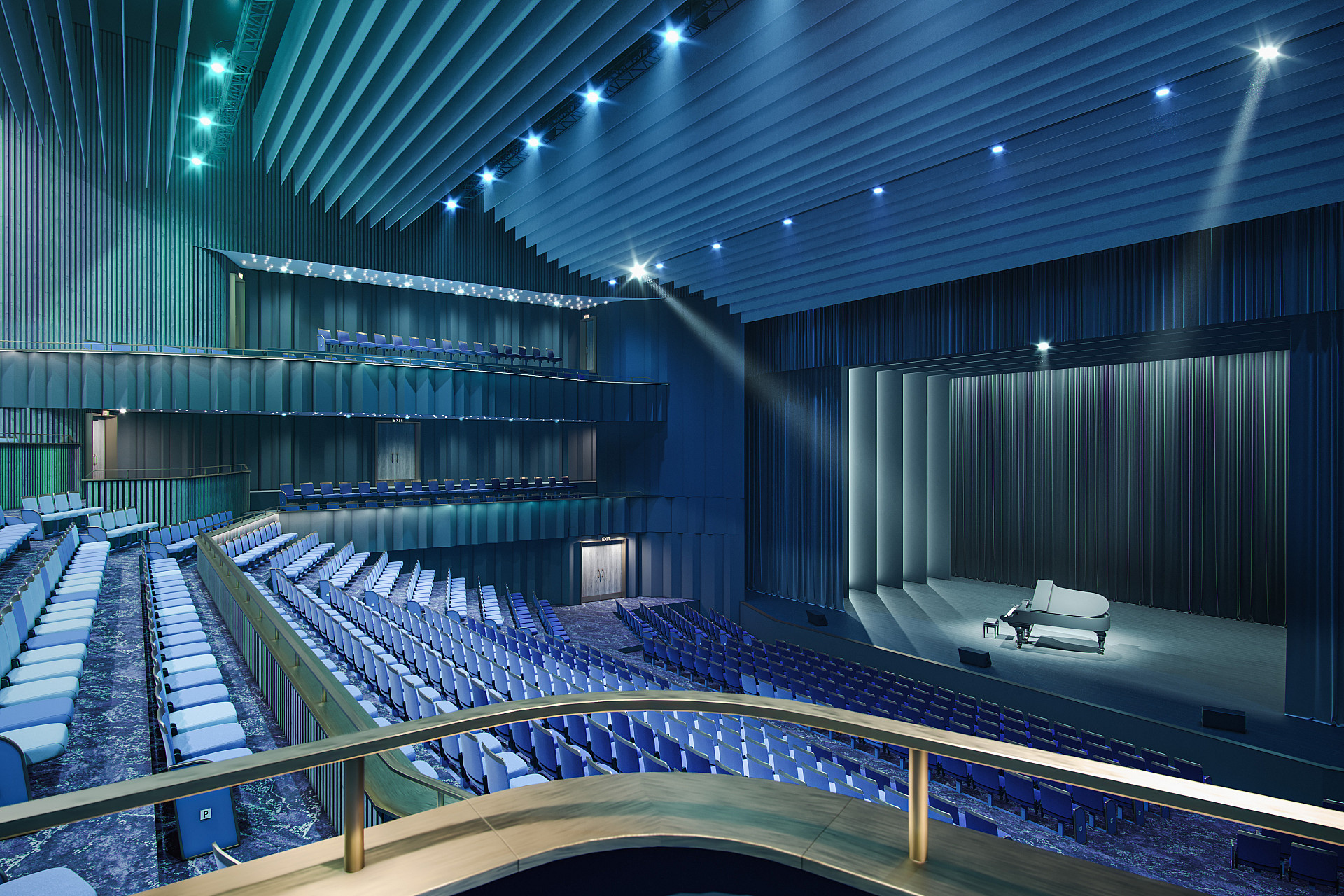
After two years of planning, the council presented its vision for the new events centre. A £73m waterfront venue would have a 1,200-seat auditorium, and a 1,500 square metre exhibition hall. It promised half a million new visitors, 290 jobs and £18m a year for the town. Enough to make a brushed-brass tower blush. Most importantly, the MLEC would recover Southport’s place in the touring circuit of comedians and music acts that had been missing the town since the theatre closed.
“Taylor Swift will never be in Southport,” a councillor tells me. But, an evening with Phil “The Power” Taylor, or a reformed Boyzone, just might hit the stage – and that type of regular midweek offer is sorely missed.
While expectations were high, the first step of the MLEC project began in what is locally understood to be a minor tragedy. In 2023, the council approved the demolition of the entire Southport Theatre and Conference Centre, including the Floral Hall.
“It was a piece of art,” restaurant-owner Attalio Sergi tells me. “It was a fantastic open space – an unbelievable Art Deco building that will never be recreated.” Sergi is the Italian-born, widely-celebrated restaurateur behind a string of Merseyside food venues.
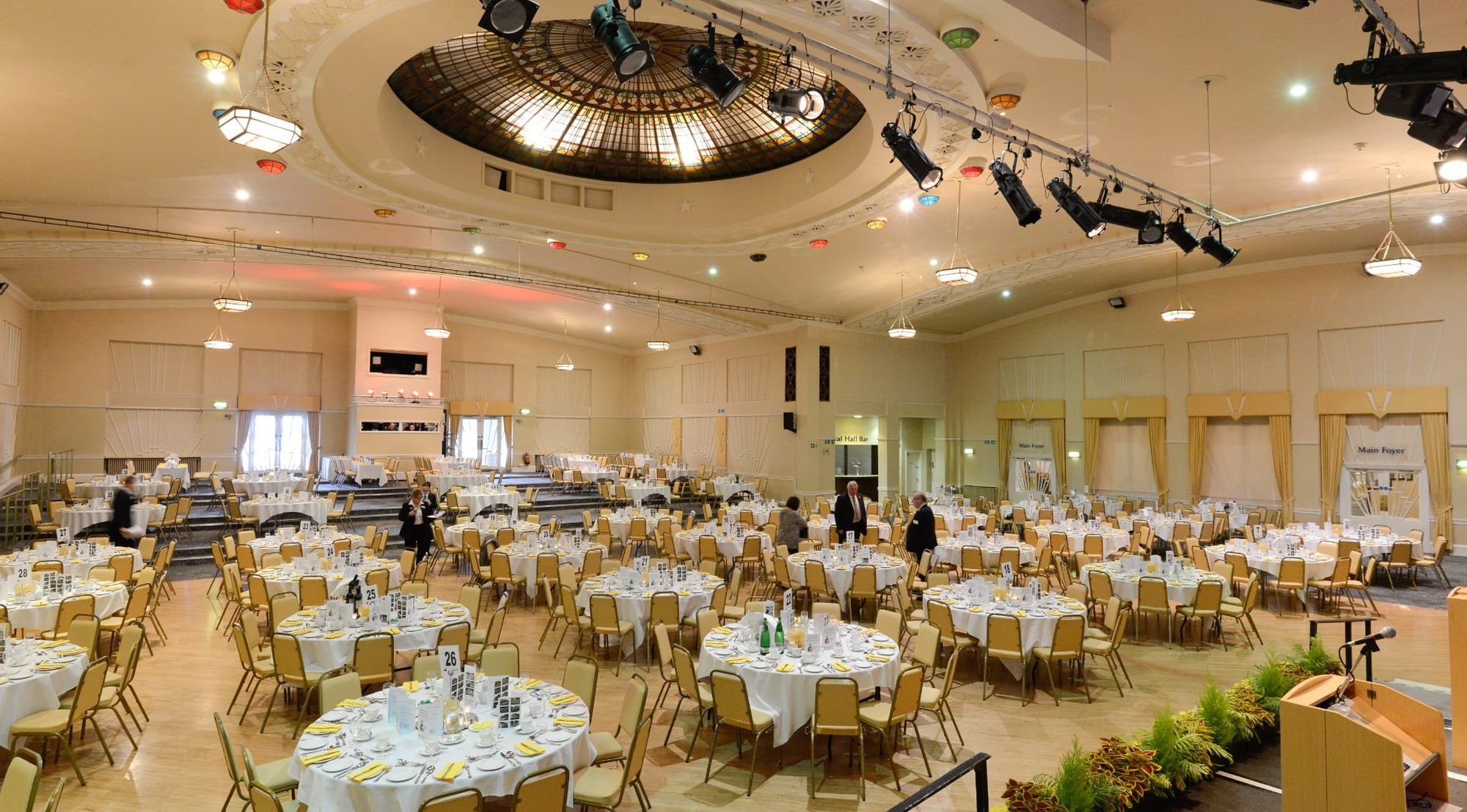
The Floral Hall was built in 1932. It was a glass-domed pleasure palace on the Promenade, with wheat sheaves worked into the plasterwork, a sprung wooden dancefloor beneath tiered seats and gold curtains. It was a ballroom, concert hall, cinema and theatre at once — chandeliers over the dancefloor, brass rails up the stairs, and projectors in the back.
The Beatles played it four times between February 1962 and October 1963. Pink Floyd in 1967. In 1973 a utilitarian theatre was built onto its side — asbestos and all — and the two were joined. From then on the Floral Hall was half of the Southport Theatre and Convention Centre.
Everything has to come to an end at one point or another, but it isn’t clear that the Floral Hall was beyond saving. The council’s reports never separated the condition of the two connected buildings, and campaigners argue that the council was too hasty in sending the Floral Hall to its death. Its contemporaries – the Spanish Hall at Blackpool’s Winter Gardens, or the Midland Hotel in Morecambe – are listed, restored, and still working.
According to Sergi, it should never have come down. “Everybody was opposing the destruction. The Floral Hall was built before asbestos was used here!” he says. I hear on good, anonymous authority that even council planners were sceptical about including the Floral Hall in plans.
The council salvaged some icons of the Hall – glass from its main dome, brass handrails, theatre seats – but a 50-tonne excavator rolled onto the Promenade in September 2024 and brought the two buildings down in one. But, this wouldn’t be the end of the problems — instead, they would multiply as the project gathered steam.
Short-term pain, long-term prospects?
Firstly, there was the issue of the contractors, a carousel of whom have been involved in the MLEC site. Kier, who won the job in 2022, was gone by Christmas the next year, for reasons the council did not disclose. Graham was appointed in December 2024, but the following April, had performed a 180 and were refusing to construct the building for reasons that seem shrouded in mystery. This was a decision “taken on an economic level”, is all a council spokesperson tells me.
By the time the developer VINCI was handed the contract in January 2026, without competition – under what the council referred to as a “soft marketing exercise” – the project had been pushed back four years.
Just as concerning as this list of misfires was the bill. Across those three brief dalliances with contractors, the cost of the MLEC kept climbing. From an initial estimation of £73m, the bill has now risen to £106m. A council spokesperson says this jump can be explained by inflation, mostly on materials, driven by global conflicts.
But, even the most generous figure for construction cost inflation, from a council report in June 2026, is 30%. On a £73m bill, that gives £95m. But the Marine Lake Events Centre will cost £106m – leaving some £11m unexplained.
The funding secured by the Town Deal Board, and some additional funding granted by the Liverpool Combined Authority, covered the first £53m of the deal. But Sefton council have not secured any additional cash to pay for the steeper bill. Which means that the whole of the inflationary increase has fallen on Sefton. Its contribution has risen from £19.7m to £52.7m — from a quarter of the project's cost to half of it.
Figures on a page can pass in a blur, so let me put it differently: The council is borrowing money to finance the project, which will be repaid into the late 2060s. A child born in the month the old theatre shut will be approaching fifty when the bill is fully paid.
“It’s not great,” a council communications officer tells me. “The perspective is, we’ve got to this point now – it would be more of a waste to scrap the project.” He continues: “the long term prospects will outweigh this short-term pain.”
There's also the matter of the projections made about the venue's profitability. As the extent of that short-term pain has deepened, those long-term prospects have been quite dramatically gussied up. When the business case was written in 2022, the events centre was forecast to draw some 500,000 visitors a year and put £18m into the Southport economy. In a version presented to cabinet this June, it draws a fifth more visitors and will enrich the local economy to the tune of £30m.
Why do the June 2026 projections forecast the venue as being so much more profitable? Of the eight reasons the council report gives all but two are about getting more money per head. According to the report, operators are confirming that higher prices "have had no impact on demand". And people will be buying more VIP packages because of a post-Covid appetite for ticket upgrades. People want a “special experience on [sic] a special event".
Put in blunter terms – in 2022, the council expected every visitor to spend £35. It now expects £50. Is this plausible?
“I don’t think it’s unreasonable that they might spend £50 each,” Southport MP Patrick Hurley, and member of the Town Deal Board that oversees the project, tells me. “I went to a gig in Camp and Furnace in Liverpool to see the Bunnymen, I must’ve spent £50.”
But the £50 has to hold for conference delegates and matinee audiences too, not just Bunnymen buffs with a bar tab.
“We’re not going to get private operators running a huge events centre like this based on figures that don’t add up,” Hurley continues, referring to Legends Global, the entertainment company which has taken on the contract for running the MLEC, joining a roster that includes Manchester’s AO Arena. “If it’s good enough for them, it’s good enough for me.”
But, these figures are not exactly Legends’ own. The seventh prong of additional income is increased sponsorship income – like the AO in the AO Arena – and we find Sefton overstepping Legends’ confidence. The council readily admits it has raised sponsorship projections that run “in excess of amounts in the current Legends Global business plan.”
The main problem facing the council, though, has long been that the Towns Fund grant was never Southport’s to spend as it wishes. That £33m granted by Sunak’s government could only be spent on a new events centre, and it was priced before the mounting inflation dragged up the total bill. Hence this lack of options.
Sefton could not divert the cash to the pier, or to the high street. It would have to build the events centre – borrowing to fund the council’s contribution – or give the cash back. By the time the real price of the project was known, the Floral Hall and the old theatre had already been demolished at significant cost to the council.
‘You are waiting for something to happen’
More concretely than Attalio Sergi’s fondness for visual art, his connection to the MLEC comes through his Italian restaurant on the Southport Promenade. Trattoria 51 was right opposite the old Southport theatre and convention centre. For 23 years, it enjoyed the theatre-and-conference-going footfall. When the centre closed, the restaurant lost 30-40% of its business.
Caught in a grim storm of the theatre closure, the ensuing pandemic, and a clerical error leaving him without government furlough support, his restaurant closed after 23 years in the town. Now, plaster crumbles from its red brick pillar.
I ask him if the council has supported him through the theatre closure.
“There was no communication – because the council didn’t know themselves. You are waiting for something to happen, you plan things.”
“Now, they say to me, when it finishes you’re going to benefit.” The building is set to finish in 2029, nine years after the theatre it replaces closed its doors.
Sergi dwells on the hundreds of emails he receives from local residents awaiting the restaurant’s reopening. He tells them that he’ll return when the MLEC opens, if he’s still got the energy.
Amongst the other business owners I spoke to in Southport, I found an unwavering tone of gratitude towards the council. Anthony Duffey, the B&B owner who told me of the falling market for accommodation after the theatre closed, told me that he is “incredibly grateful” that Sefton council managed to secure a developer for the MLEC.
“For smaller accommodation businesses, having a major venue that can bring conferences and events to Southport throughout the year could make a real difference,” he tells me. “I’ve worked in the construction industry in the past as a quantity surveyor, so I know that large projects don't always run smoothly."
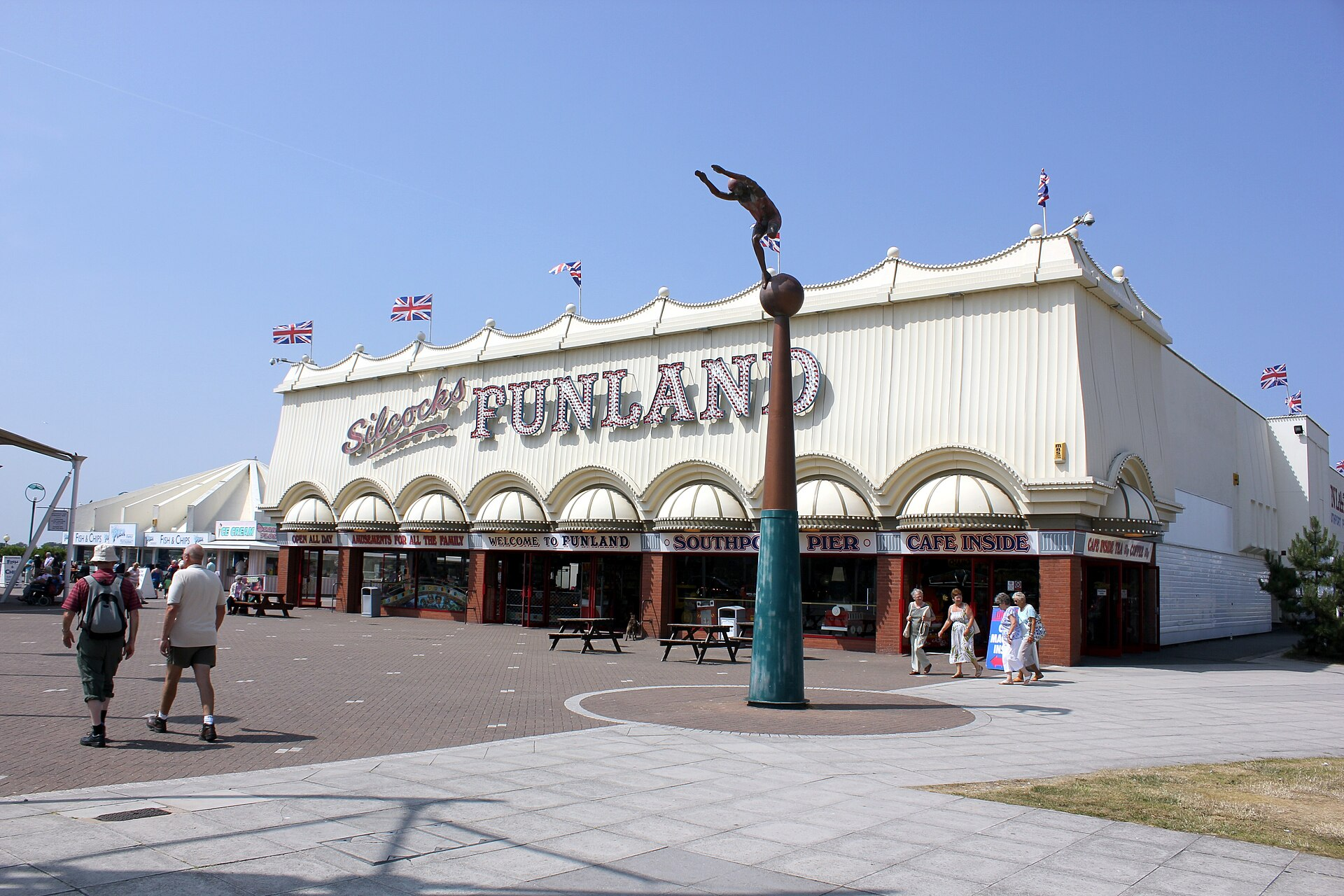
Serena Silcock-Prince, of Silcock’s Funland fame, put it more plainly: “Whatever the council comes up with, we think it’s a good idea … My opinion will always be a positive one – that’s our ethos as a business. We’re incredibly supportive of the council.”
Enjoying a powerful consensus of approval by business owners, Sefton council seems to have dodged much organised scrutiny. Perhaps after six years of watching projects fail to appear, the owners may be simply relieved that the construction of the MLEC has finally begun.
But, the case that might convince the Sefton taxpayer of the MLEC’s virtues is made in documents that are not released to the public.
The 280-page business case, which explains how the council landed at its visitor projections and justified the public spending, was marked NOT FOR PUBLICATION at a meeting in June. So too was the feasibility study back in 2020 and the business case of June 2021.
“We’ve been led to believe that things were going in the right direction, that prices were being contained,” John Pugh tells me. He was Southport’s Liberal Democrat MP until 2017, and now leads the party’s group on Sefton council.
“But prices haven’t been contained. The cost has escalated, and we are pretty unsure what has currently been agreed.” On the phone, John Pugh lets out a mirthless laugh of exasperation.
The council withholds many documents on the grounds of commercial confidentiality. By all accounts, this is an important safeguard. It ensures that the details of deals don’t reach the hands of opportunistic future contractors who tailor their bids to past prices. But, John Pugh thinks, it’s overused.
“Clearly, this was information that persuaded and was important in making the case to spend a huge amount of public money. I don’t understand how all 280 pages can be commercially sensitive information,” he says.
I ask the council spokesperson if the commercial confidentiality justification has been used heavy handedly. “It’s a fair comment. I couldn’t talk on that,” he said.
As I attempted to pull the real story of Southport’s seafront regeneration from opaque press statements and blocks of redactions, I took a tour through the record of other promises. In one project, I stumbled across something different. Sefton handed a developer exclusive rights over a stretch of publicly owned seafront. Nothing has been built. In July, the council gave the same developer a second site.
Something in that developer's past stopped me — and with this came a question about the council’s judgement.
While we’re not customarily in the business of doing two-parters, what I found was so striking that I felt it deserved its own feature, rather than being tucked into this one. If you care in any way about Southport – about its hospitality or tourism industries, or about its economic future – it’s one you won’t want to miss. That’s next week.
Comments
Latest
Southport has traded an Art Deco treasure for a glittering new events venue. But do the sums add up?
Can Formby’s red squirrels be saved?
Luxury student housing’s well and good — but I miss when Liverpool was bedsit land
Sefton aviary dispute continues to ruffle feathers
Southport has traded an Art Deco treasure for a glittering new events venue. But do the sums add up?
The many problems besieging the Marine Lake Events Centre