
Skip to content

Paul Conroy: the self-doubt driving Liverpool’s most acclaimed war photographer
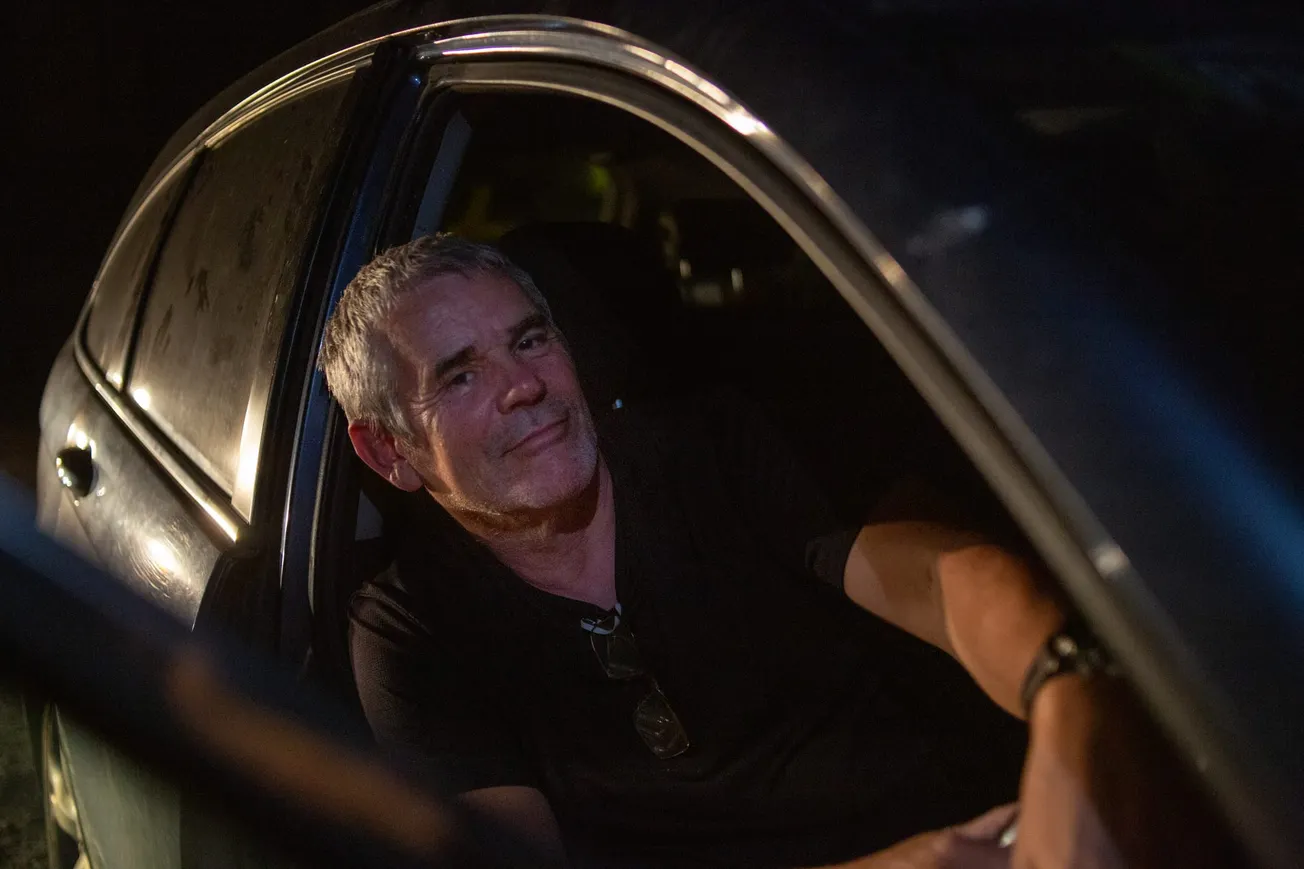
Paul Conroy, photo by Danny Rigg.

Over drinks in a besieged Ukrainian city, two Scousers swap battle scars
CTA Image

Hello, it's Abi here. Every three years or so, freelance journalist and jetsetter Danny Rigg drops me a story idea that I commission faster than the speed of light. Today is one of those stories — while travelling through warzones, he met esteemed Liverpool war photographer, Paul Conroy.

When news broke of his death last week, he was quick to reach out to The Post and offer a story about this encounter. It's an extremely moving and human tribute to a man who was something more interesting than just 'fearless', and something you won't find The Other Local Paper publishing any time soon. Tears were shed reading this one and we think you might join us in needing a tissue.

If you enjoy today's piece, and want more in-depth, thoughtful pieces about Merseyside and its people, then please consider becoming a paid subscriber below. It costs just £1 for the first three months, so why not support some independent journalism today?

Get The Post for £1

Smoke rises from the edge of Kramatorsk; a series of Russian shells have hit the city, which is 23km from the frontline. It’s August 2023, the height of summer, and two other journalists and I have driven here from Kyiv in an orange, first generation 1970s Lada. As we wind our way through darkness on the bumpy Donbas roads, violating the 9pm curfew, a window falls out and shatters. The previous day, our acceleration pedal had snapped in half, requiring two of us to push the Lada off the road while our driver hooked a wire out under the bonnet as a temporary replacement. But at least the car still started — just about. The Lada’s persistence against the odds seemed oddly suited to the situation we had placed ourselves in, travelling to a warzone from Paris, Beirut and Liverpool respectively. Why do journalists do this?

This was a question I was hoping to answer. While my companions — a photographer and filmmaker — were chasing pictures of destruction, I was in pursuit of a person: Paul Conroy, the Liverpudlian photographer. Paul had achieved international renown for his partnership with legendary war correspondent Marie Colvin, then tragic fame for being blown up in 2012, by now-deposed Syrian dictator Bashar Al-Assad. After the attack, which killed Colvin, he survived another 14 years until he died of a heart attack last week at the age of 61. 

Three months before I was being thrown about in the back of the Lada, I’d recognised Conroy’s Scouse accent before his face, while attending the premiere of a documentary in Kyiv. 
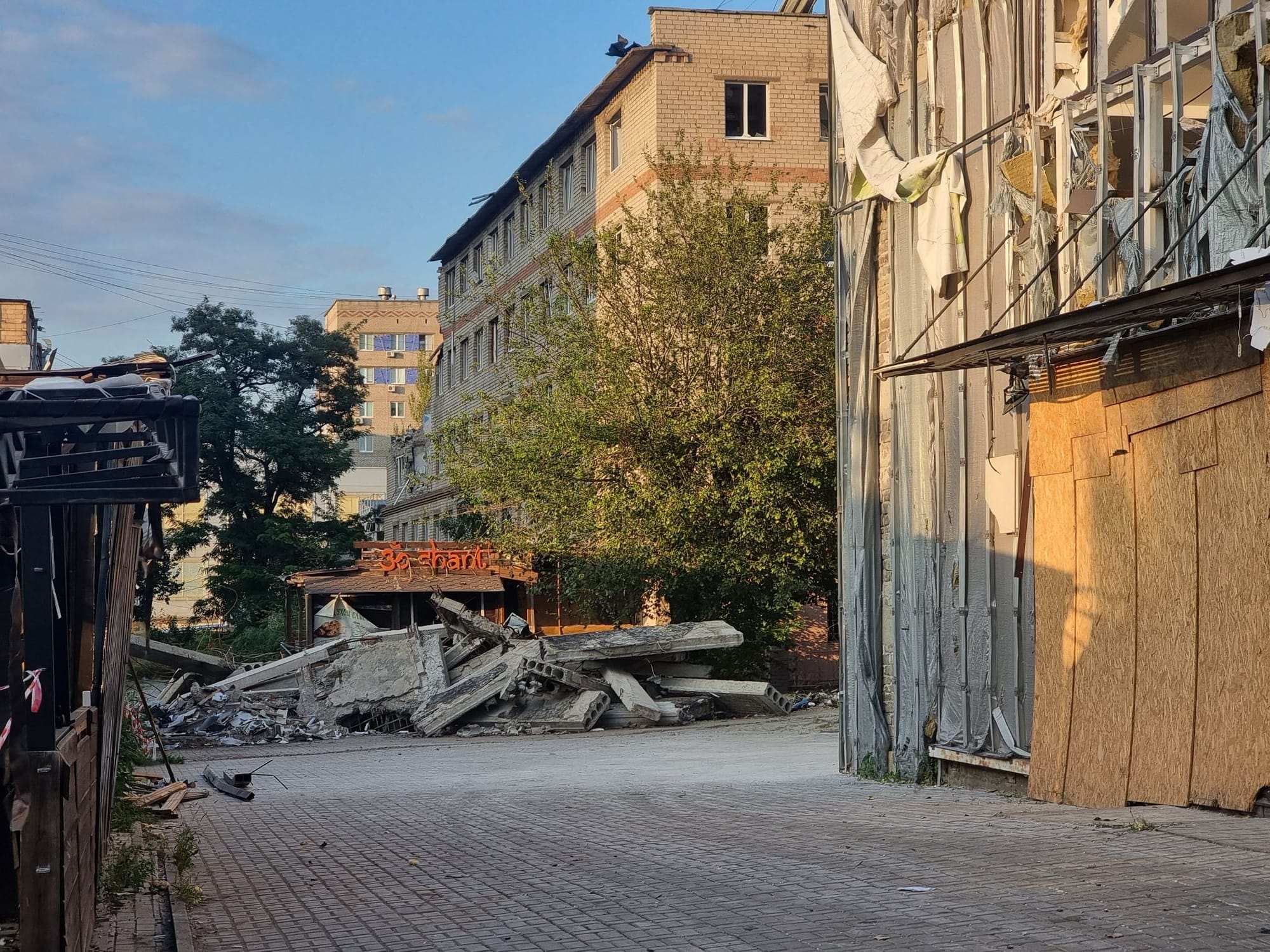
Damage in Kramatorsk around RIA Pizza. Photo: Danny Rigg

“I'm hanging out with Paul Conroy!!!” I texted my parents later at a pub. I idolised him. He'd taken on a dictator and come out alive. He was the type of journalist I wanted to be.

Somehow, between pints, I convinced him to do an interview. But when I called on the assigned day — after double checking the night before that the interview was still on — I encountered Paul’s propensity for spontaneous changes of plan: he was enroute to Kramatorsk, a “fortress city” 700km away. So I followed. 

Now, two days later, I’ve arrived to the thud of shells rattling the city. They feel close and my colleagues want to hunt down their landing spot, so we hop back in the Lada. I lean across the back seat watching smoke curl above grey, rectangular apartment blocks. The car races towards Kramatorsk’s airport, the likely target, but there’s no way we’re getting within 200 metres of it. We pass a police car; it clocks us, turns and follows us down a side road, calling us to a stop with its siren. Three officers file out and approach the window, gun holsters unlocked. They check our passports, pop the boot. We hold our breaths. They let us go. 

My phone buzzes with a text: "I've just seen you get pulled over." It’s Paul Conroy. 

The ‘world’s worst waiter’

“I can’t remember what I did last week,” Paul said, twirling a Marlboro cigarette between his fingers, a lighter clenched in the other hand. “I don’t seem to attach too much importance to remembering things”.

One of his sons has Asperger’s, he told me, “and he remembers everything. If the police are coming up, ‘Where were you on the 22nd of July 2018’, I would be like, ‘Mate, I don’t even know what continent I was on’. I would not have a clue. And the only way I would know is, I would phone my lad Max up and I would go, ‘Max, where was I six years ago?’, and he’d go, ‘Well Aston Villa were playing Norwich in the Cup and you were…’. He’s either a genius, or he’s lying, and I can’t prove it.” 

Soldiers sat at neighbouring tables. Old film posters adorned the mauve exterior of the cinema next door. It felt like a normal, outdoor restaurant, with tables around a fountain, apart from the kitchen that stopped serving by 7pm so we could be safely booted out before curfew. Paul appeared like every other Scouse da: pot-bellied, out for bevvies, except we drink americanos and passionfruit lemonades instead of alcohol. Due to the heavily armed population of soldiers in Donbas, booze was banned — unless you knew which window sells plastic bottles of bitty, watered-down beer in black bags, or which shop spirits vodka away under the counter. Paul smuggled a crate of booze through military checkpoints to butter up soldiers for access. 

If you think I’m mad driving into a warzone with a car long overdue a date with the scrapheap, you haven't met Paul. Raised in Anfield, Paul left Liverpool as soon as he could join the army at 17 but went AWOL so much that he was eventually court-martialled and locked up. 
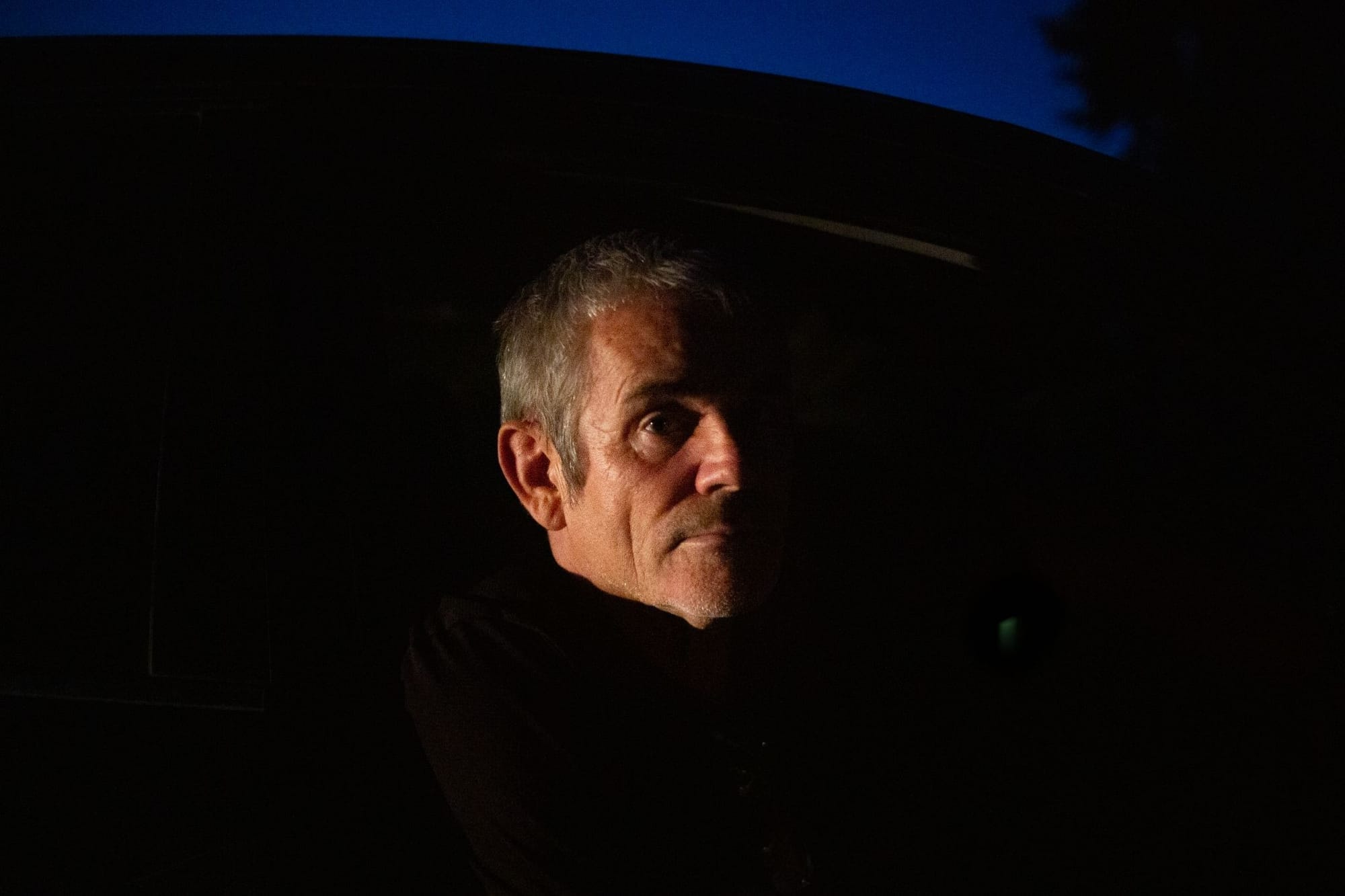
Paul Conroy, photo by Danny Rigg.

Becoming a war photographer was an accident — while working in a Liverpool music studio (he was a sound engineer on ‘There She Goes’, the 1988 global hit by The La’s), Paul's friend invited him to join an aid convoy destined for Kosovo via Albania in 1998. 

Equipped with a camera, he crossed the border with the Kosovo Liberation Army and spent several months there while Serbian forces carried out ethnic cleansing. Since then, he’d gone from warzone to warzone. 

In that Kramatorsk restaurant, he regaled me with so many anecdotes, it’s hard to know where to begin. There’s the time in 2003, when he grew so impatient (Paul described himself as the “worst waiter in the world”) to enter Iraq on the brink of invasion, that he paid his fixer a couple of hundred dollars for tyre tubes, rope and wood. 

Welcome to The Post, the quality newspaper for Merseyside and the Liverpool city region. Sign up today and get two completely free articles per week delivered directly to your inbox.

That means a Monday briefing with cultural tips, top stories and everything else you need to know, and a weekend read diving deep into a subject, whether that’s lost department stores of local yore or bungled political promises. No mess, no fuss, just good journalism: click below for more.

Sign up now

He used these materials to build, in his hotel room, an inflatable boat to take him and his camera equipment across the Tigris River. From there, he planned to cross the desert to meet the Kurdish Peshmerga in their northern Iraqi stronghold, before they marched south to Baghdad. No need to wait for permission from the Syrian security service like the rest of the press pack. 

"It was bulletproof," he assured me, legs crossed, his arm stretched across the back of a bench. Then, an amendment: "Well, it wasn't bulletproof, but it would have handled the Tigris no bother." 

The plan didn’t come to fruition, but it did catch the eye of Sunday Times reporter, Marie Colvin. Journalism is so often a race to be first or stand out from the pack and in Marie, Paul met his professional soulmate. But it was nearly a decade before they were actually on assignment together.

Paul recounted the time the pair found themselves under fire in a Libyan trench in 2011, plotting a harebrained scheme to sail across the Mediterranean, sneak into Tripoli and beat other foreign journalists to cover the capital’s fall to rebel forces. 

That scheme didn't come off either. The fall of Muammar Gaddafi’s regime was too swift. But Paul was there in time to photograph the dictator’s corpse stored in a meat freezer and, in his captured palace, posed for pictures with the rebel fighters who’d overthrown him. 
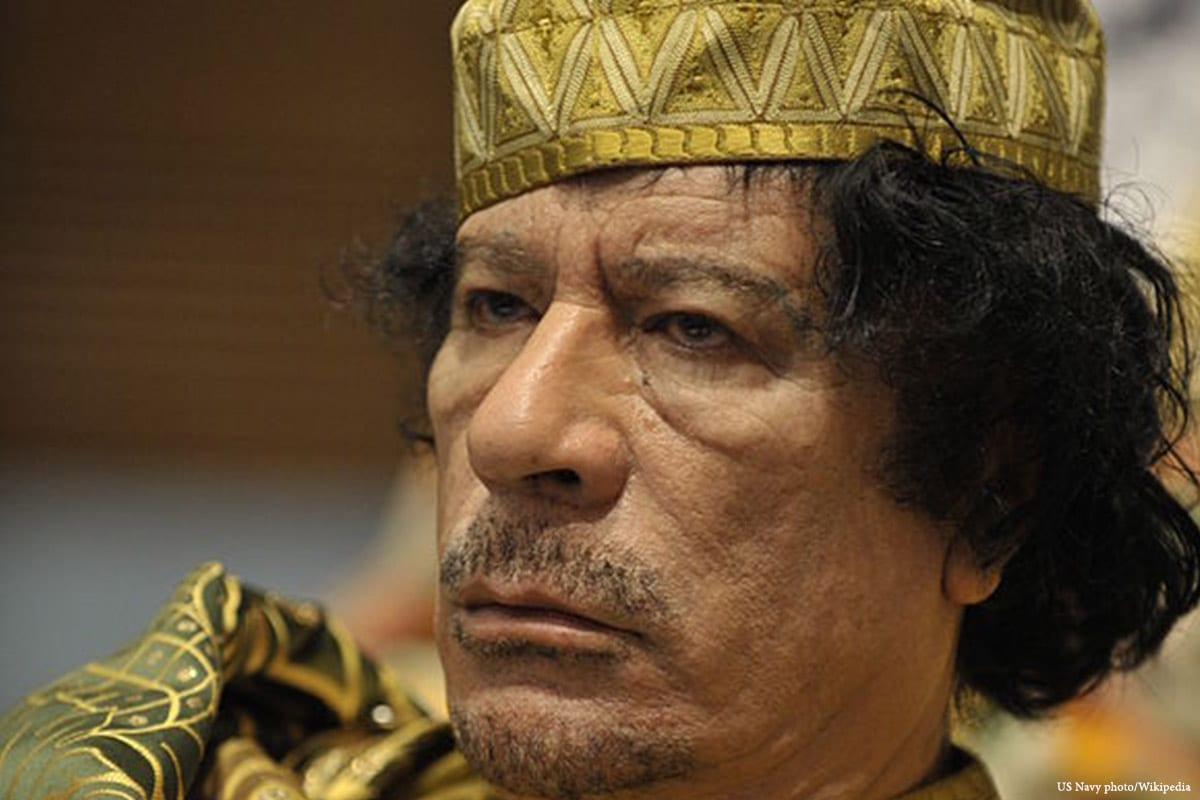
Muammar Gaddafi. Photo: Creative Commons

Months later, the Arab Spring in full swing, a brutal crackdown on peaceful protesters by Syrian president Al-Assad had sparked a civil war. The dictator’s forces were now locked into a siege of the rebel stronghold of Homs. Most foreign journalists hovered in hotel lobbies over the border in Lebanon. Returning reporters from the BBC and Sky News urged caution. Civilians were being murdered, and a press vest offered no protection. 

Paul and Marie went anyway, smuggled through a sewer on motorbikes into Baba Amr in February 2012. Some 28,000 people were trapped there, surrounded by a Syrian Army hitting houses with rockets, shells and tanks. A trench stopped any escape. 

They visited a wood factory cellar — the “widows’ basement” — where 300 people, mainly women and children, had hid for two weeks, and a healthcare centre where doctors and dentists treated the wounded with rapidly diminishing means. Food and medical supplies were running out. Leaving in search of resources was perilous; the streets were surveilled by snipers. 

After filing their pictures and words, Paul and Marie were about to leave, but they felt the job wasn't done. They decided to stay and use Marie's satellite phone to broadcast what they had seen to news networks in the West, from a temporary media office in Homs. On 21 February, Marie told the BBC how she had “watched a little baby die today” after being hit with shrapnel in the left side of his chest. Doctors couldn’t do anything. “His little tummy just kept heaving until he died”. 

Marie’s words to CNN were prophetic: “There's nowhere to run”.

In their media safehouse soon after 5am on February 22, the journalists were packing up their gear, when they heard artillery strikes getting nearer and nearer. Assad's forces knew where they were — they were walking them in. Should they stay? Should they flee? Having been an artillery gunner, Paul knew walls were better protection from shrapnel than nothing in a direct hit, so he stayed inside. Marie made a break for it and died in the doorway. French photographer Remy Olchik also died. Le Figaro reporter Edith Bouvier was injured, and Paul was left with holes in his leg and torso. 

Marie Colvin’s sister, Cat Colvin, with Paul. Photo: the Marie Colvin Memorial Foundation

Paul was alive but stranded in a surrounded city, with a final push by regime forces imminent. Rather than risk falling into the hands of a dictator who wanted him dead, the barely conscious photographer was snuck back to the sewer, then strapped to a motorbike and smuggled out of Homs, out of Libya, and back to Beirut. 

The Syrian Army destroyed the tunnel soon after. A US court later declared Marie's death a targeted assassination. 

A man on the move

“That assignment never ended for me,” Paul said, his usually fidgety hands suddenly still, his smile gone.

“When I woke up in hospital, finally, it was like ‘it's not over’. It's still happening in Syria. Marie is dead, Remy is dead. All them people died, so for me that story never ended.” 

After six months in hospital, and a year and a half in rehab, Paul spent the best part of a decade sharing his and Marie's story. He wrote a book about their work together, which was made into a documentary, and advised on the film A Private War, which dramatised Colvin’s life — he was played by actor Jamie Dornan in the movie. 

Paul wasn’t sure what was next. But one thing was certain: no more war. He returned to his home in Devon and tried to find something else to do. 

He said: “I was under a massive amount of pressure,” Everyone was like, ‘No, enough’. Ex-wife, children, friends, everyone. There was definitely no more war.”

But come 2023, Paul was in Ukraine. His Kramatorsk flat had a view of nearby Bakhmut. The city is dubbed a “meat grinder”, due to Russia’s strategy of flooding it with wave after wave of troops as cannon fodder until Ukrainian defenders were overwhelmed. Roughly 20,000 Russian soldiers died by August 2023. Nearly 30,000 Ukrainian soldiers were missing or dead by the time Paul and I came to be in the Kramatorsk restaurant. It is unmistakably a warzone, the kind Paul is not meant to be anywhere near.

Paul Conroy, photo by Danny Rigg.

“I kind of sneaked back in”, Paul smirked. When the Frontline Club, a media members club in London, donated body armour and helmets to Ukrainian journalists in 2022, Paul offered to deliver them — and his expertise. “Why not send me?” he told the club. 'I’ll go and teach people how not to go and do what I did.” 

Between training Ukrainian journalists on surviving the frontlines, he used Kramatorsk as a base to get up to his old tricks, photographing Bakhmut, nearby villages, and civilians threatened by approaching Russian forces. One photo series published by Byline Times in March 2023 showed elderly pensioners carrying supplies on bikes along sandbag-lined streets back to homes with little water or electricity. 

The epithet ‘fearless’ gets attached to people like Paul a lot. But he was scared constantly, he told me. “Everyone makes me nervous,” he admitted, matter-of-fact. 

“If you can tell me it's okay to get out of a car in the mountains at 3am in the morning in Hezbollah-controlled Lebanon and get into another car with some people who don't want to show you their faces, who are armed to the teeth — if you're not at some point going, ‘this is a bit dodgy’, then I think, quite frankly, you're a bit mad. You should be scared. Bravery is being scared but doing it anyway. But you absolutely should be scared.” 

So why go back to a war at all? 

“I still find it exciting to do”, Paul confessed, slouched in the corner of the booth. Training journalists is rewarding, he said, but his heart was still — he paused — “in another place”. That place was with ordinary people.

Sign up to The Post today and get two completely free articles per week delivered directly to your inbox. No mess, no fuss, just good journalism: click below for more.

Sign up now

“There’s a bit of pressure on everyone to tell the counter-offensive story,” he said. “I understand why editors want that”. But he preferred to focus on “what me and Marie used to do, which is telling the story of war through the eyes of those who suffer most: families, women, kids who are stuck in places. 

“That’s why Siversk and places like that interest me, because it’s the real brutal end of the stick. Yet there are still people like your granny or my auntie stuck living underground in horrendous conditions. You can tell their story.” 

The Ukraine conflict. Photo from AMNA/EPA

When I suggested to Paul he was something of a celebrity for journalists, he laughed. Attention was something to be endured, not enjoyed. “I’d be at an event and someone comes up to me like, ‘Paul, how’s your leg?’, and I’m like… Do you know me really well? Are you a close friend? Or do you just know all about me because I’ve got a holey leg? I never know.” 

CTA Image

I hope you're enjoying today's piece. Remember: It's just £1 a week for all our weekly editions for the first three months. Get investigations, news briefings, culture rundowns and deep dives into Liverpool’s history straight to your inbox, plus access to exclusive events. To keep The Post reader-funded and ad-free, click below to support us and sign up now.

Get The Post for £1

Insecurity lingered. Even in Ukraine, he still carried the same “imposter syndrome”, felt more than 25 years ago when Channel Four published his first work from Kosovo. It’s why his belongings remained packed in a car, a man always on the move. 

“I always think, will I do it better next time”, Paul mused. “Am I a fraud? I might be. Am I enjoying this too much compared to the quality of the work? Yeah. I’m self-critical, but I do actually think I can do it better next time. I can always try a bit harder. What did I miss out? How did I miss out? Did it change enough? Did it reflect enough? More often than not, the answer is no.” 

I was caught off-guard by Paul's self-reflection. Far more pensive than the confident laughing man I first met, he usually denied getting a buzz from his job. The honesty and self-doubt made him seem more human than bravado ever could.

Homs was one assignment he felt he lived up to his own standards. Both he and Marie risked their lives to broadcast from the besieged city, knowing the Syrian regime could trace their location. They decided it was worth it, to shed light on the crimes being committed. Marie died for the decision. Paul nearly did. Assad survived in power for nearly 13 years longer, at a cost of more than half a million lives. 

“But the reporting I did has now been news,” Paul reflected. “All that evidence still goes to war crimes tribunals and still goes to The Hague. At the end of the day, we got about as much out of it as we possibly could. Ten years, the films, the books, and continually pushing it… I think, I hope, I really actually for once in my life gave my best.” 

A Liverpool story

Paul’s curiosity and resilience was hugely shaped by his parents. A globetrotting mum, who was an architect's assistant fond of popping off with a rucksack. And an Everton-supporting dad, a musician and painter, who'd drag the kids up to Scotland to swim in lochs “rain, hail or snow”.

They raised him in a Victorian terraced house on Lothair Road, a now-demolished street right behind the main stand of Anfield Stadium.

“We all knew each other in Anfield”, Paul smiled. “When we were kids, it was completely safe. We'd disappear for days in Stanley Park. Then it started to go downhill because half the buildings were boarded up. That's when my mum and dad moved out to Dovecot. It was like moving from Beirut to Chechnya.”

Paul’s outlook, he told me, was “a complete carbon copy” of his parents. When we met, he was still grieving their loss. His mother Joan died in a care home during the first wave of Covid-19 in April 2020. The family spread her ashes in Stanley Park. A month before I sat down with Paul, his dad, Les, had died too. Paul was not long back from the funeral. 

He spoke to Les, “every day,” Paul remembered, “because I know he worried about me being out in Ukraine”. Daily, he’d still go to call his dad, he continued, and “these really big hits” of grief would catch him. 

The absence of his parents prompted a “big emptiness”. 

“It’s kind of dawned on me that a lot of the reason I like doing this is I used to like my mum and my dad going, ‘Oh Paul does this’,” he said, frankly. “Sometimes it’s a bit like, God, how much of this did I actually do to please them? Not just to please them, but I was proud of the fact that they were proud. And now that isn’t there”. 

His parents endlessly backed him. “Even after I was blown up, in hospital, my mum and dad sat next to me on the bed — my younger brother had just died three months earlier — and they sat next to me and said, ‘You’re going to be under a lot of pressure not to do this anymore, but we’ll always support you’.” 

For the last few years of Paul’s life, Kramatorsk was his “home from home”, with youngest son Otto later joining him in Ukraine. His main British residence was Devon, where he ended up passing away. 

The writer with Paul Conroy in 2023. Photo: Danny Rigg

But when I spoke to him, he still saw Liverpool as an anchor, despite the increasing rarity of his visits “it doesn’t matter how long you’re away”. Every visit would take him back to Ye Olde Cracke; after leaving the army, Paul worked there for six months in the 1980s, living by Sefton Park. He admitted his job didn’t leave much time for family; when I interviewed him, he was yet to meet his two-week-old grandson. But he was looking forward to “influenc[ing them] heavily. Mad Grandad Paul, that's what I want to be.”

We finished our interview discussing the extortionate price for a cup of tea in England, swapping notes on where we'd lived around Liverpool, and our fondness for the “thriving oasis” that is Lark Lane. Paul's dad had a studio at the old police station there.

The sun was setting by the time we were done, so I snapped some pictures of Paul, illuminated by the Lada's lights, before he drove off in the dark to meet a source.

I returned to Liverpool two weeks later, just in time for firework season, and found myself jumping, my heart racing, every time I heard a bang. I felt detached. I hadn't achieved all I'd set out to in Ukraine. Maybe I wasn't brave enough. Maybe I wasn't good enough. Maybe I wasn't cut out to be like Paul. And every time I listened back to our interview, I dwelled on each opportunity I'd missed to dig deeper, each time I'd stuttered, or hesitated or held back. Was I the best I could be? Could I do better next time? What story was I even trying to tell? Would he approve? I felt like a fraud. 

So I stopped writing up my interview with Paul Conroy, or sending it to editors, periodically reading what I had written but never finishing it.

‘Don’t have regrets’

I was in a Melbourne bakery last week, picking up a loaf of soda bread and a morning coffee when I checked WhatsApp and saw a message informing me Paul was dead. “Fuck” I whispered, gripping the counter. A warzone hadn’t done it for him in the end; it was a heart attack. I sat in my friend's flat zoning in and out of conversations about our book club's latest reading, unsure how to convey what I was feeling. I didn't really know Paul. Just as he placed little importance on remembering, I'm not one for keeping in touch. I'll see you when I see you, is my motto — but I always hoped — and maybe assumed — I'd see him again.

The recording of our Kramatorsk chat was still on my phone. At home, I listened back to it. What struck me was not so much Paul’s humour, heroism or charm, but his self-doubt and how much he achieved despite it.

Paul’s bright voice, with a hint of gravel, played tinnily out of my phone speakers, remembering advice his mother had given him. “Don't have regrets. Don't get to the end of your life and go, ‘I wish’.”

I wished I'd finished my small part in documenting Paul's story, so I did. You’re reading it now. 

In Kramatorsk, pondering the reasons why his 60-something years had been spent in constant restlessness, Paul wrote his own eulogy. “How would I like to be remembered?” he laughed. “‘He lived life like a fruit fly’.

CTA Image

Thanks for reading today's moving tribute to Paul Conroy. Remember: It's just £1 a week for all our weekly editions for the first three months. Get investigations, news briefings, culture rundowns and interviews just like this straight to your inbox, plus access to exclusive events. To keep The Post reader-funded and ad-free, click below to support us and sign up now.

Get The Post for £1

Click here to share this article


Comments

Latest