

‘Your heart beat in my ribs, and mine in yours’ — Melville, Hawthorne and Merseyside
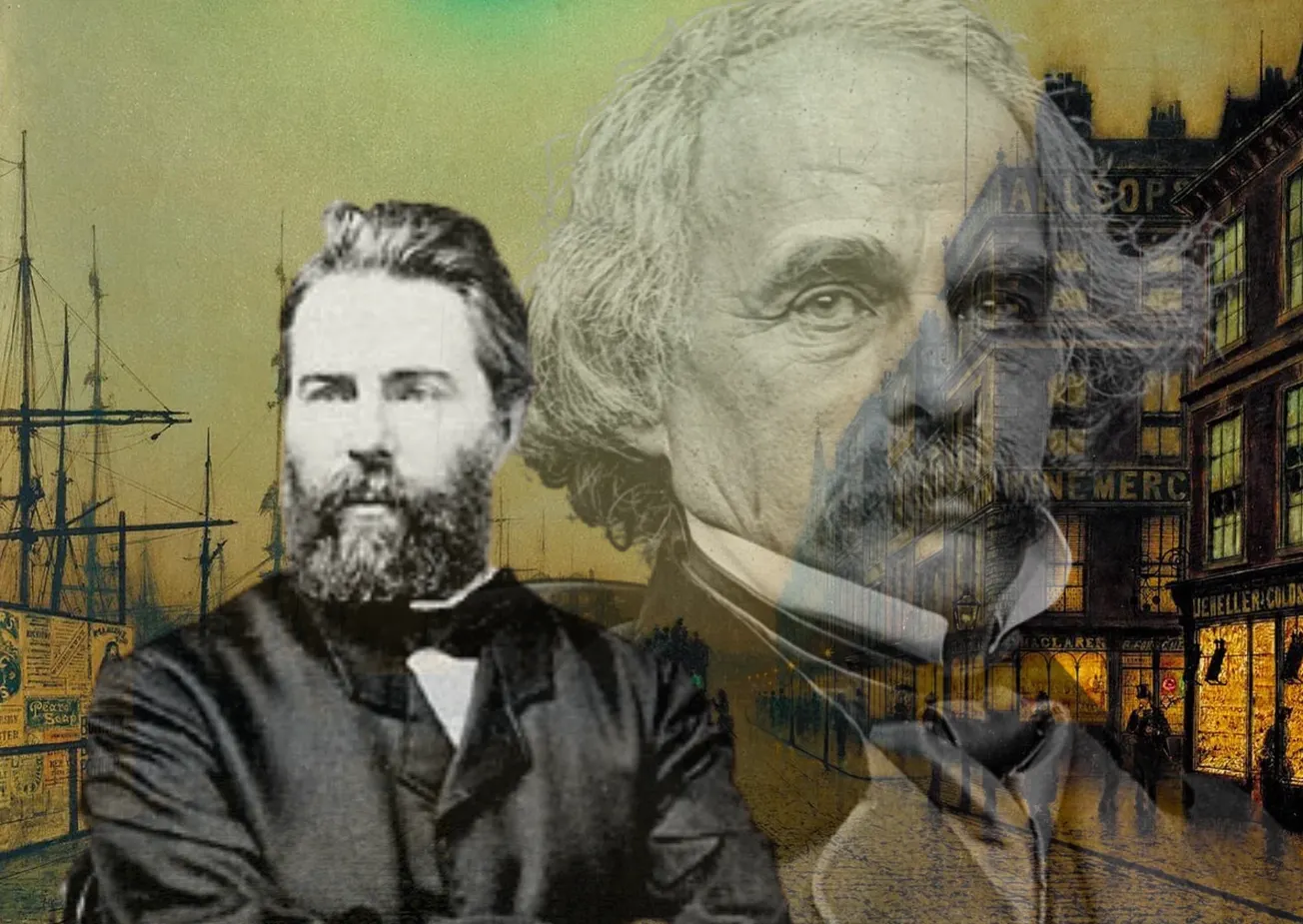
What can two American novelists tell us about Liverpool’s 19th-century prime?
“I did not expect that every house in Liverpool must be a Leaning Tower of Pisa, or a Strasbourg Cathedral; but yet, these edifices I must confess, were a sad and bitter disappointment to me.”
So muses Wellingborough Redburn, a teenage sailor aboard the Highlander after a transatlantic voyage from New York City in 1849. Over the next fifteen chapters, Redburn gives us perhaps the most detailed prose rendering of Liverpool in its 19th-century heyday. Post readers may feel similarly gutted to find the merchantman talking down our home. Was this not the second city of the Empire, a cosmopolitan hub so often compared to New York?
Except, Redburn was not a real person. He is the eponymous hero of an early fiction by Herman Melville, the great American novelist. We cannot know the latter’s legendary mind: he left no diaries detailing his visit, and if he wrote letters home to his mother or brothers, none have survived. Melville also did not arrive in Liverpool in 1849, but exactly ten years earlier. Redburn is a historical document, nor a classic in the vein of Moby-Dick or even Billy Budd, but an entertainment dashed off, as the author admitted, for tobacco money. So what can it really tell us about the city?
Hello! Although we believe in putting out as much accessible content as we can, today's story is paywalled partway down. This is because The Post operates on a reader-membership model: our ability to pay our writers without resorting to annoying ads or clickbait is partly dependent on how many of you sign up. So that your reading pleasure is not interrupted today, please consider becoming a full member now and helping us bring every flavour of journalism to the Liverpool city region.
Actually, quite a lot. Especially if we read it alongside news clippings from The Post’s predecessors.
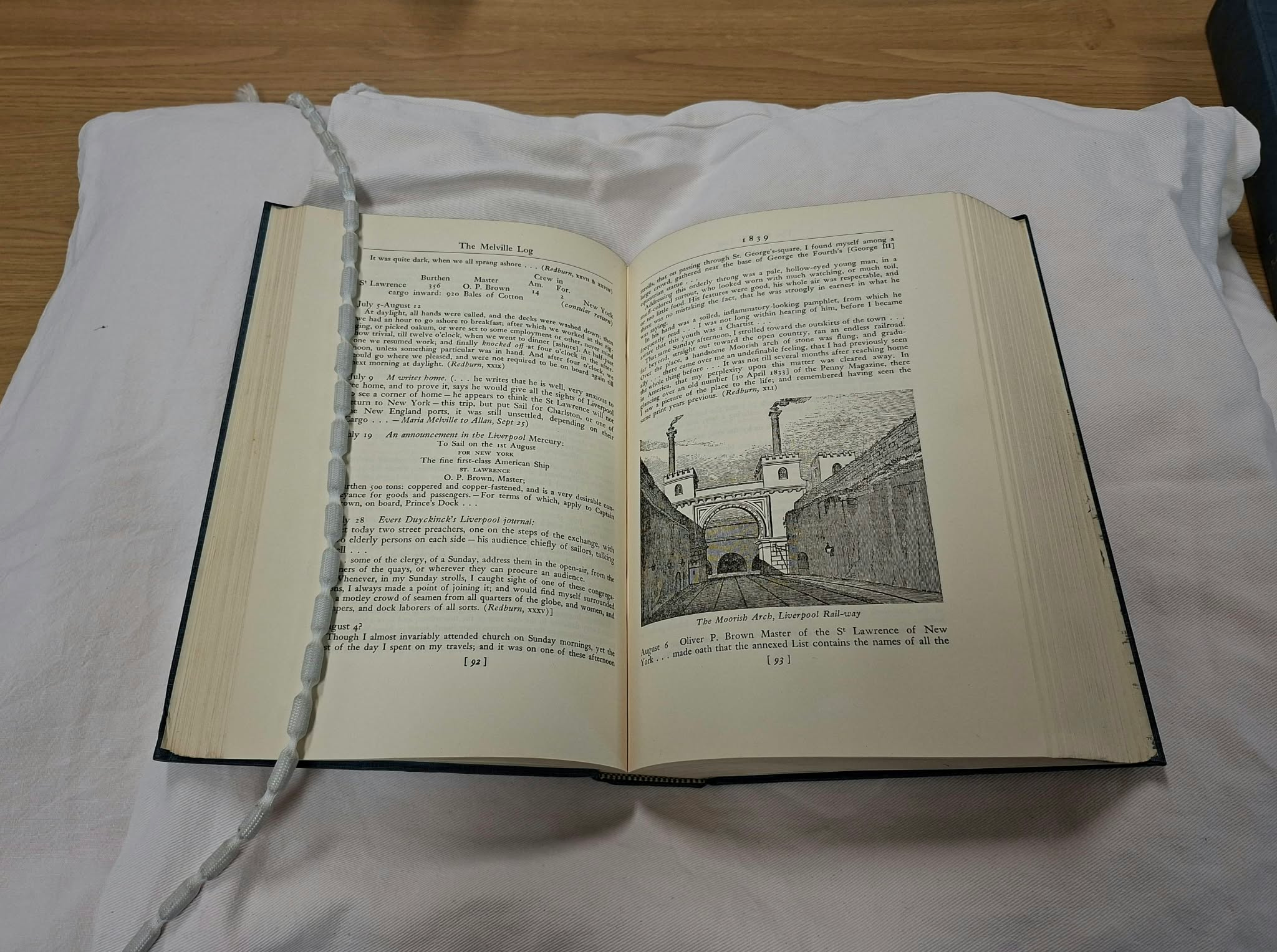
When a teenage Herman Melville stepped off the merchant ship St. Lawrence at Princes Dock in 1839 — fittingly, for the man who would write America’s greatest novel, on the 4th July — he did so into a burgeoning imperial port. The 1830s had seen a string of docks built in Liverpool, from Canning to Brunswick, that would shame even Peel Waters’ current ambitions. The year before Melville’s visit, the White Star Line’s financier moved to Liverpool; a year after, Cunard would be established there. Such was the scale of construction that Redburn, trying to use his father’s decades-old guidebook to Liverpool, quickly becomes lost.
But for all the city’s opulence, it had not yet delivered a St George’s Hall, either cathedral, a single Grace, nor the Hill Dickinson Stadium to wow the young wayfarer. Mercantile progress had been accompanied by crime, social degradation and squalor. Melville’s biographer, Herschel Parker, conjures the seedier aspects of the city for us from the local paper-of-record at the time: the Liverpool Mercury. The very day Melville arrived, one of his countrymen — perhaps in a surge of patriotic fury — stabbed two men in a pub on Denison Street. The next day, a £5 fine would be issued to “a biped animal”, a “monster” for whom “language has not a name”, who had been accused of “prowling about the town” corrupting young men; if this person did not leave town, the Mercury recommended torture by treadmill. On Melville’s first Friday night in Liverpool, a man “with more money than brains, and more liquor than either” was led by a woman from Castle Street and then robbed by her and an accomplice.
Liverpool deserves great journalism. You can help make it happen.
You're halfway there, the rest of the story is behind this paywall. Join the Post for full access to local news that matters, just £7/month.
SubscribeAlready have an account? Sign In
Latest
‘Your heart beat in my ribs, and mine in yours’ — Melville, Hawthorne and Merseyside
Can £20m build the Hollywood of the North?
Probe launched into apparent police brutality in Speke
How did a dream retirement at one of Liverpool’s grandest addresses become a nightmare?
‘Your heart beat in my ribs, and mine in yours’ — Melville, Hawthorne and Merseyside
What can two American novelists tell us about Liverpool’s 19th-century prime?