

The one rule making Liverpool uglier

Councils are urged to buy cheap, even when they could afford better. Is it costing us more in the long run?
Dear readers — is it just us, or do things in Liverpool look a little… ugly?
Yes, there’s the brilliant cluster of neoclassical buildings when you step out of Lime Street Station, the famous Three Graces and the city’s Neogothic, Georgian and Art Deco heritage. We’ve got museums and art galleries aplenty… or we will, whenever they finally reopen.
But we also have countless architectural pustules — though, according to the developers behind the new King Edward’s Tower, not enough. Where are the green spaces in or near the city centre? Where are the cobbled streets and bespoke light fittings? Any eye-catching public benches or bins? And do the pavements have to be dappled with incongruent repairs and chewing gum?
We decided to get to the bottom of this aesthetic crisis, find out why things aren’t built to last anymore, and work out if anything can be done. We’ve spoken to experts, councillors and looked at the numbers. As it turns out, one rule in particular could shoulder much of the blame. But we’ll get to that, after today’s briefing.

Hello! Laurence here. I hope you find today’s edition informative and let us know your thoughts in our comments section. To keep abreast of all the latest news in Liverpool and Merseyside, why not sign up for our free newsletter? No credit card details required — just click below, enter your email address and you’ll get two completely free editions in your inbox per week. You’ll also be helping support what we do just by signing up and spreading the word.
Your Post briefing
Chester council has confirmed it investigated reports of toxic waste in Helsby after some of the highest levels of "forever chemicals” in the UK were found in its soil. A BBC investigation in 2024 found more than 12,000 times over the recommended level of Polychlorinated Biphenyls in land adjoining a former factory. Since then, campaigners have been pressuring the council to act. Now, Chester council has confirmed it launched a thorough investigation into the toxic waste, but will not publish its findings due to commercial sensitivity. Campaigners are now lobbying for the release of the report, with local activist Paul Cawthorne telling the BBC its findings are “of national and potentially international significance”.
And another open letter has been written to Prime Minister Keir Starmer, pushing for the introduction of a Hillsborough Law after fears it has now been “stalled”. The Hillsborough Law, officially known as the Public Office Accountability Bill, was withdrawn earlier this year after an argument over how far the security services would be forced to comply with its duty of candour. In the open letter published on Monday, The Hillsborough Law Now campaign group called the delay an "insult to all of us who have been working to get to this point". In response, the government said needed to properly consider how to implement the law without "compromising national security".
In today’s Answers in The Post, we embark on a journey to answer some rather blunt questions: is Liverpool uglier now? And if so, what can we do about it?
Has our city changed?
The short answer here is yes, of course it has. But the complaint we often hear is that — aesthetically — it’s going backwards. Say what you like about the patricians of Liverpool’s past, with their ruthless imperialism and industrial greed, they did possess a certain noblesse oblige when it came to the city’s visual style. When they couldn’t commission something beautiful, they ordered something interesting; when they couldn’t manage interesting, they defaulted to time-tested ideals of harmony and proportion.
It’s worth pointing out that no city simply is beautiful. For all its gothic arches and exquisite tracery, Venice was once overrun by plague victims. Even after its Haussmanisation, Paris was subject to cholera epidemics, and huge swathes of its districts still look like industrial estates. Likewise, even during its “Second City” peak, Liverpool was choked by sickening pollution and abject poverty.
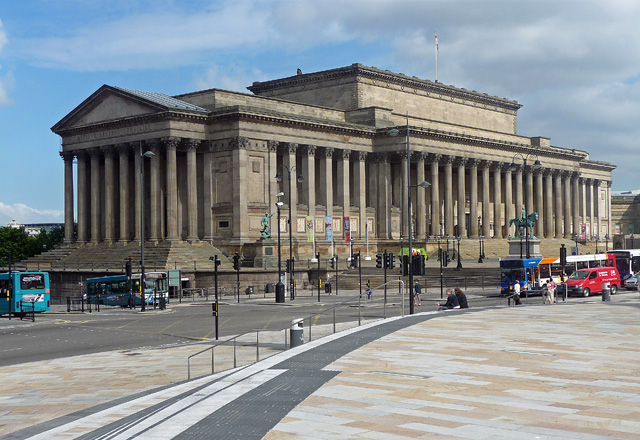
But compare the Renaissance palace-simplicity of the Cunard, or the Corinthian pillars of St George’s Hall to the growing dystopia of ACM cladding, shipping container shapes and featureless glass in great supply, and suddenly King Edward’s Tower doesn’t look like the exception but the rule. And we don’t appreciate the digs that design firm Broadway Malyan’s Lime Street carbuncles have attracted either.
It’s not just the buildings. Our fountains are metal grids that don’t even work and we traded the angular triumphs of Arthur Dooley — whose Resurrection of Christ recently drew appreciative crowds to the Princes Park Methodist Church in Toxteth — for Ugo Rondinone’s crap “Liverpool Mountain”.
But it’s no good just complaining for the sake of things. We wanted to know what drives these changes, practically-speaking.
This story is free to read - you just need to join our mailing list. And why wouldn't you? By becoming a Post subscriber, you'll get our scoops, features, and insights, in your inbox, the second we hit publish. No card details required.
Already have an account? Sign In
Latest
The one rule making Liverpool uglier
Liverpool vs UKIP: Round 2
The Killing Fields of Wirral
The missing gravestones of Merseyside
The one rule making Liverpool uglier
Councils are urged to buy cheap, even when they could afford better. Is it costing us more in the long run?