

The lost department stores of Liverpool
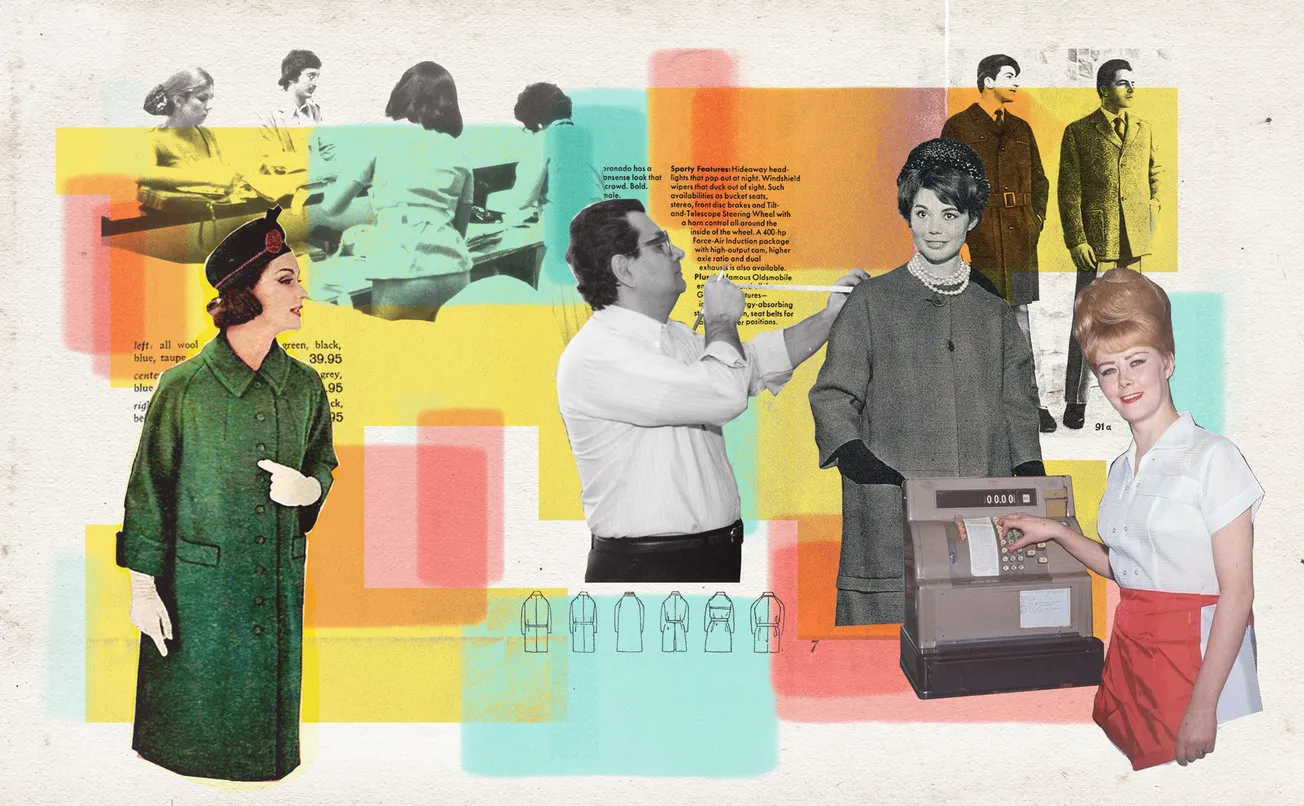
'We gave them our lives'
It’s one of those infuriating Liverpool ironies — the more residential developments that crop up in the city centre, the more dislocated and displaced we feel. The willowy copses of student flats — those cheaply-cladded shoeboxes in the sky — the transient humanity of Airbnbers rolling into town, getting pissed up, and rolling out again. The offshore investment funds offering 7% yields on speculative, skeletal developments. None of these, to me, shout community and cohesion. Not like Gerard Gardens, Eldon Grove or Scottie Road did. We can all recite the sorry rollcall of blighted and bulldozed neighbourhoods.
But we’ve lost other communities too. Places wiped from the map with just as much disregard for the embedded histories they’ll scatter to the winds when they’re swept away. Entire self-regulating biospheres where people worked, fell in love and formed light operatic societies. Places where people flirted at the tradesman’s entrance and witnessed love growing in the hardware department.
Liverpool’s long lost department stores were magical realms of commerce and community — places where generations of Liverpool families congregated, would-be Beatles scurried beneath the floorboards, and lifelong bonds were forged.
The fall of these empires isn’t just a story about the rise of online shopping, identikit chain stores and zero hours Saturday staff; it’s the story of how we lost a specific kind of urban family — one in which Liverpool led the way.

Welcome to The Post. I'm Abi. I hope you’re enjoying our weekend read about Liverpool’s lost department stores by the indomitable David Lloyd. This is what we do at The Post, and it's the type of reporting you can get by signing up. Our free mailing list gets you two totally free editions of The Post every week.
No ads, no gimmicks: just click the button below and get our unique brand of local journalism straight to your inbox.
No city took to department stores with as much fervor and inventiveness as Liverpool. We lapped up their sense of theatre, their promise of escape and their guarantee of gossip (my mum spotted our insurance salesman furtively trying on ginger toupees in the wig booth in Owen Owen. “I knew it,” she said, triumphantly, while treating herself to a celebratory spritz of Opium).
In turn, the stores’ owners worked overtime to bring us more. More world firsts, more retail ingenuity, more reasons to linger a little longer. You’d expect nothing less from the kings of retail. But what’s less celebrated is how these stores fostered a real sense of belonging for their staff too. It’s quite possible Sports Direct does the same, but I’m not about to lay any serious money on it, are you?
Founded by David Lewis in 1856, Lewis’s was the undisputed king of Liverpool retail. It wasn't just a store; it was an entire world within a building. The concept of spending the day in Lewis’s isn’t just another piece of lazy Liverpool lore. It’s what I did, frequently, as a kid. My mum would tempt me with breakfast in the fifth floor cafe, with its jauntily-tiled mural of supersized teapots and salt and pepper shakers, before heading to the salon alongside for a shampoo and set while my nan took us downstairs to see Aunty Dot, magnificently marooned on the island of biscuits in the food hall.
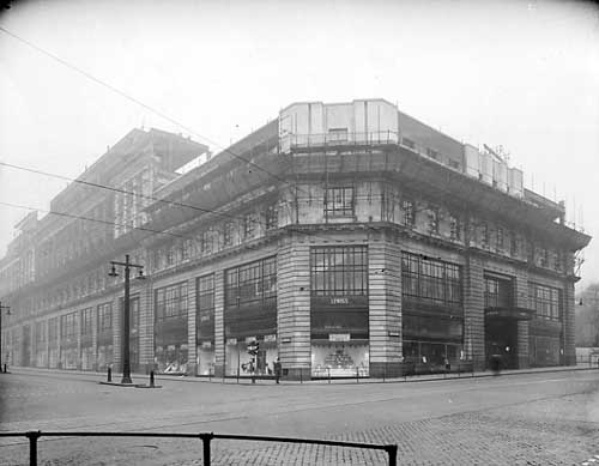
Dot wasn’t a real aunt. She was a Liverpool ‘aunt’. She was also a close hand magician with a deft way of palming handfuls of chocolate-covered Nice biscuits. She’d pass them to me when the floor runners had their backs turned, with a conspiratorial wink.
Love bloomed, for Dot, in Lewis’s. It’s where she met Alf, from carpets and flooring. He was her prince charming. Literally. They both fell in love when they starred in the staff panto that I was dragged to, sulking because I was denied the pleasure of Little and Large at the Empire. Alf couldn’t compete with biscuits, but he did let us sit on the giant curtain rolls while he unfurled them so we could slide down. Hey, it was the 70s, we made our own fun.
That their relationship blossomed at all is a tale of love winning against the odds — rumour has it (or, at least, Dot whispered it to me) there was a secret room where the store’s private police force monitored for internal theft or inappropriate socialising between staff. Those multi-eyed black blobs that clung to the ceilings like alien slugs terrified me from then on.
It wasn’t just pantos. Dot was in the Lewis’s choir, performing at St. George’s Hall. She never, to my knowledge, took part in the annual Miss Lewis beauty pageant. She might have said that was due to all the surreptitious biscuits she’d snaffle throughout her shifts. But, really, it was because she was way too cool for any of that nonsense.
Lewis’s wrapped itself around Dot’s life like a heated blanket. When ill health forced her early retirement she never quite had the same sparkle in her eyes. She’d still visit the store every week until it closed in 2007, grumbling at the forlorn state of her once-beloved food hall: its archipelago of islands set adrift on the marble-tiled ground floor, populated by white-gloved ladies with pillar box-red lips.
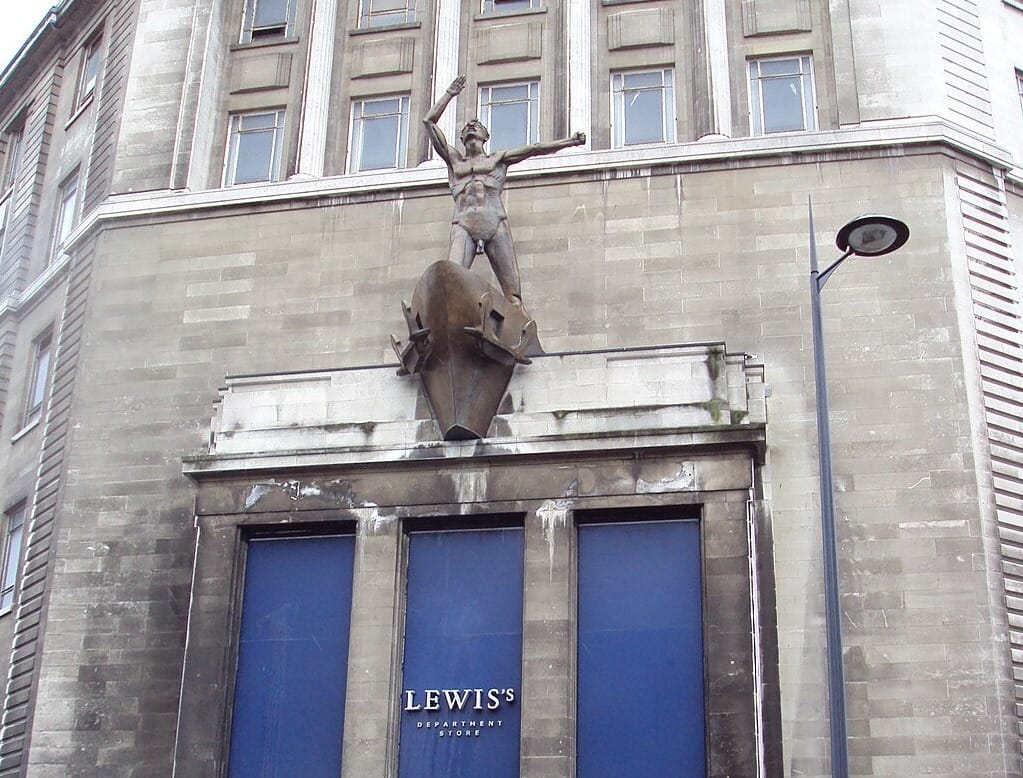
Where, once, Dot’s friend Sheila held court with her huge carving knife, slicing thick haunches of ham with an intensity bordering on maniacal, aisles of pre-packed sliced meats skulked in the semi-darkness. The writing was on the wall, Dot had predicted. She was right.
“They don’t make buildings like Lewis’s any more,” says architect Richard Peel. “It’s like the Titanic of the high street. The scale is immense, and the build quality is incredible,” he says. “It was built to last.”
Maybe. But Lewis’s wasn’t. None of them were. When Richard oversaw clearing the store out — to make way for the ill-fated Central Village development — there were skips full of polar bears and Christmas trees around the back of the store for years: the shameful final tableau of the world’s first-ever Christmas grotto. And then, for no good reason, they carved the building clean in two. This is how we honour our dead around here. At the very least they could have got Sheila to do it.
Lewis’s was saved, temporarily, when it was bought by Owen Owen in 1992, but only managed to limp on for another 15 years. The move across town was to be the final flourish for Owen Owen’s Clayton Square site too.
Walking into Owen Owen’s was like walking into one an intergalactic space ship, where entire generations lived out their lives in a hermetically sealed stasis: nothing much changed here, or if it did, it was at the pace that lichen advances over megaliths (although they did celebrate the advent of the computer age in this brilliant 1980s video.) You were entering a timeless social world where the staff knew each other’s families, knew their customers’ children’s names, played on the same football teams, and sang in the same choirs. Some even lived in hostels provided by the shops; Welsh families shipped into the city and housed by the store’s benevolent founder at the turn of the 20th century.
For Alan Turner, Owen Owens was the only job he ever had.
“I joined the menswear department as a boy in 1963, and sadly oversaw the operation to shut the shop up for good thirty years later,” he says, adding that he then moved across town to manage their Lewis’s acquisition until that too closed.
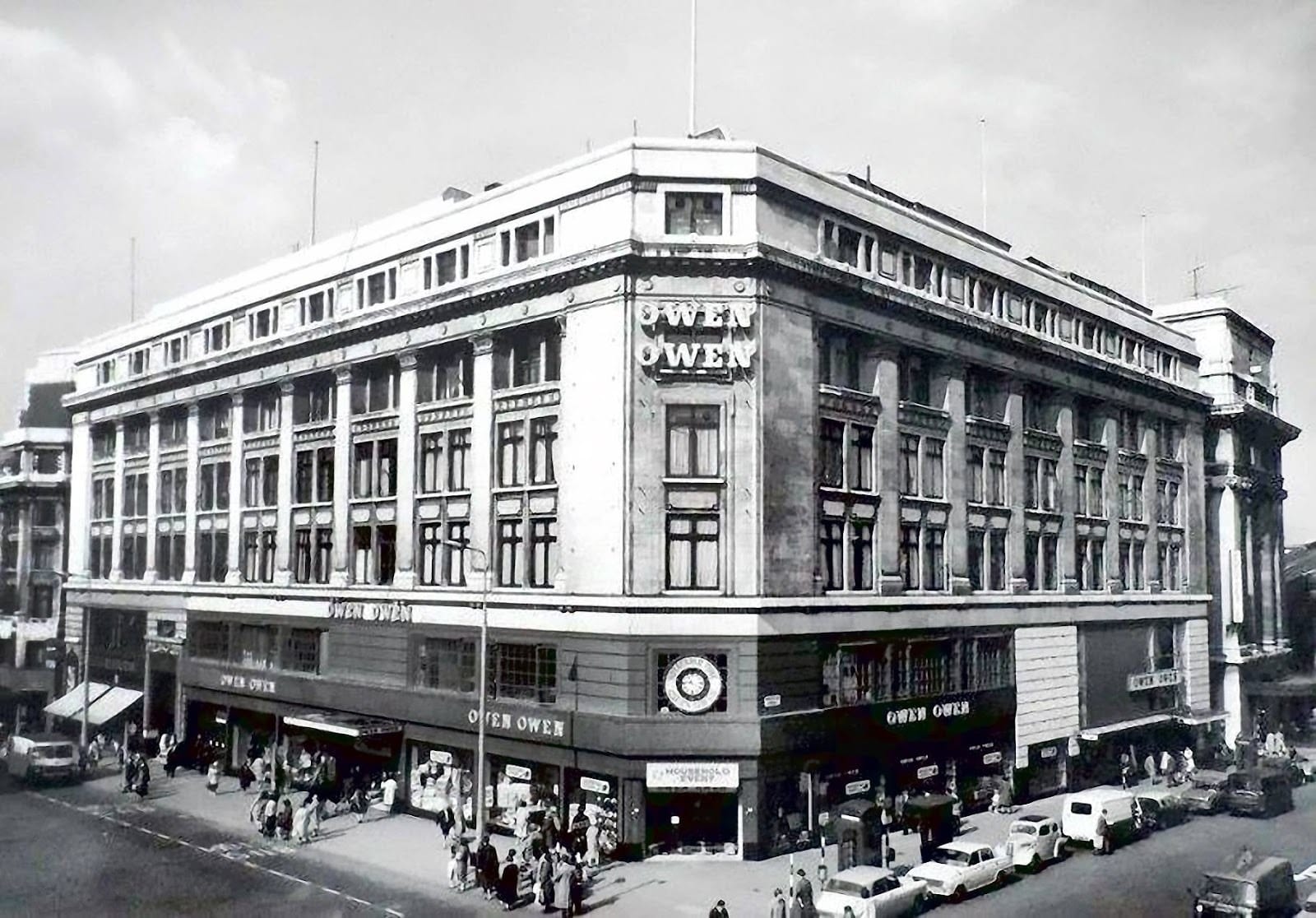
“When I started there were two older gents that took me under their wing,” Alan remembers. “They knew everything there was to know about customer service,” he says. Apart from tailoring. Alan recalls how a customer needed each of his trouser legs shortened by three inches when the store’s tailor was on holiday. “We’d never turn a customer away. That wasn’t our style,” Alan says. “So one of the old assistants took the job on himself. But for some reason he just took the one leg up by six inches instead,” Alan laughs. “They were great times.” Perhaps. Although, maybe not for the man with one very cold shin.
For Alan, the store really did represent a family. “I got to know the chairman, he’d always visit the store. He saw me grow from a shy new boy to Deputy Store Manager. He really cared about how we were getting on.”Over the years, Alan’s customers became friends. Some even became neighbours. “Our customer’s addresses were on their store cards. I noticed that one of my regulars lived near where we wanted to move, so he kept an eye out for me. We now live next door to each other!”. Hands up who’s had that kind of interaction at TK Maxx recently?
The store was a welfare pioneer, too. Owen Owen was the first employer in Liverpool to give staff a weekly half-day off. They even had a holiday home in the country where sick staff were sent to convalesce, with all expenses paid by the Owen family.
Every year, the family also paid for an extravagant staff ball at the Adelphi. It was the social highlight of the calendar where, Alan recalls, the strict "Mr. and Miss" naming conventions were briefly relaxed for a night of dancing and, well, whatever else: “Oh sure,” Alan says, “plenty of romances blossomed there.”
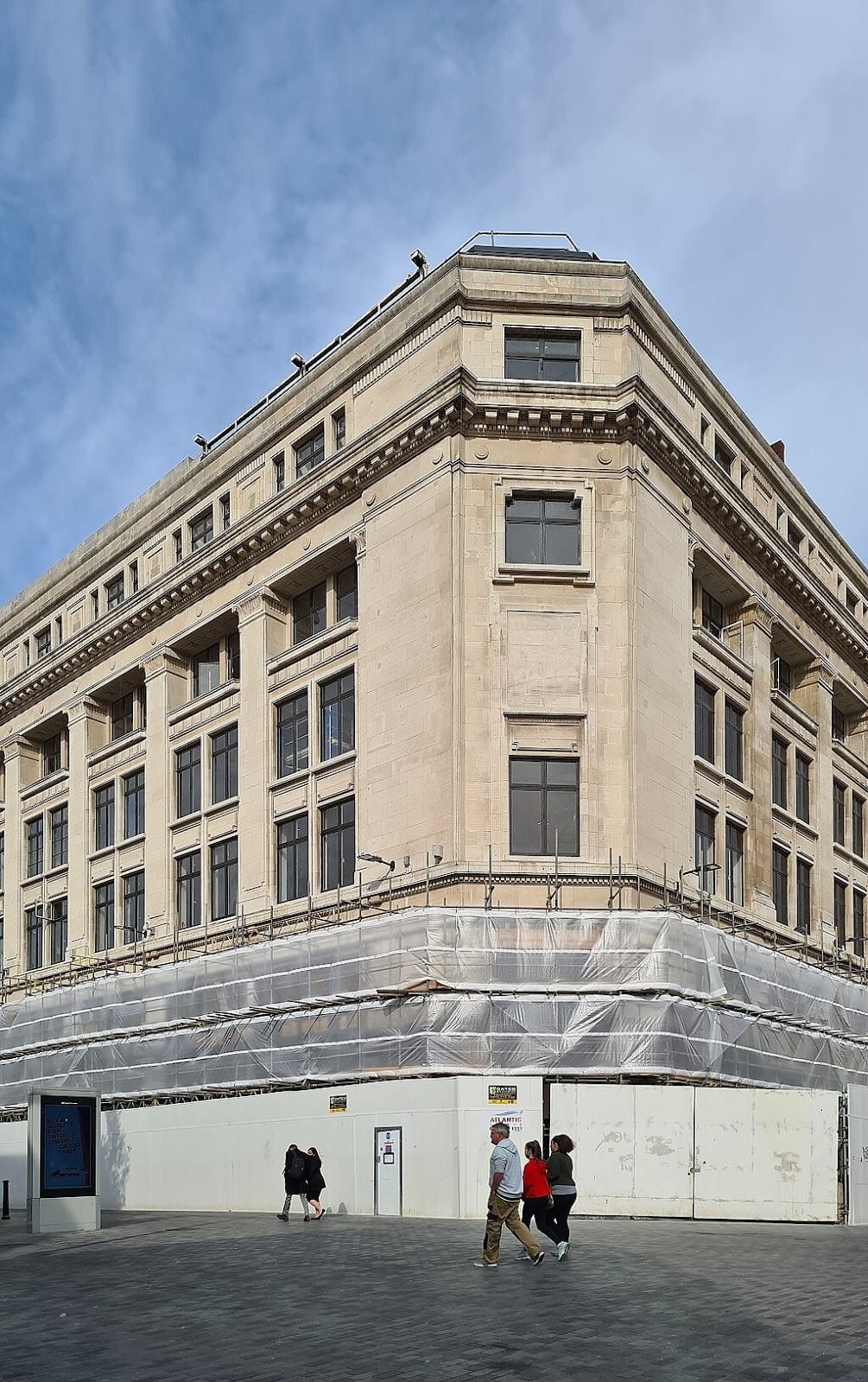
Alan still works for the company — as a Trustee for the Lord Street-based Owen Owen Trust, still running 126 years after it was set up (when Owen Owen was then based in London Road).
“We still care for our staff all these years later,” Alan says. “The trust gives out grants and loans for ex-staff in need of support.”
The Trust buys washing machines and helps with ongoing living costs. “We still meet up for Christmas lunch, and still talk about the good old days, like they were only yesterday.”
Alan’s been back to his old stomping ground — Owen Owens’ old home is now the swanky Flannels store. His first visit? The menswear department, of course.
“I picked up a T-shirt,” he laughs, “I couldn’t believe it. It was £290. They’ve spent a lot of money there, but has it got that same welcoming atmosphere as Owen Owens? I’m not so sure. We were never the top tier, like George Henry Lee’s, we were for the ordinary working families of Liverpool.”
Ah, he’s mentioned it. The Premier Cru of Liverpool department stores. With its creaky floorboards and labyrinthine corridors, the gleaming brass handrails of its sweeping staircase and the immaculately uniformed waitresses of its top floor restaurant, Lee’s always fancied itself as a cut above the rest.
But, in one of those lovely Liverpool twists, George Henry Lee’s competitor, Lewis’s, had a hand in giving the old bonnet shop a glow up. Lee’s was already doing solid business on Basnett Street when David Lewis, inspired by the chic Parisian store Au Bon Marché (the world’s first department store) decided that Liverpool needed its own version, next door to Lee’s, on Church Street.
Bon Marché brought ready to wear French chic to the Mersey. But, when the two stores merged in 1961, it also brought the famous rickety three-level bridge that – against all better architectural judgement – connected them, flying wonkily over the alleyway of Leigh Street. The glorious 1920s façade, with its Ionic pillars on Church Street/Basnett Street remains one of the city’s most beautifully overlooked remnants of these retail palaces.
Former staff remember the nightly ritual where, at exactly 5:30 PM, every single counter in the store had to be covered with heavy dust sheets. The sound of hundreds of sheets being whipped through the air at once was the shop’s closing bell. But the closing bell chimed, for the last time, in 2008, when the entire store, customers and all, cheered the old dame to the rafters. I know, because I was there, buying a shaving mirror. It was an oddly emotional moment.
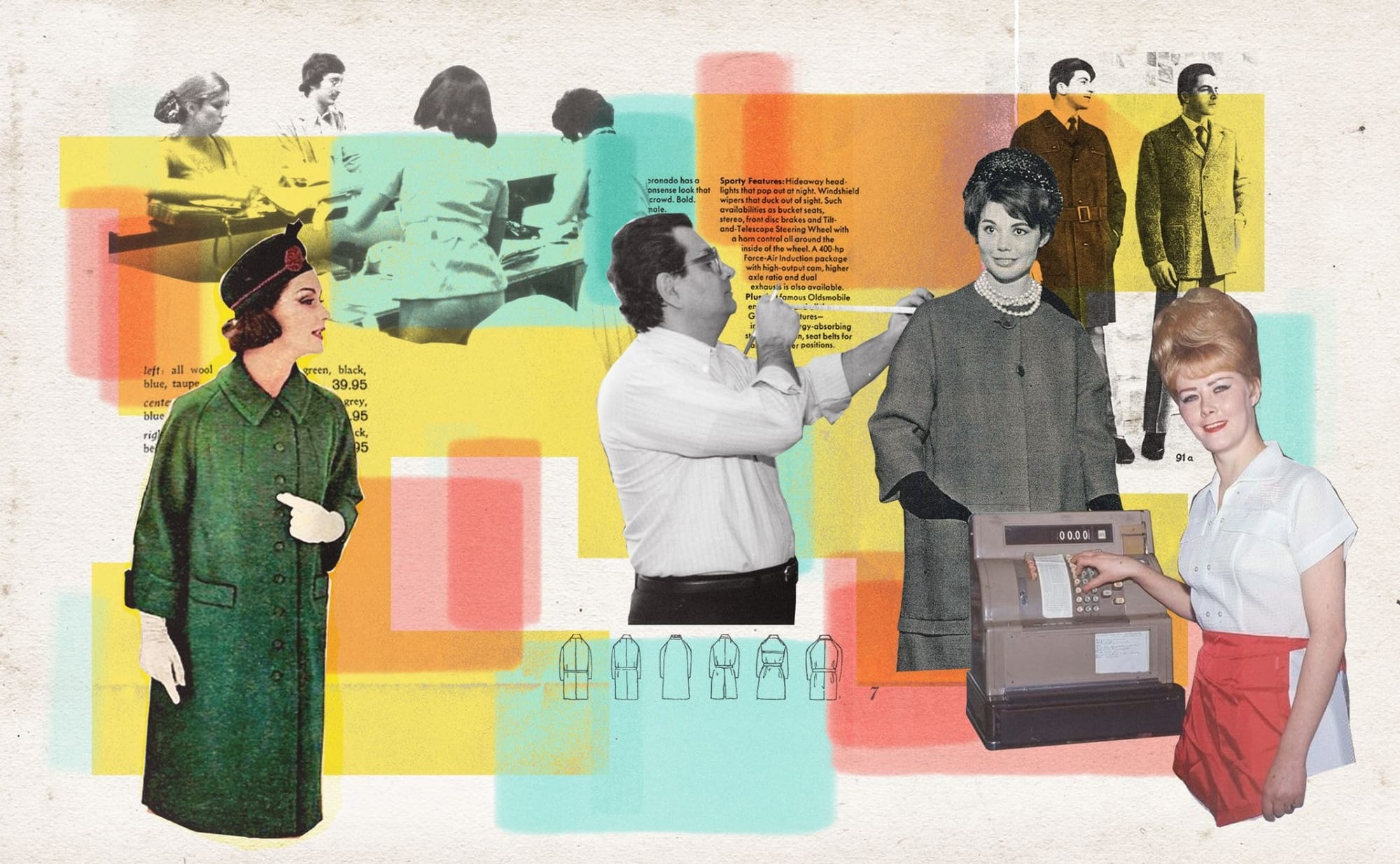
Similar to Owen Owens’ Trust, Lee’s had ‘The Registry’ — a department set up to help, when its staff fell on hard times.
“It was all strictly confidential,” says Lynda Hartley, who worked with the company for over 30 years, editing the store’s weekly Liverpool magazine The Chronicle. “Many people were glad of this help if the unexpected happened.”
“We had so many perks we even had a Leisure Benefits co-ordinator called Barbara,” Lynda says, revealing that Barbara, too, made time for her own leisure benefits, meeting her husband on the shop floor. “It was that kind of place,” Lynda laughs. “There were lots of husbands and wives in different departments, and many generations of the same families working there, including the Fowlers, as in Robbie!”
“There was a real feeling of sadness as we prepared for the move to Liverpool ONE. It was an emotional time for many people,” Lynda says, “but it made sure we had a future.”
She’s right of course. John Lewis is the last man standing, as Blacklers, Hendersons, Gimbles, even Compton House (the country’s first purpose-designed department store, now Sports Direct) and so many others have fallen. And the loss isn’t confined to just in the city centre - Wavertree’s Freeman’s served its community until 1974 (in its official history, one colleague revealed how she’d send love notes whizzing through the air, tucked inside the store’s pneumatic cash cylinders. There is no mention as to whether they were paid in full, sadly), Birkenhead’s Robb’s and Beatties, and Southport’s elegant Broadbents & Boothroyds suffered the same fate: it’s kind of hard to believe they ever existed, if you walk down Grange Road or Lord Street today.
When we think of Liverpool’s great lost department stores we think of their gleaming mahogany counters, Blacklers’ rocking horse and its Christmas lights (maintained courtesy of its apprentice electrician, young George Harrison), treats in George Henry Lee’s Buttery, and queuing excitedly for the grottoes. But what made it all possible were the armies of staff (Blacklers and George Henry Lees employed up to 1,500 people in their heyday) who served us with a smile and, when the work was done, ran through their repertoire of pop hits at the Crane Theatre, hiked the hills of Snowdonia together, or headed for holidays at a company-owned hotel on the south coast.
Jan Lee worked in Blacklers’ kitchenware department until it closed in 1988. “It was the saddest day of my life when the store closed,” she says. “We still have a Facebook group, so it tells you something about how close we were, that we’re still in touch nearly forty years later.”
Maybe our stores’ most enduring achievement is these friendships — the continuing bonds that showed just how tightly-knit and supportive these communities were.
“Don’t get me wrong, it was exhausting work. Every week there was a new gadget to get to grips with. I still have memories of having the life-changing benefits of a wok explained to us!
“We all suffered from shop-floor legs,” Jan laughs, recalling the varicose veins that came from standing on hard floors for most of her adult life. “But I’d suffer that pain again to be part of it all. The loneliness you feel when you’re no longer part of your retail family is crushing.”
“There weren't that many options for young women in Liverpool in the 60s,” Jan says. “These stores gave us our independence, and we grabbed it. The friendships you formed there were for life. My daughter’s godparents both worked in the shop.”
The retail paternalism of our long lost stores wasn’t accidental. The structured welfare schemes, staff social clubs, organised outings and Christmas dances all helped to foster staff stability, and to keep us being served. If the department store was a micro-society, it was one that blended commerce and kinship, hierarchy and belonging, career progression and gruelling routine.
Back in 2008, Liverpool Confidential’s editor, Angie Sammons said our Capital of Culture year would be remembered as the year that we got a Debenhams. It was a good quote and, like all good quotes, there was a ring of truth about it. Because no one loved department stores more than we did. We gave them our lives. And yet, temporarily dazzled by something new and shiny, we turned our backs on them. Before we knew it, they were gone.
When these stores closed we lost a part of Liverpool forever. Entire social worlds tied to the fabric of our city. Places where work and community were inseparable. No matter how furiously we scroll through Temu and Amazon, I doubt we’ll never get them back again.
I hope you loved David Lloyd's weekend read as much as we did. Remember: these kind of stories are what we do best at The Post, and it's the type of reporting you can get by signing up. Our free mailing list gets you two totally free editions of The Post every week.
No ads, no gimmicks: just click the button below and get our unique brand of local journalism straight to your inbox.
Comments
Latest
Is the tide turning for sites polluting our rivers?
The Post in Wonderland
How the National Bank became housing’s biggest headache
The one rule making Liverpool uglier
The lost department stores of Liverpool
'We gave them our lives'