

The bombmaker next door
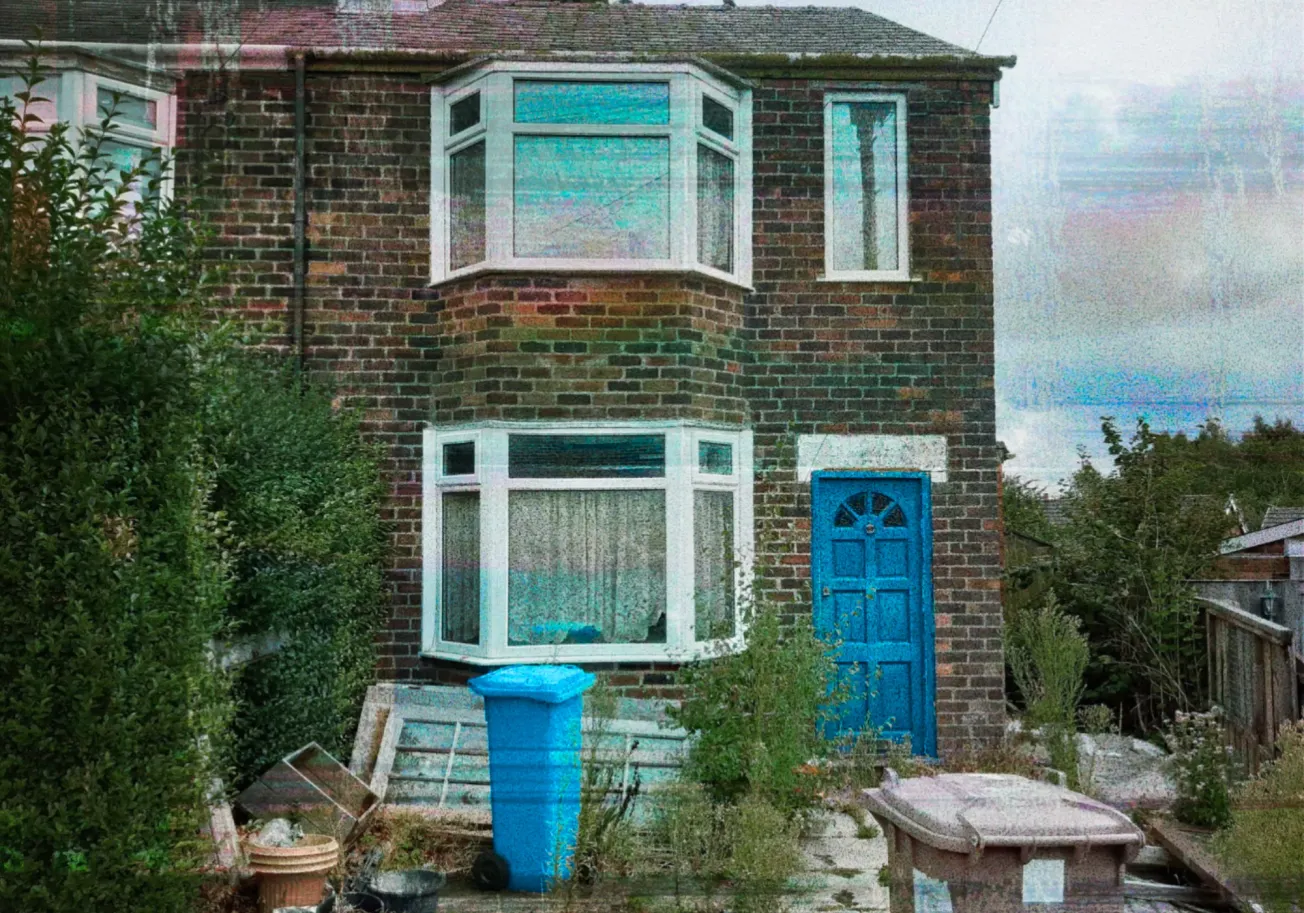
Police found 400 bombs in a man’s house in St Helens — why did his neighbours adore him?
This article was originally published by Dispatch — however, given the local subject matter (and the fact it was penned by the wildly talented Andrew Kersley, who works for one of our sister papers), we wanted to re-publish it here.
He had only been gone for 45 minutes, but the body was already cold. Mark Plevin had spent the evening with his friend and neighbour John Nelson before popping back to his own house next door. By the time he returned, Nelson was dead. It had probably happened only moments after he had left. When the paramedics finally arrived at the quiet suburban roads in Haresfinch on the outskirts of St Helens, there was no point attempting CPR.
The story might have stopped there, with Nelson simply one of the more than 1,500 people who died in Britain on 23 June 2025, if one of the paramedics hadn’t looked towards the mantelpiece of his cramped, overfilled living room. Sitting there, like cheap ornaments, were two hand grenades. It was only after the paramedics retreated and the police were called in that the true scale of the situation was revealed.
Nelson, 64, was a compulsive hoarder, and dotted among the messy, loose piles of seemingly random possessions was one of the largest domestic collections of explosives ever discovered in Britain. All in all, well over 400 devices were discovered throughout the house, a mixture of rigged pyrotechnics, IEDs and relics from the Second World War. Many of the rooms of his own house had been booby-trapped, rigged with tripwires and spike traps, all set to go off if an intruder made a wrong move.
As police and bomb-disposal technicians began the painstaking work of making the property safe, around 200 households were given 30 minutes to gather what they needed and evacuate. Those without somewhere to stay were sent to a local community centre. They would not be allowed home for five days.
What followed was one of the most extensive and complicated explosive-ordnance disposal operations in recent British history. Yet at its centre wasn’t a political movement or a lone-wolf terrorist. There was only John Nelson.
In the days after his death, police statements and newspaper reports produced a recognisable portrait of the man responsible: a neurotic recluse with no known family, who had compulsively constructed explosives. According to the narrative police put out, he was someone who had rigged his house to explode to keep away any trace of the outside world from where he lived, and the piles of discarded possessions that lay within.
Which made what happened six weeks later rather difficult to explain. On 8 August, more than 100 people packed into St Helens Crematorium for Nelson’s funeral, filling the room to standing capacity. Many of them were neighbours who had only recently been forced from their homes because of the explosives he had collected.
To them, Nelson was a kindly, bedraggled intellectual, an eccentric familiar across the isolated suburbs of St Helens. They not only had known about his explosives for years, but also remained adamant that his “hobby”, as they called it, had never posed a danger to them.
Over the past few months, I have spoken to those who knew Nelson and those tasked with disarming his creations after his death. I wanted to understand why a man would spend decades building bombs seemingly for no purpose at all — and why, after his death, so many people in this area felt like the formal, permanent record of his life had erased the real man underneath.
‘The start of my week of chaos’
Sergeant Kharn Ralston-Yarwood, known to his fellow squaddies as “RY”, had already been on call for the best part of two days when he climbed into his van and drove to St Helens. The job sounded routine: dispose of a couple of grenades found in a dead man’s house.
For the Army’s explosive ordnance disposal unit, this sort of thing is quite literally a daily occurrence. That night, RY carried the grenades across the dunes to a secluded stretch of Formby beach, dug them into a hole with sandbags and controlled explosives, and detonated the lot. It was midnight, and it was unlikely anyone noticed the muffled explosion or the burst of sand.
By morning, RY was back in bed with no trace of him being there. “But that was just the start of my week of chaos,” he tells me.
The following morning, he was called back to the same address, something vanishingly rare for a bomb disposal team. This time, in the light of day, RY could properly see what was contained within the four walls of 100 Chadwick Road.
“It was a hoarder’s nightmare,” he says. “I’m a six-foot-tall bloke, and I walked in, and the piles were up to my shoulders, and there was just one safe lane through the middle. He had dog faeces in carrier bags, piles of carpets and jackets, dog food, tins open and closed across the entire house. It was awful.”
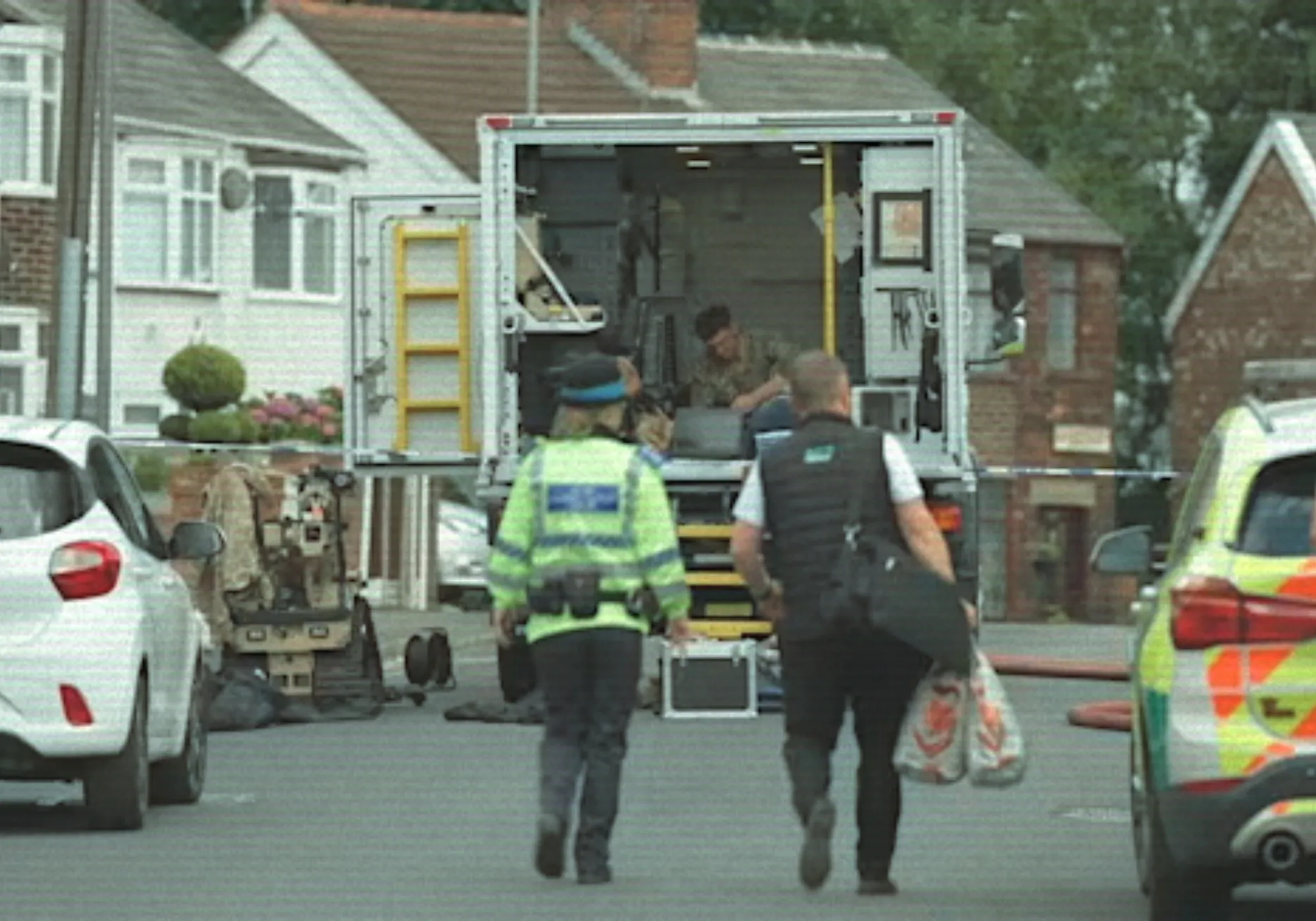
During a second search after Nelson’s death, police had discovered a small tobacco tin containing explosives, with wires protruding from it. RY set up his X-ray machine and stepped into the adjoining room while it scanned the tin. As he reached for the door, he almost triggered the first booby trap: a fishing line wrapped around the handle that was attached to a rigged shotgun cartridge. Suddenly the contents of the house looked rather different. If one door had been trapped, any of them might be. So might any of the shoulder-high piles surrounding him.
Normally, RY would send in a bomb-disposal robot, but there was nowhere for one to go. The narrow passages through Nelson’s hoards meant that RY and the police would have to clear the house by hand, inch by inch.
Liverpool deserves great journalism. You can help make it happen.
You're halfway there, the rest of the story is behind this paywall. Join the Post for full access to local news that matters, just £7/month.
SubscribeAlready have an account? Sign In
Latest
The bombmaker next door
In defence of Liverpool’s humdrum, vital suburbs
How to kick Merseyside pessimism
Lib Dem candidate withdraws after Post reveals shocking online comments
The bombmaker next door
Police found 400 bombs in a man’s house in St Helens — why did his neighbours adore him?
5 days left
Back The Post, for less
Your support keeps proper local journalism going.
Monthly
Usually £7£2.99a month
For 2 months, then £7
Start my membershipAnnual · Best value
Usually £65£49.99first year
Under £1 a week
Start my membershipFor new members