

The clockmaker of Wavertree
A centuries old trade is running out of time
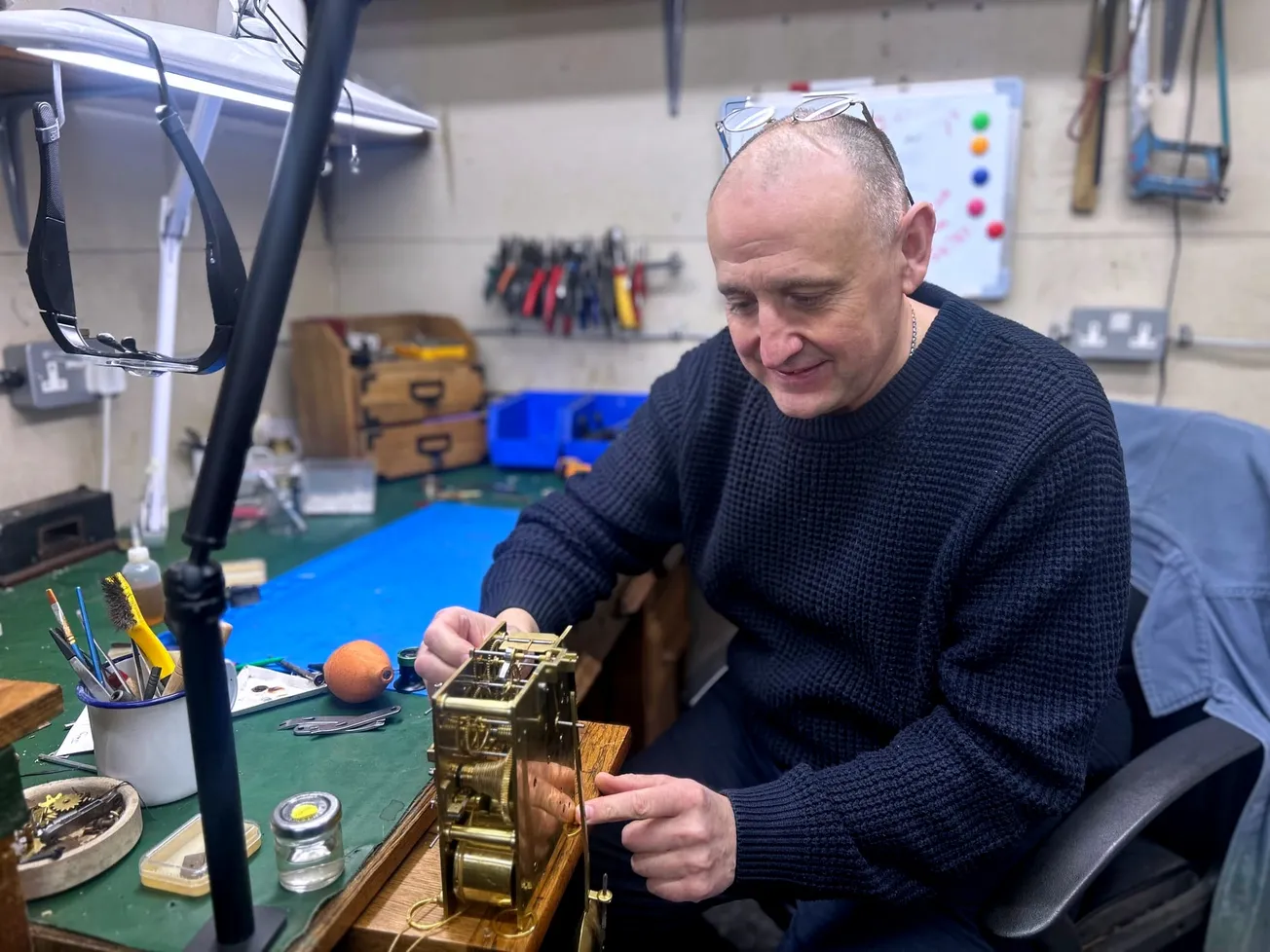
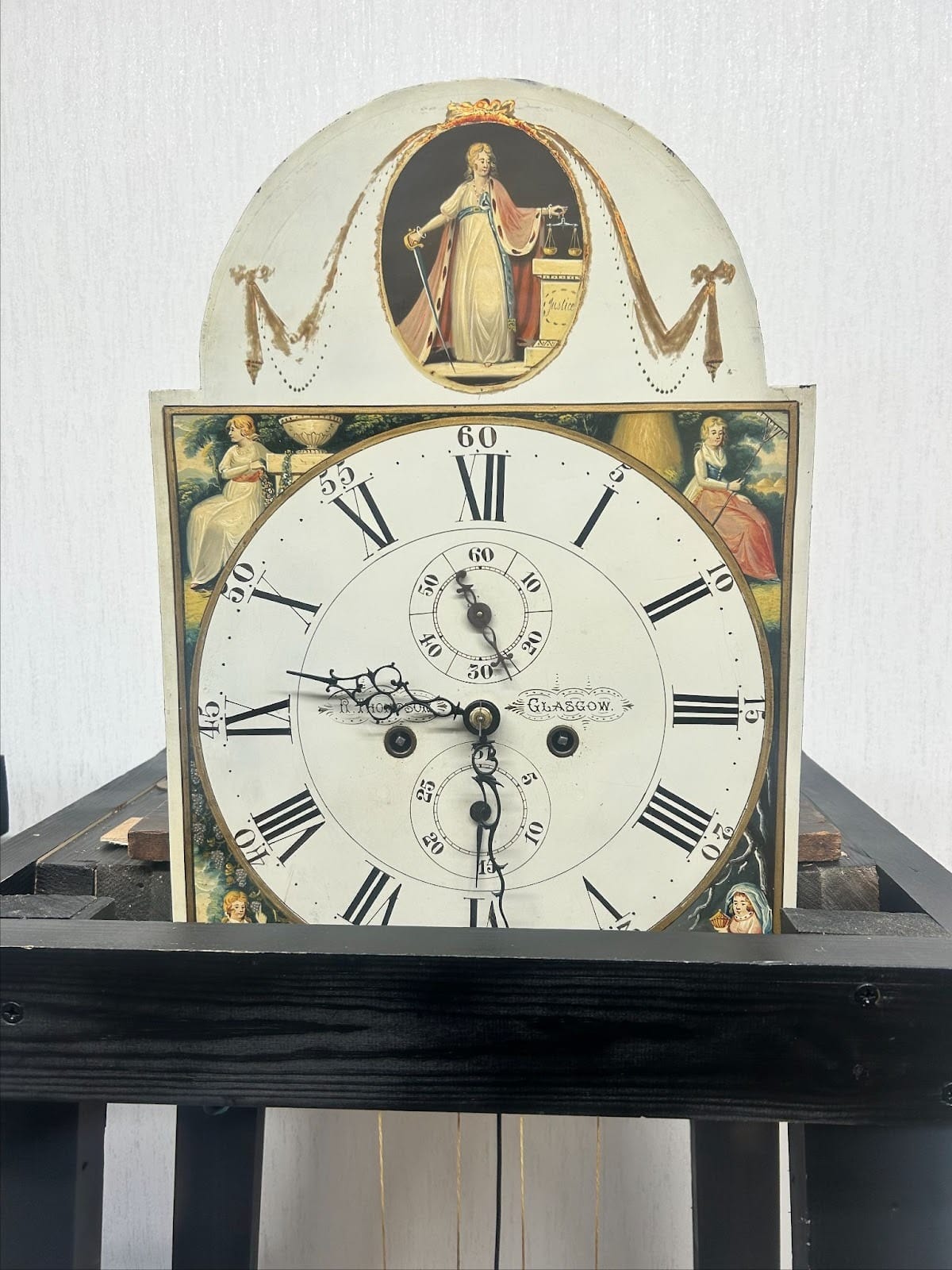
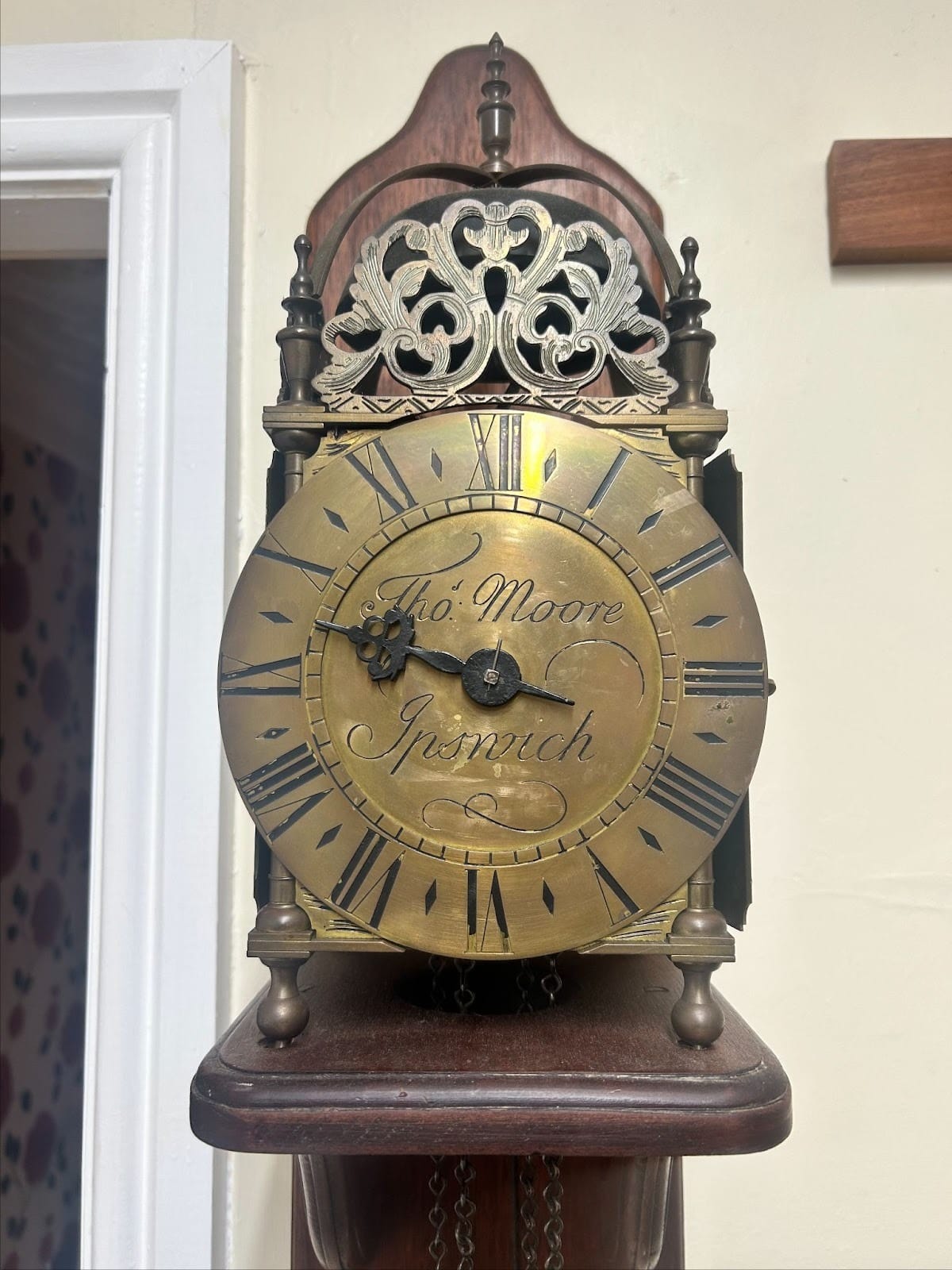
Walking into John Burnell’s house in Wavertree, there’s no mistaking where his passion lies. In his otherwise modest living room, a large mahogany clock stands proudly beside the television. Head towards the kitchen and you’re met with a growing crescendo of gongs and ticks. Half a dozen clocks of varying shapes and sizes line the walls, some mounted and some free standing. A rather stately one, suspended in a large black wooden frame, is adorned with baroque motifs enveloping an ivory clockface with Roman numerals. He tells me this one is a favourite: built in the 1700s and lovingly restored by him two weeks ago.
John is one of the few traditional clockmakers left — not just in Merseyside, but the world. The centuries-old profession is running out of time; the mechanics of old-fashioned mantels and grandfather clocks is a complicated art, which he says less than 40 people worldwide now have the skillset for.
I’ve come to meet John to learn more about horology — the craft of making and repairing clocks and watches. How did he become involved in his niche line of work?
Born in Edge Hill in the summer of 1965, John comes from a line of skilled enthusiasts — his great, great grandfather and his adopted uncle both repaired watches. While his father, also John Burnell, had a career as a builder and boxer, John was far more insular, taking an interest in mechanics rather than sport.
“I've always liked taking things to bits,” he says, recalling how he used to disassemble the presents he’d receive from his parents each Christmas, from toy cars to Meccano sets. “My mum used to say to me that I was more interested in dismantling the cardboard box than the present inside,” he laughs.
Hello, it's Abi here! I hope you enjoy reading this story about John Burnell. While The Post specialises in investigative journalism, we also love to write about the lifeblood of this city - the people. For me, there is nothing better than finding out about the wonderful characters of Merseyside, and sharing them with you through storytelling. If you enjoy reading pieces like this as much as I enjoy writing them, please consider becoming a paying member of The Post. Plus, if you sign up for an annual membership today, you get two months’ membership absolutely free (PS. If you're already a monthly paid subscriber, you can switch to annual and just pay the difference).
After a trip to a second-hand shop at the age of 14, his fascination turned to clocks. Baffled by how they worked, he purchased a small second hand alarm clock — a Smiths from the 1960s — that he’d seen displayed there, and asked the shopkeeper to help him take it to pieces. “We couldn’t get it back together properly then,” he says, “but it just amazed me looking inside it.”
Within this fairly bog-standard musical alarm clock he found oscillating wheels, gears, springs and screws – some so small you had to squint to see their ridges. It was far more complex than his teenage brain could comprehend, and so began his fascination. Each afternoon he’d rush home from school, quickly finishing his homework so he could turn his attention back to clocks, bewitched by their mechanics and even more so, their history. “If you look at early clockmakers, they were building them pretty much under lamplight or candlelight,” he says, “and it was just impossible to believe they actually did that work to that precision with so little.”
Indeed, mechanical clocks first began appearing in this country as early as the 13th century, long before the invention of electric lamps, lights and torches. European inventors had been inspired by early water clocks found in China and the Middle East, using them as the basis for their own designs.
Of course, John’s enamourment with this history was not something he could share with his peers. It was the 80s, and teenage boys were supposed to be interested in football, music and girls. Instead, he kept his collection of clocks and watches locked away in his bedroom, refusing to wear his antique pocket watches in public or share his latest projects with friends. “In retrospect, I was probably quite odd,” he says, “but in a way I liked that it was my secret kind of thing.”
When he graduated from Edge Hill Boys School in 1981, he never believed working with clocks was a career option for him. Even back then, there were very few clockmakers in Merseyside John could look up to, or become an apprentice of. Instead, he followed the path so many working class boys took: mirroring their fathers’ trades of bricklaying, building or plumbing.
Welcome to The Post. We’re Liverpool's quality newspaper, delivered entirely by email. Sign up to our mailing list and get two totally free editions of The Post every week: a Monday briefing, full of everything you need to know about that’s going on in the city; and an in-depth weekend piece.
No ads, no gimmicks: just click the button below and get our unique brand of local journalism straight to your inbox.
Despite this, his father saw his son’s desire to carry on tinkering, and instead suggested he try his hand at becoming an electrician instead. Sure, it wasn’t quite clocks, but it was a dependable career for John. And plus, at this point John had met his first wife, Alison, and they had a child on the way. He needed to prioritise his growing family.
And so John began his training as an electrician — a career he would stay in for over 30 years. It still gave him the opportunity to fiddle with wires and screws, “and I got to solve a lot of problems and put things together,” John adds. By his mid-30s, he’d become so good at the trade he was offered the chance to become an inspector, travelling across Merseyside to repair circuit boards and conduct safety checks on homes and local businesses. It paid well, but just like he did as a child, he would race home from work to spend precious hours in his makeshift office, tinkering on clocks he’d acquired at auction houses on weekends.
One day in early 2015, John was called out to a job at a small business in Wavertree. It was a routine fire alarm inspection — something he’d done thousands of times before. One of the women working there asked him if he could help her repair a vent, and he kindly obliged. Within days, he began coughing up blood.
He rushed to the doctors, and they told him he’d caught Legionnaires' disease — a serious lung infection caused by breathing in contaminated water droplets. He was booked in for an X-ray at the Royal Hospital in Liverpool. The following week, he was diagnosed with leukemia.
“Immediately I said to the doctors, ‘How long have I got left’?” he says. In his mind, a diagnosis like that meant just one thing. But luckily enough, the X-ray had caught the cancer just in time. There was just one problem. An illness like this — and the treatment that follows — is aggressive, and would leave him immunocompromised. He’d have to give up his day job as an inspector, the doctor said, warning him that too many interactions with new environments could lead to him catching a cold or flu that could end his life.
Even if you’re not a clockmaker, seven weeks in hospital will have you contemplating time. For John this was an awakening. While he was happy in his job, he always knew where his passion lay: there in his office at home, tinkering with cogs and springs. It felt like a sign from the universe.
John spent the next year recovering from his intensive treatment and attending weekly hospital appointments. Bored and home alone for the most part, he began slowly transforming his garden shed into a traditional clockmaker’s workshop, acquiring dozens of clamps, dials and wrenches. “I must have spent about £25,000,” John laughs, pointing to the security cameras and signs now tacked up outside his home and on his shed.
While he was still weak from treatment, each weekend he’d drive down to the auction houses on Jamaica and Roscoe Street, looking for his next project. “That was me, going and having my cup of tea in the polystyrene cup, and standing there talking nonsense to auctioneers,” he laughs, “but you know, I really enjoyed that”.
As the months ticked by, and word spread in John’s neighbourhood of his unusual new workshop, he began receiving requests for his help. A music teacher from Wavertree showed up on his doorstep with a grandmother clock that had lost its chime. “I always remember this, because she could tell that the chime was out because she was pitch perfect, but it drove me round the bend because I couldn’t hear it!” John laughs. Nevertheless, he worked with her for weeks until it hit the right note, restoring her memories of it in childhood.
This, John says, is the very thing that keeps him fixing clocks. “It boils back down to the fact that it's important to them,” he says. “It might not be important to you, because it's not worth anything…but to them, it's worth everything in the world”.
In 2017, John set up an official business called Clock Repairs Merseyside, and has since launched a YouTube channel dedicated to horology with thousands of followers. He’s also a member of the prestigious British Watch and Clockmakers Guild, and has rubbed shoulders with the likes of John Griffiths — a horologist famed for his work restoring clocks at the Royal Museums Greenwich — and Phil Irvine, who worked on Big Ben. John operates out of that same garden shed he decked out 10 years ago, now with the help of his assistant, Steve, who he met when he showed up on his doorstep in 2022 with his own clock that needed some TLC.
On average, the pair repair one and a half clocks a week. It doesn’t sound like much, but the work is incredibly complex, John says. Instead of using more modern tools to repair vintage clocks, he prides himself in using authentic methods to maintain the antique’s integrity. “My idea is sympathetic restoration,” he explains. “I want you to get a clock from me, and say ‘Oh God, that's nice, and it still retains that 18th century look’. When you use machinery to do work that is supposed to be done by hand, you lose all the chisel marks, all that character. It’s sad.”
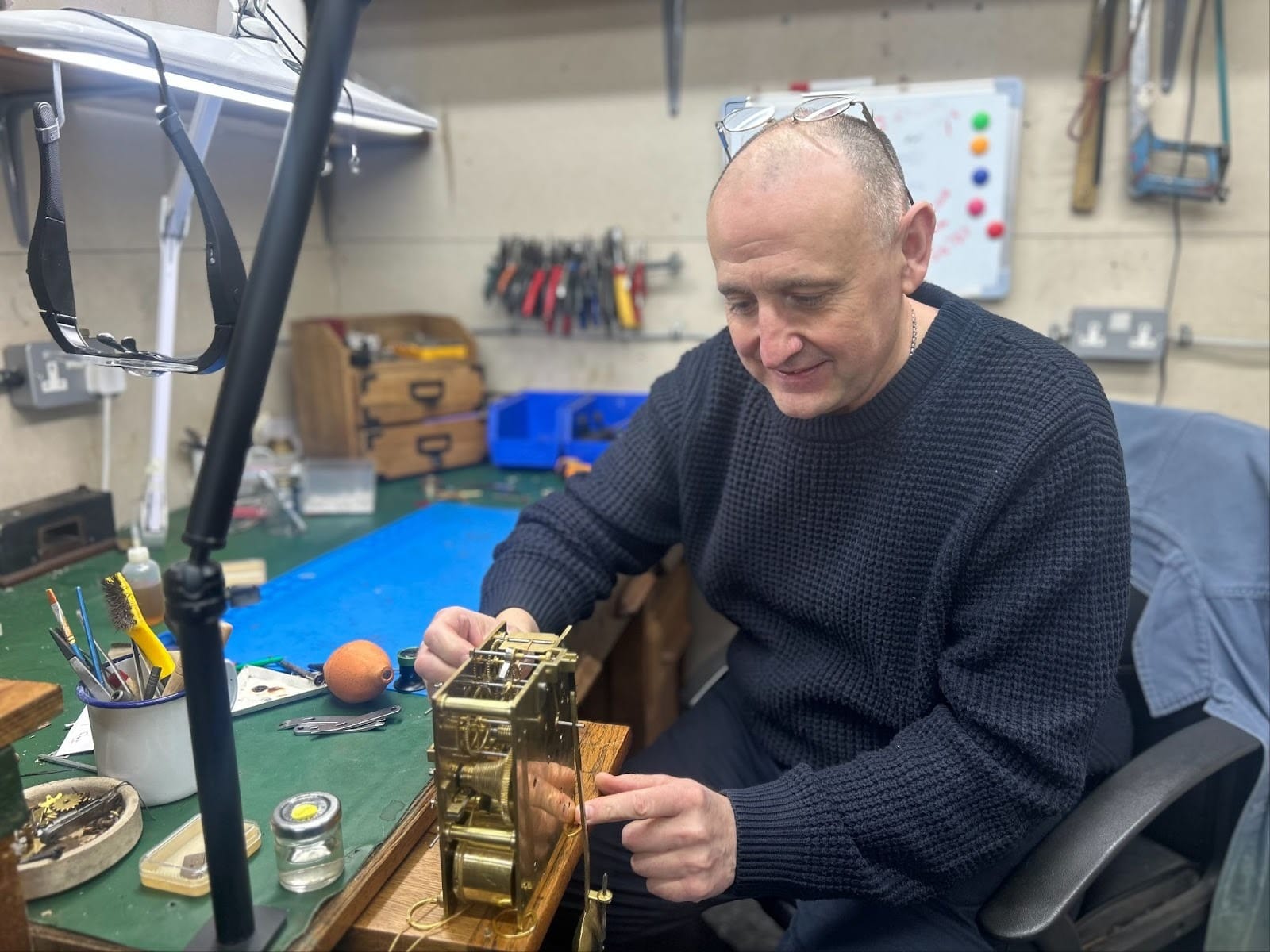
As we talk over a cup of instant coffee, John shows me around his workshop in his garden. It’s full of strange brass appliances, and tiny clock parts organised neatly into labelled drawers. It’s freezing in there, and apart from a small portable heater plugged into an extension cable there’s little other insulation. To sit in here rain and shine must take enormous dedication.
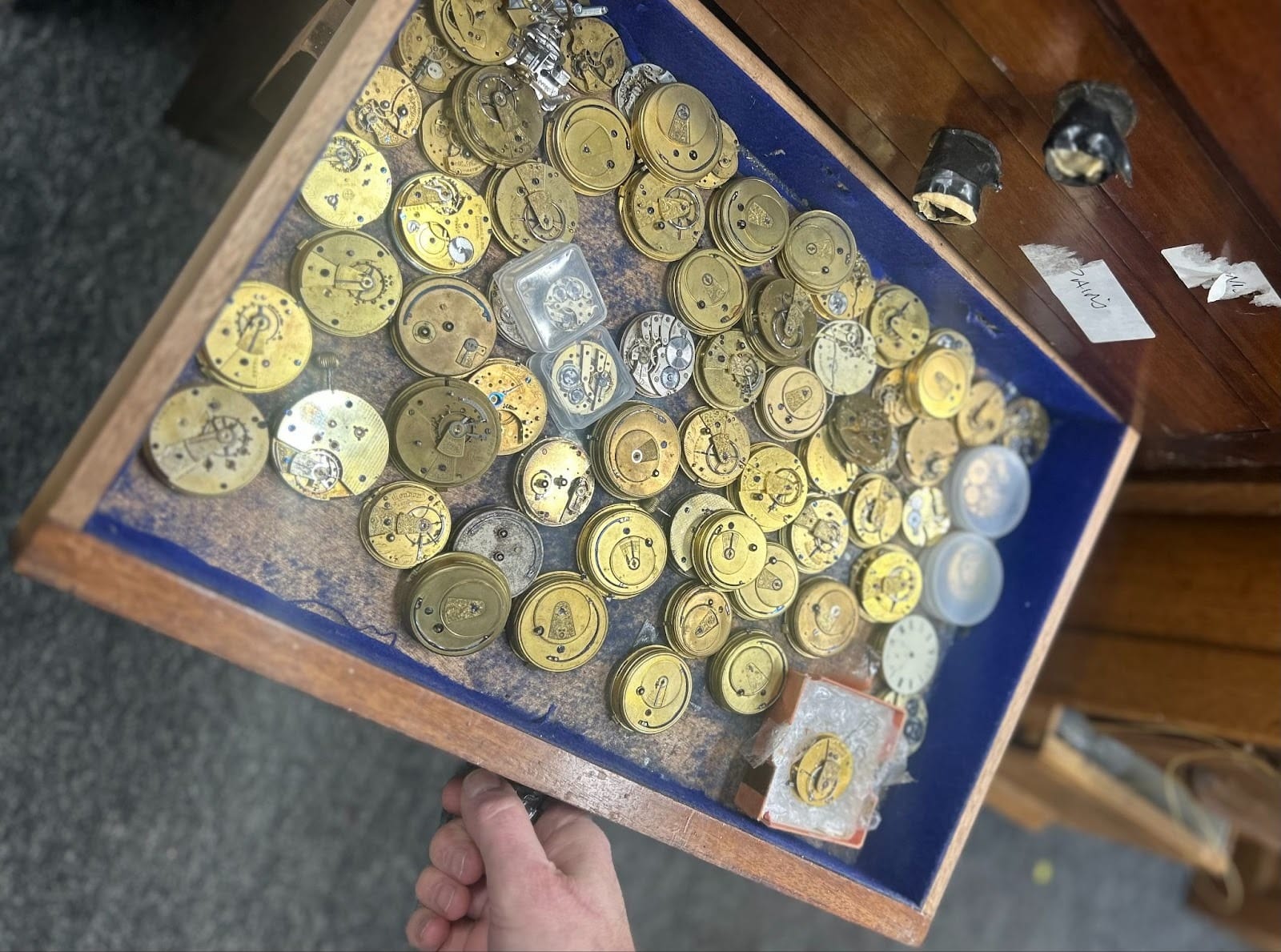
He struggles to open one drawer, so stuffed full of pocket watch parts that it gets stuck. “These are all for my grandson, Aaron,” he explains. As a teenager, Aaron would sit in awe watching John tinker away, and even wanted to become a clockmaker like his grandfather. Unfortunately, he lost sight of that dream some years ago, but John keeps hold of the pocket watch pieces he bought for Aaron in the hopes he will one day return.
To capture the attention of a younger generation is, John says, the key that’s missing in horology. At the age of 60, John is one of the younger specialist clockmakers in the country — most now stretching into their 80s and 90s. He fears that soon the profession will die out, and clocks that held such a special place in the hearts of families for decades will be rendered obsolete.
“It is traditionally an older man’s trade, because you’ve got to have the personality to be able to speak to people that are often 70, 80 years old – that’s the clientele,” he says. He recalls one of his own customers in recent years, Brian, who was 96 when he first came to visit John. “He told me he used to dance with Margaret Fontaine,” he laughs. “I fixed the clock and he was deaf as a post, and kept asking me ‘Is that ticking?’. I had to keep saying yes, Brian, it is.”
These clocks, while often worth very little, are brought into clockmakers like John as “a last chance saloon”. “You've got to understand that this isn't just about the money, for me or for [the customers]. This is their prized possession,” he says. In an era of fast fashion, Temu and Amazon appliances, who else will maintain these family heirlooms?
Last year on The Post, we exposed corruption, abuse, held politicians to account and got nominated for two of the top journalism prizes in the country as a result. We're doing reporting no other paper in Merseyside is.
So why not become a full-time paying member and support our mission? You get four editions a week and right now, it costs just £1 a week for the first three months. That's a great deal for exceptional journalism.
Comments
Latest
Cuts, care and council tax hikes: how the city is balancing its books
A postcard from Colwyn Bay
Fountains, Ffrith and turning the place over
Just what is happening with Peak Cluster’s CO₂ pipeline?
The clockmaker of Wavertree
A centuries old trade is running out of time