

Losing local radio — and my mum
Merseyside stations soundtracked David Lloyd’s relationship with his mother. Now he’s grieving a double loss
🎁 Want to give something thoughtful, local and completely sustainable this Christmas? Buy them a discounted gift subscription. Every week, your chosen recipient will receive insightful journalism that keeps them connected to Merseyside — a gift that keeps on giving all year round.
You can get an annual subscription for just £49.90, or you can buy six month (£39.90) or three month (£19.90) versions too. Just set it up to start on Christmas Day (or whenever you prefer) and we'll do the rest.
Whenever I think about my mum — which is to say every hour of every day since I lost her in August — I think about her radio.
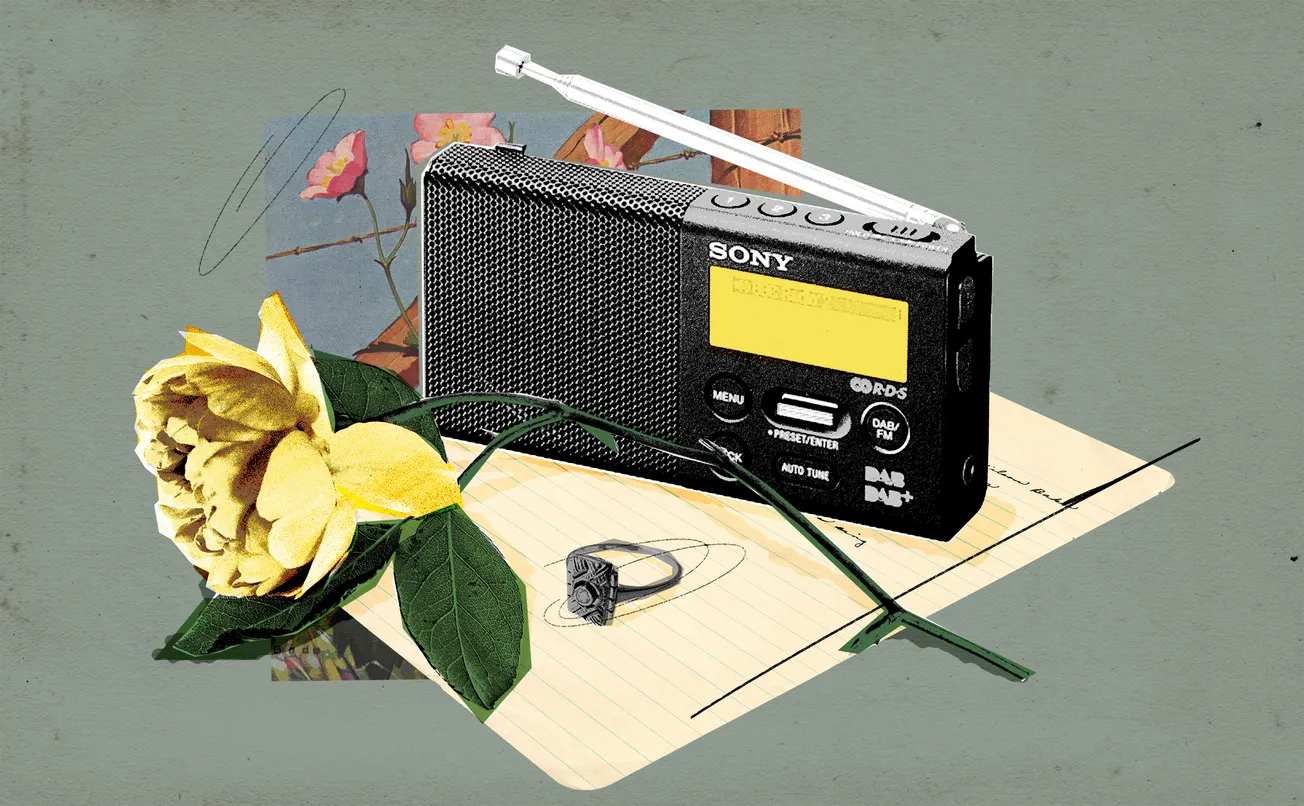
It’s funny. The things that became totems aren’t the ones I imagined they’d be. They’re her little posies of plastic flowers. The lucky bingo dabbers. But mostly, it’s her radio. It’s a tiny thing: a little black Sony portable, no bigger than her outstretched palm, which she’d slide through the guardrails of her hospital bed to stroke my hand.
Mum’s radio was the thread that tied everything together. It was her social media — her steadfast link to the world in which she played her part with love and wonder. And, in those last fitful days, it was her gentle companion.
It was also her time machine. Wherever she was, Mum’s radio had the power to transport me back to her side again. “Listen to what they’re playing, Dave,” Mum would say, caught off-guard in her kitchen, phone pressed hard against the radio’s tiny speaker. “Remember? You used to play this when you came back home after college.”
Radio Merseyside would be on, the presenter having chosen a song by Madness, maybe, or Kate Bush. Songs that melted away the years, and delivered me back to her.
“I can’t hear it mum,” I’d say, barrelling blindly through my day. “It’s too distorted,” the clatter and static of my stupid life drowning out the signal. Who has time for memories when there are Zoom calls to make and deadlines to meet?
Now, more than anything, I long for that call. I try to will it into existence. I think of those stolen evenings turning the dial on my world band radio under the covers. If I could tune in to Radio Helsinki or snatches of Russian football commentary surely, when the atmospheric conditions are right, some long-delayed signal will bounce off the ionosphere, light up my phone and Mum’s voice would find me?
Only radio can make you feel the world moving through you. Its invisible waves connect you to something magical and mysterious. Disembodied voices and dislocated music. Traffic and travel. Gossip and scandal.
For mum, the sudden arrival of a significant song was charged with a profound sense of purpose. Try as it might, Spotify Wrapped will never perfect the algorithm for that.
If Mum was thinking about me just as Sean Styles played ‘Our House’, it could only mean one thing: the universe was listening too, patching us through. That is, unless she had her radio by the microwave and she was heating up her milky coffee. Then only the Clangers could make any sense of its unearthly squarks (ah, DAB, you promised so much.)
When Mum became ill, her little radio and its comfortingly familiar cast of characters soothed her restless nights and, when swaddled in morphine, its waves transported her back to safer shores: “Don’t be afraid, you’re back home again. Everyone you love is here.”
It was always radio. And, in our house, it was always local radio. Few stations are as deeply woven into our family’s history as Radio Merseyside; Roger Phillips and Linda McDermott putting the world to rights, Billy and Wally magnificently upending it again.
Only local radio helped mum decode the world around her and engage with it. Much as we loved Ken Bruce, Mum never saw fit to frantically call me up with the names of three UK chart hits for The Dooleys to help me sail through Pop Master.
For Mum, her radio was also her early warning signal. She was ever-alert to its urgent updates and would regularly call her feckless son to save me from being trapped in the snarl-up on Dunnings Bridge Road, or marooned on a sandbank surrounded by an incoming tide.
“Dave, I’ve just heard them saying on the radio there’s a hurricane coming,” she’d frantically text. “Don’t take Ben for a walk on the beach, he’ll get washed away.”
“Don’t worry, Mum. I think the hurricane’s in Florida.”
“Well it's getting very windy in our back garden.”
Growing up, radio for me was also Merseyland Alternative Radio, the Great Easton Express with Phil Easton, Roger Hill’s PMS and, for a brief but brilliant moment in the 1990s, Janice Long’s Crash FM.
They all spoke my language, in a way that the vocal fry of my favourite podcasts just don’t. Local radio lives in that rare space where intimacy and community collide. Close enough to feel like it's speaking directly to you, shared enough to make you realise you’re part of something bigger.
I suppose the clue’s in the name. ‘Local’ is outside our front door. ‘Regional’ is farming news for the Trough of Bowland. ‘Networked’ is a German multinational run by a family of billionaires who translate ‘value’ as ROI and ad revenue. More fool us for thinking it meant Leanne Campbell beaming out good vibes from the Radio City Tower, and making our morning commute just a little more bearable.
If today's piece by David Lloyd has moved you, and you want to read more stories like this, then please subscribe to The Post. We're an award-winning email newsletter that sends you heartfelt features, proper local journalism and peerless writing about life in Merseyside. 35,000 people have already joined our mailing list. Hit that button below to join up for free.
I can’t imagine a more poignant symbol for all we lost when we gorged on the all-you-can-eat buffet of streaming than our city’s silenced beacon. The Radio City Folly.
In the late 1990s, everyone I knew listened to Crash — beamed out from its rooftop Ropewalks studio — while they were getting ready for Cream. And just knowing that made you feel plugged into the energy of the city in a way that The Capital Weekender with Kem (whoever he is) doesn’t. Sorry (not sorry).
I sometimes wonder if we're the last Liverpool generation to enjoy the intimacy and immediacy of local radio. I wonder about the slow, deliberate silencing of local stories, trusted voices and community programming, to be replaced by Fleur East and AI-generated playlists. The stateless slurry of Global and Bauer or, as a sop, Manchester-based shows speaking on our behalf, delivered by a presenter whose closest brush with Greatie market is an air-conditioned studio in a Salford business park.
Imagine working in a place that delights in calling itself Media City. A business park with a personalised number plate. How could anyone from a place like that comfort a recently-widowed 87-year-old man? Help him navigate a world he once knew turned upside down, alien and terrifying? I know for sure Mum would be reaching for the ‘off’ button faster than you could say ‘Make me a winner with Greatest Hits Radio.’
I’m not the only one who feels this way.
“I saw the way it was going when I left,” Roger Phillips tells me over the phone, of his decision to leave Radio Merseyside in 2020, after 42 years as one of their best-loved presenters. “It was losing all that was important about local radio.”I pull myself together — just hearing his voice again melts my head a little bit. I’m back in my parent’s lounge, and there’s a fella from Croxteth shouting at Roger about potholes. The direction of travel, Roger says, is thanks to successive BBC Director Generals too feeble — or too terrified — to square up to Conservative governments hell-bent on getting rid of the licence fee and, with it, gutting the Corporation’s promises.
“Cowardice,” Roger says. “That’s what it boils down to. They should have stood up, but they didn’t.”
“Radio Merseyside gave an identity to the city in a way that nothing else did,” he says. “It still tries to, but with regional programmes in the afternoon and fewer local voices, it’s a shadow of what it was. It wasn’t about us, the presenters. It was where people went to hear their friends.”
Roger now presents a weekly programme on a new station that proves this city is still in love with radio, and still has the power to create something magical. Merseyside Dementia Radio — the first of its kind in the UK — was set up by Nathan Gavin after his mum, and then his grandmother, were diagnosed with Alzheimer's.
“We’d put CDs on, but soon they’d get bored of them,” says Nathan, who’d previously set up a station beaming into the toilets of a Liverpool club, among other adventures in radio. “TV was too overwhelming, and didn’t make sense, and commercial radio’s constant adverts and phone-ins were too distressing,” Nathan says. “There was no radio station suitable for people living with dementia.”
So Nathan — a self-confessed radio geek — started a station of his own. Of course he did.
“I didn’t think it would become my whole life,” he laughs, of the station now streaming and on DAB across Liverpool. It’s a thing of real beauty, born from love and compassion: in a way that, perhaps, iTunes radio isn’t.
Nathan fine-tuned playlists that wouldn't overwhelm or distress — no adverts: “nothing sonically unpleasant or emotionally manipulative”, he says. No ‘Mistletoe and Wine’ until Christmas Eve, he tells me, lest listeners thought it was Christmas in mid-November (I’m starting a petition to have that rule enshrined in law).
“I knew that familiar, friendly voices could combat the loneliness that often accompanies dementia,” Nathan says. “There’s nothing that comes close to that cosy, safe feeling local radio gives you.” The station runs on donations, the odd fundraiser, and grant funding from places like the Awesome Foundation and Soup.
"This is what I'm supposed to be doing," he says. “And this is what local radio is supposed to do, too. Reach out to people on the margins.”
I meet up with my friend Roger Hill, another of Nathan’s presenters. Roger helmed Radio Merseyside’s Popular Music Show for a record-breaking 43 years, until it was axed two years ago, in one of the station’s many recent brutal contractions.
“Look at Radio Merseyside’s home now,” Roger says of the shiny Hanover Street HQ, completed in just 2006, a radio epoch ago. “The station houses a quarter of the people it was built for. It’s incredibly sad.”
“We used to sit at the heart of a listening family,” Roger says. “It wasn’t just you and [presenters] Alan Jackson or Billy Maher, it was you and the continuing escapades of June in West Derby, or Bob in Fazakerly.”
Now, with centralised servers and shared playlists, Roger says the BBC is stealthily, but surely, “taking the ‘local’ out of ‘local radio”. “The same playlist will be aired in Cornwall, Hull and Liverpool, and the presenter will merely be filling in the gaps,” he says. “Music is just a layer cake between news and travel. Station managers are servants to an agenda that doesn't see local as important any more,” Roger says.
It’s hard to argue with his logic in the face of a local radio landscape that sees those communities it used to serve — Liverpool's Black Caribbean and Asian communities, the elderly, the lonely — as acceptable losses, collateral damage in the push for efficiency and reach.
At the same time, the city has more ‘micro-broadcasters’ beaming out niche digital stations than ever, atomising us ever more securely into our safe little silos. Fragmenting us down, rather than bringing us together. “A group of mates talking amiable drivel and playing their favourite music isn’t going to replace what we lost,” Roger says.
An elderly lady alone in a hospital room won’t shift the RAJAR needle; nor would the BBC care too much if it loses her listenership. She’s not even downloaded BBC Sounds. What a loser. How can she share the new Sophie Ellis Bextor Christmas Music Kitchen Disco playlist?
“We managed to stay local as long as we did because of events like Heysel and Hillsborough,” Roger says. “Moments when local radio showed why it really mattered, and station managers understood that local radio’s first duty was to bring us together. In good times and bad.”
I ask Roger where he thinks local radio goes from here: “Like The Echo, in time, people will have forgotten that local radio meant anything much at all,” he says. “Such is the way the BBC is intent on dismantling it.”
“I’m afraid I see a quiet folding of the tents.”
In Mum’s room, three baby seagulls are tapping expectantly at her window. Mum had delighted in watching them pad around the hospital roof all summer long, turning from downy balls of fluff into cocky fledglings, helped on by her crumbling handfuls of Arroweroot biscuits through the little gap in her window every morning. There’ll be no breakfast today.
“I’m so sorry,” her doctor says as we stand around Mum’s bed, bewildered and sleep-deprived, and Tony Snell announces what’s coming up on today’s show, predicting a future that seems preposterous to us now.
“Only yesterday, your mum was having a little dance in her bed to ‘Mr Blue Sky’,” the doctor says. “Everyone loved coming in to see her. This was the happiest room on the ward.”
We switch off Mum’s radio, kiss her goodbye, and hold each others’ hands as the world falls silent.
🎁 Want to give something thoughtful, local and completely sustainable this Christmas? Buy them a discounted gift subscription. Every week, your chosen recipient will receive insightful journalism that keeps them connected to Merseyside — a gift that keeps on giving all year round.
You can get an annual subscription for just £49.90, or you can buy six month (£39.90) or three month (£19.90) versions too. Just set it up to start on Christmas Day (or whenever you prefer) and we'll do the rest.
If today's piece by David Lloyd has moved you, and you want to read more stories like this, then please subscribe to The Post. We're an award-winning email newsletter that sends you heartfelt features, proper local journalism and peerless writing about life in Merseyside. 35,000 people have already joined our mailing list. Hit that button below to join up for free.
Comments
Latest
In the face of threats, a trainee priest saved his community
A doctor takes on the NHS – and its Liverpool law firm
Punk rock and Paradise
What the Liverpool FC parade report doesn't say
Losing local radio — and my mum
Merseyside stations soundtracked David Lloyd’s relationship with his mother. Now he’s grieving a double loss