

Public buses are here. What does this mean for the city region?
Plus: the Merseyside estate “left to die.”
Dear readers — welcome to another Monday edition. Today we’ll be covering Merseyside’s new fleet of cutting edge, publicly-operated buses, and asking what this could mean for passengers. We also have the latest on the Hillsborough Law, Jaguar Land Rover and the Wirral estate “left to die.”
But first, a big hand to Ethan for his weekend read all about Twenty, Liverpool’s hottest new restaurant and the Reddit feud over its disappearance. In terms of bringing in new members, it’s one of the most popular stories we’ve ever published — and, judging from the comments, one of the most controversial. If you haven’t already, have a read here.
If our new subscribers are wondering what to expect: it’s all a bit of a rollercoaster at The Post’s scheduling desk, but in the near future we’re aiming to cover a wide selection of topics including investigations, data-driven stories, local feuds and cultural reporting. If you think there’s something we should be writing about, let us know at editor@livpost.co.uk.
Your Post briefing
Hillsborough law gets second reading: The Public Office (Accountability) Bill — also known as the Hillsborough Law — is edging closer to becoming official legislation, having received its second reading in the House of Lords. Readers may remember that former prime minister Sir Keir Starmer had promised to introduce it before 2025’s anniversary of the 1989 disaster, when 97 Liverpool fans were fatally injured. But attempts to allegedly water down firstly the “duty of candour” obligation for public bodies and secondly the provisions of legal funding for ordinary people taking on institutions previously delayed the law’s passing.
“The families of the victims are closer to seeing real change,” said Law Society president Mark Evans in a press release. Evans, whose school friend John McBrien died at Hillsborough, declared the Law Society’s support for the duty of candor obligation, while also cautioning that the Ministry of Justice has not yet published its response to the consultation on legal aid fee rates: “Families of victims have already gone through a lot, they should not have to fight for legal support as well,” Evans said.
Merseyside estate “left to die”: This morning, the BBC has published a brief story about the Woodchurch, the Wirral estate “plagued by gang violence and anti-social behaviour.” Among those interviewed are resident Lenny Fowler, who says the Woodchurch “just seems to be dying," and neighbour Simon Johnson, who has dedicated hours every day to litter-picking.
Long-term readers may remember our story a year ago about the resilience of the Woodchurch’s residents, and the dire need for public bodies to take their cause seriously. If you’re new or maybe missed it at the time, give it a read here and tell us what you think.
Jobs at Jaguar Land Rover’s Halewood plant uncertain as redundancy scheme announced. JLR employs 4,000 staff at Halewood, in Knowsley. The site lost around 500 jobs under shift cuts in January 2020, and more agency roles were lost later that year.
It has been quite the storm for JLR. Nearly a decade ago, they warned that the Brexit fallout could cost the company billions annually – and more recent competition from China, US tariffs, and EV transition has complicated things further. In September 2025, after a cyberattack shut Halewood's lines for more than six weeks, the government agreed to underwrite a commercial bank loan of up to £1.5bn to support its supply chain. This time, the government has ruled out a bailout.
The recent redundancies are reportedly aimed at salaried, back-office management roles – so workers at Halewood, who are primarily on the production, ought to be largely insulated from cuts.
The big story
Top line: Public buses are finally here, but what do they mean for the region?
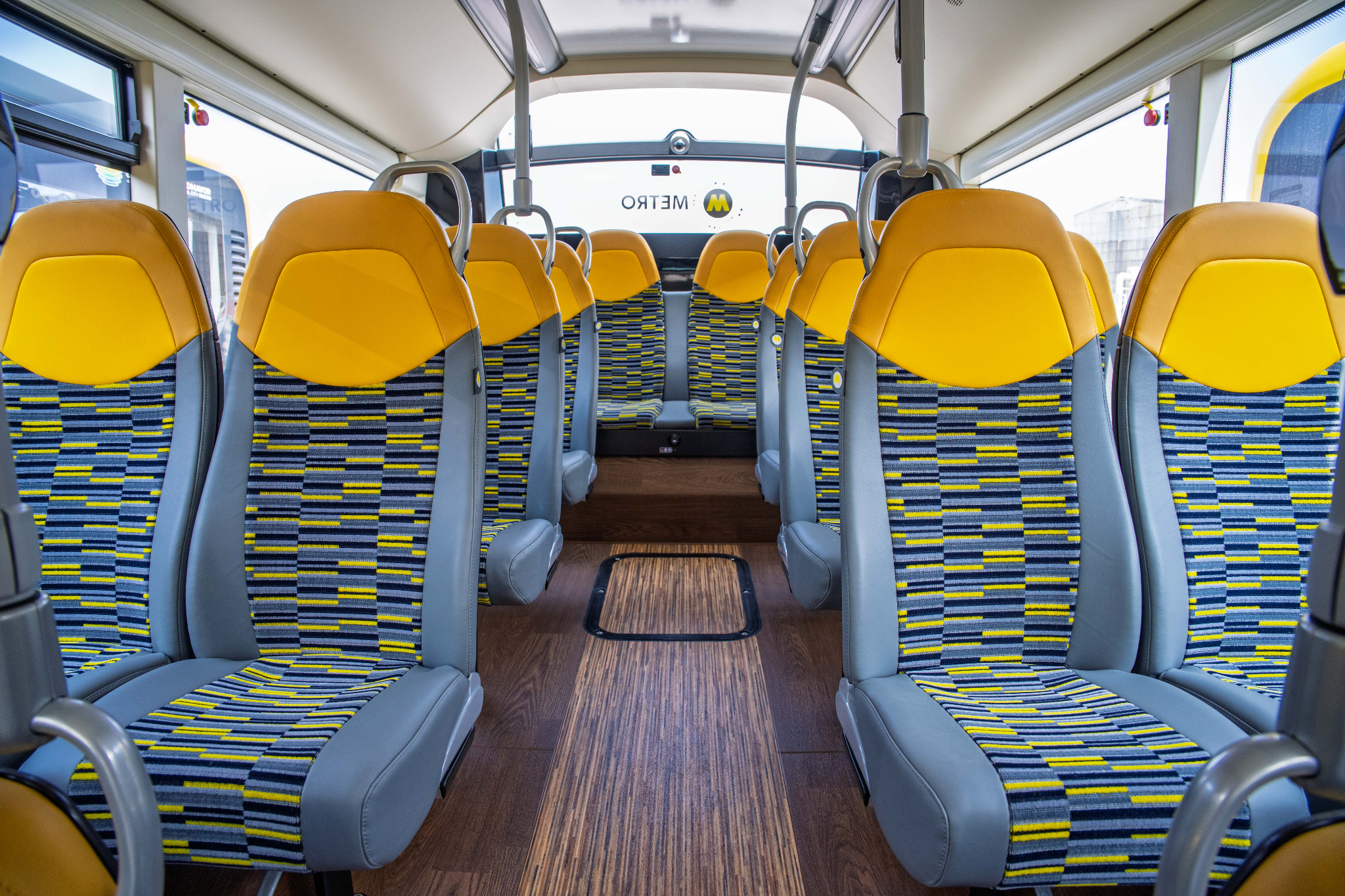
Context: The first publicly controlled buses on Merseyside have hit the road in St Helens, the first of 560 ultra-modern low-emission vehicles set to be rolled out across the city region.
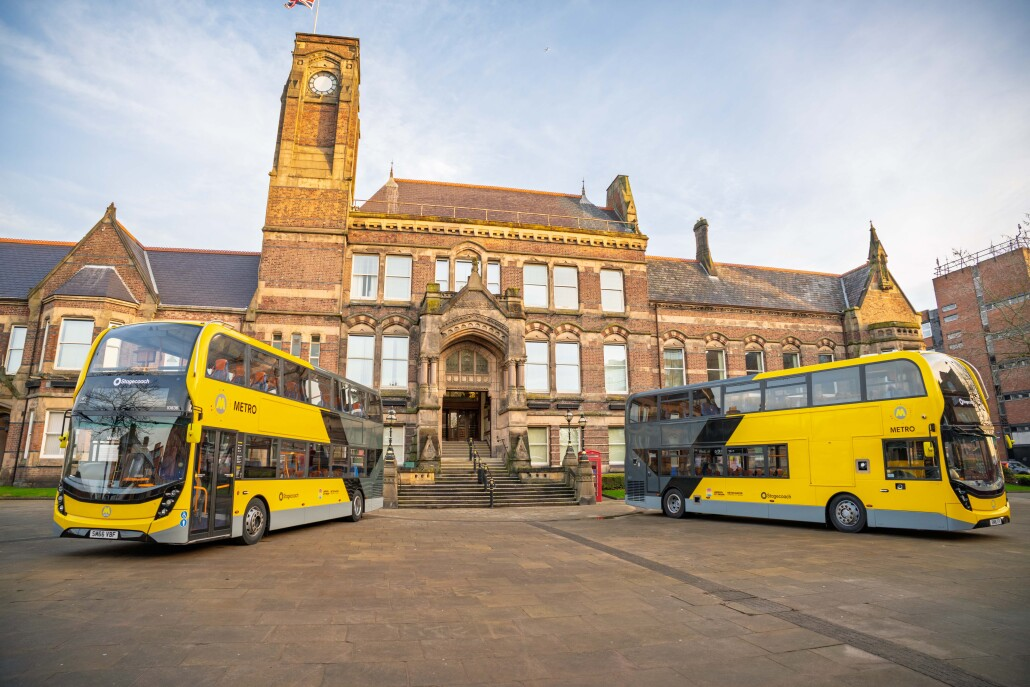
The new services include an X3 express bus to John Lennon Airport, an early morning route to Southport and an evening return. The Liverpool City Region Combined Authority (LCRCA) said there should also be improved access to Edge Hill University, Ormskirk and local hospitals. The £2 adult price cap for single journeys will continue.
LCRCA called the rollout the "biggest change to public transport in the region for more than a generation". An investment of over £150m, the buses will join over 100 new electric buses already in service.
Following their St Helens debut, the next phase of the publicly franchised bus rollout will be on the Wirral next month, followed by Knowsley, Liverpool and Sefton by the end of 2027.
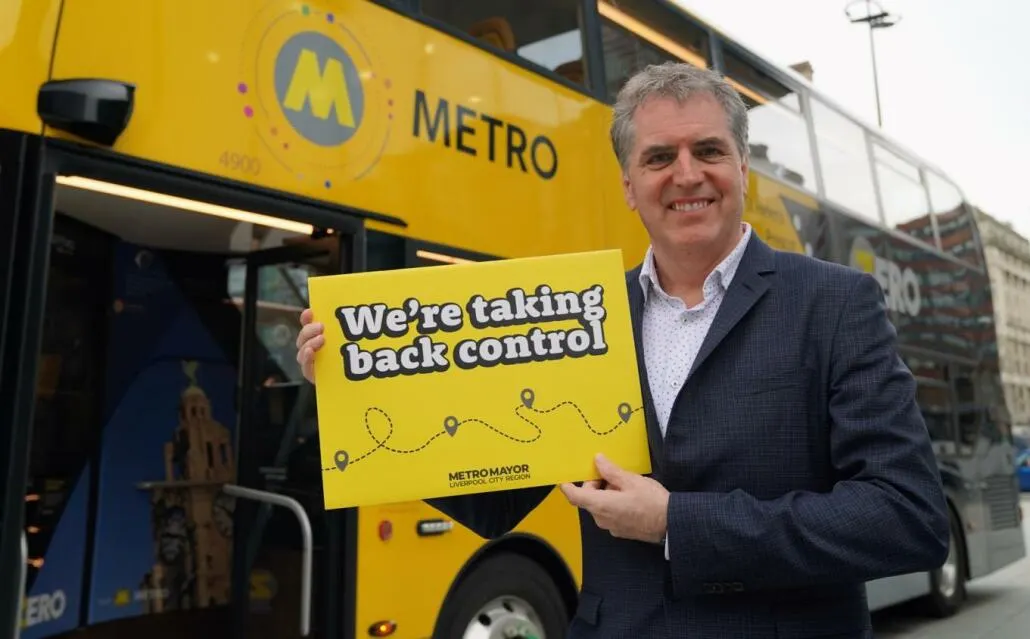
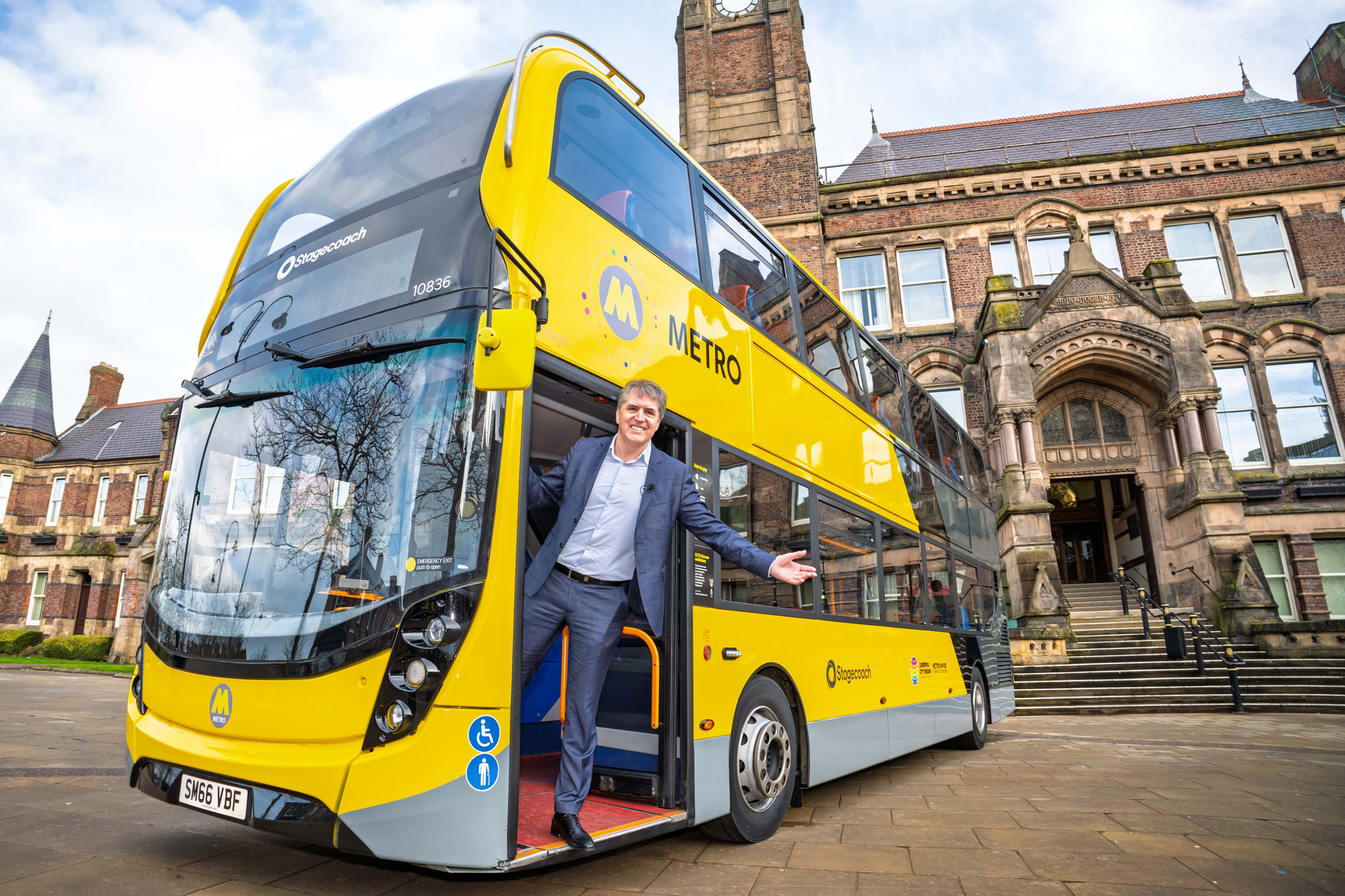
Metro mayor Steve Rotheram hailed the arrival of these “state-of-the-art, low-emission” buses. For Rotheram, this was making good on an announcement he made back in 2023; that the region’s buses were being brought back under public control.
This week, Rotheram added that “this is about building a fully integrated transport network that is fit for the future,” bringing to an end “40 years of deregulated, fragmented bus services.”
In July, it was announced that Merseyrail would also be brought back under public control, ending a decades-long experiment in privatisation that the Lib Dem’s transport committee member Liz Makinson told us was the “worst deal for the taxpayer that you could imagine.”
With both buses and trains now within LCRCA’s responsibility, on paper this should make Rotheram’s vision of better integration between transport systems more deliverable. But how has this played out in other city regions that have brought modes under public control?
In Nottingham, their council-owned operator Nottingham City Transport runs buses alongside the NET tram system: this integrated municipal transport service has resulted in 90% passenger satisfaction — nine points above the national average. Likewise, in Barcelona, where buses and metro are operated within the same public transport organisation, TMB recorded its highest ever customer satisfaction scores in 2025: 8.19/10 for buses and 8.21 for the metro. In Edinburgh, where the main operator Lothian Buses is publicly owned (not just a publicly controlled franchise), customer satisfaction among residents has reached 86% for bus services compared to 65% in largely privatised Strathclyde and less than 50% in Falkirk.
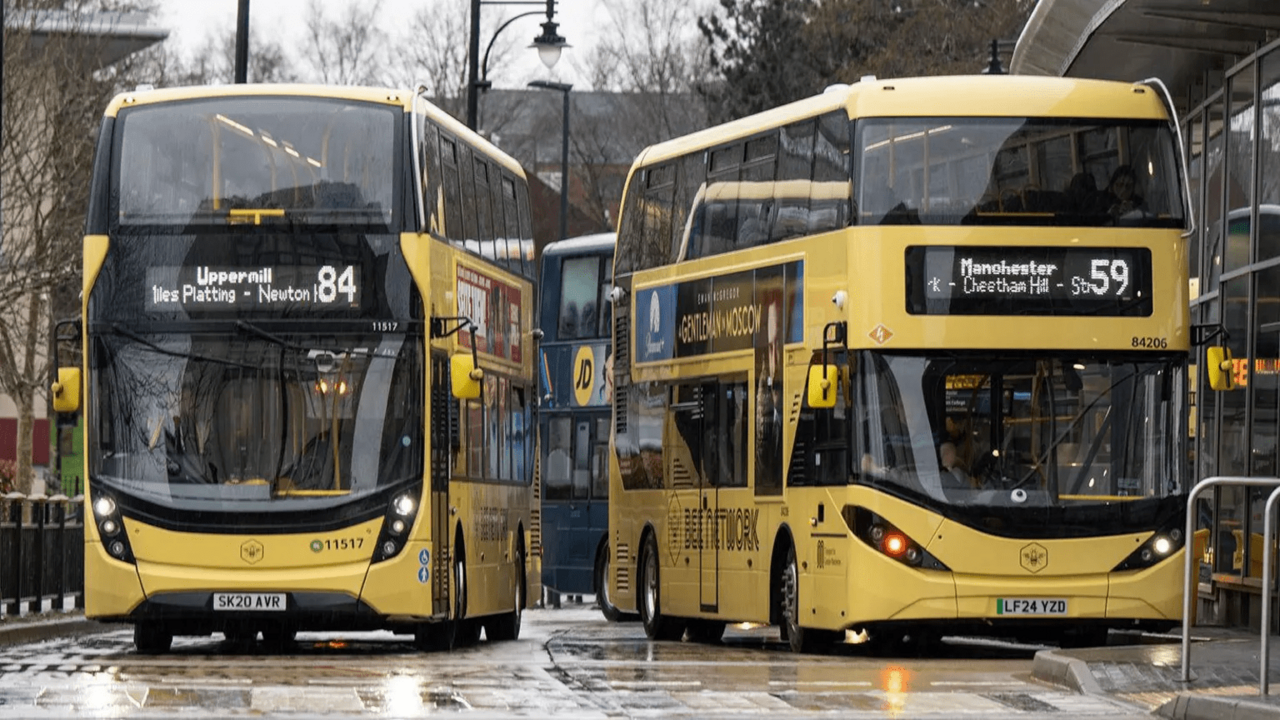
For the best sense of what Liverpool’s buses might become, look east along the M62, to Manchester’s Bee Network. Burnham’s big yellow legacy came into force during his time as mayor back in 2023 – and it has, by most accounts, been a great success.
Nick Fairclough, deputy director of bus travel at Transport for Greater Manchester, tells us that “before the franchise, Manchester was increasingly spending significant public money to prop up a network that was shrinking.” The pre-franchise story is true of Liverpool too: bus usage sits around 10% below pre-pandemic levels and combined authority funding is propped up by government support.
In the years since, Manchester has seen a 24% increase in usage, punctuality has risen from 66% to 80%, and passenger satisfaction has climbed faster than anywhere else in England.
But Gary Nolan – former northern England director for Stagecoach – is sceptical of franchising.
“Yes, there’s been lots of investment in new vehicles, electric ones, but there have been no real network changes, and TfGM have introduced their own punctuality targets.” Fairclough flaunts the 80% punctuality figure – but, put another way, one in every five buses is still not on time. The long-standing national benchmark is 95%.
Only about half the cost of running Greater Manchester's bus network is covered by fares; the rest comes from national and local government. Nolan doesn't think franchises can plug that gap. "London have a £1bn bus subsidy," he says, "and Manchester is heading there. The solution is just to find more money." Liverpool is attempting the same from a harder starting position: fewer people, and a smaller pot.
Bottom line: While it’s important to distinguish between publicly owned models like Nottingham and Edinburgh, where local authorities own controlling stakes in the operators, and publicly controlled models like Manchester or London where the operator is franchised out, the evidence seems to suggest that the more municipal control a region has over its transport network the better. Manchester shows what can be achieved here on Merseyside, both in terms of passenger satisfaction and integration, but caveats from figures like Gary Nolan should be heeded.
Recommended read
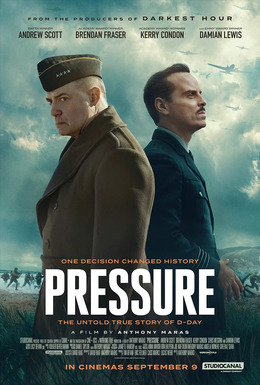
You may be looking forward to Pressure, the new WWII-set thriller about Allied meteorologists trying to forecast the weather before the D-Day landings.
Well, we loved this piece by Ben Macintyre in The Times about Arthur Thomas Doodson, the head of the Liverpool Tidal Institute at Bidston Observatory. Doodson was given the unenviable task of correctly predicting the tides in 1943, and so significant was his contribution to the war effort that William Joyce, the Nazi radio propagandist better known as “Lord Haw-Haw”, threatened the destruction of Bidston Observatory.
If someone forwarded you this newsletter, click here to sign up to get quality local journalism in your inbox.
Comments
Latest
The bakery rankings Merseyside didn’t ask for
Can The Beatles' tower revive Liverpool’s 'struggling' music scene?
BREAKING: Police probe horror maze at abandoned hospital
What’s behind Liverpool’s ‘XL gully’ problem?
Public buses are here. What does this mean for the city region?
Plus: the Merseyside estate “left to die.”