

We made it!
Plus: Merseyrail’s coming home
Welcome to The Post, the quality newspaper for Merseyside and the Liverpool city region. Sign up today and get two completely free articles per week delivered directly to your inbox.
That means a Monday briefing with cultural tips, top stories and everything else you need to know, and a weekend read diving deep into a subject, whether that’s lost department stores of local yore or bungled political promises. No card details required, just good journalism: click below for more.
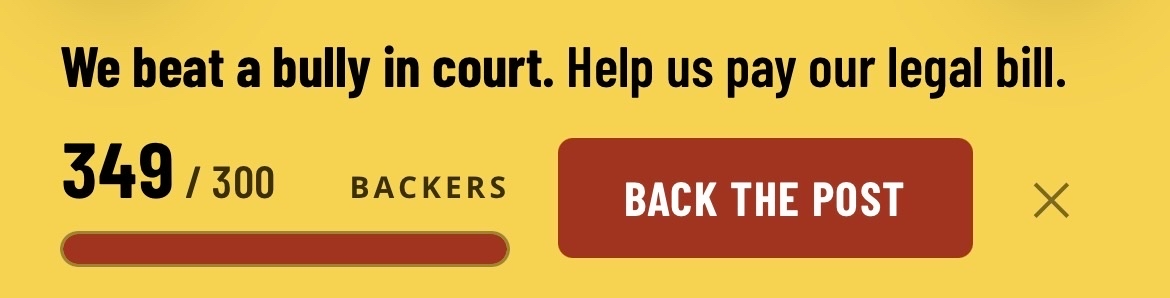
Good morning, readers — following an incredibly one-sided display, the end result on Sunday night was little more than a formality, even in the face of some fairly underhand tactics. In the final analysis, the only surprise was perhaps that the margin wasn’t even wider. Our two-week campaign to accrue 300 backers and pay off our final legal bill after a year of legal wrangling with [redacted] ended in triumph.
We wound up with 349 backers, including new subscribers, paying members upgrading and one-off donations. We raised more than enough to cover the outstanding £20,000 we have left to pay our lawyers and we can’t thank you enough. The only shame is that Justin Bieber, Shakira and the muppets were too busy to help us celebrate.
Here, in all its glory, is the final counter:
The big story: Merseyrail’s coming home
Top line: Merseyrail is being brought back under public ownership. What might this mean for the city region?
Context: Back in 2023, metro mayor Steve Rotheram made a major announcement: the region’s buses were being brought back under public control. Merseyside wasn’t the first devolved authority to take this step — then-Manchester mayor and, by the time you read this, now prime minister Andy Burnham oversaw Greater Manchester becoming the first place in England to re-take control of its buses in several phases from 2023 to 2025. West Yorkshire soon followed suit. It made sense that the city region’s combined authority (LCRCA) would be next in line.
Earlier this year, Abi asked the question everybody wanted answered in these pages: why not the trains, too?
The vast majority of our Monday editions are free of charge, and today's is no different. But to make sure you're not missing out on some of our best stories and most important reporting, become a premium member today for just £7 a month by clicking the button below. Thank you!
Merseyrail signed a 25-year contract with private operators Serco and Transport UK in 2003. This was done under what is known as a “concession” model, with fares mainly paid to the local authority while the private company was given a fixed management fee. In practice, this meant that much of the financial risk fell on the public sector. Meanwhile, by the time of Abi’s article, over £200mn had been paid to shareholders in dividends.
Rail experts and other stakeholders had been unequivocal about the limitations of this model. Transport committee member (and Lib Dem) Liz Makinson told The Post it was the “worst deal for the taxpayer that you could imagine.” Last year, new RMT leader Eddie Dempsey said those dividends “should have gone back into the network – to keep fares down, upgrade infrastructure and improve services for passengers. Instead, it’s gone straight into shareholders’ pockets.” Meanwhile, Christian Wolmar, a journalist and author described as the “high priest of railway studies” opined that public control across all transport is a “no brainer”.
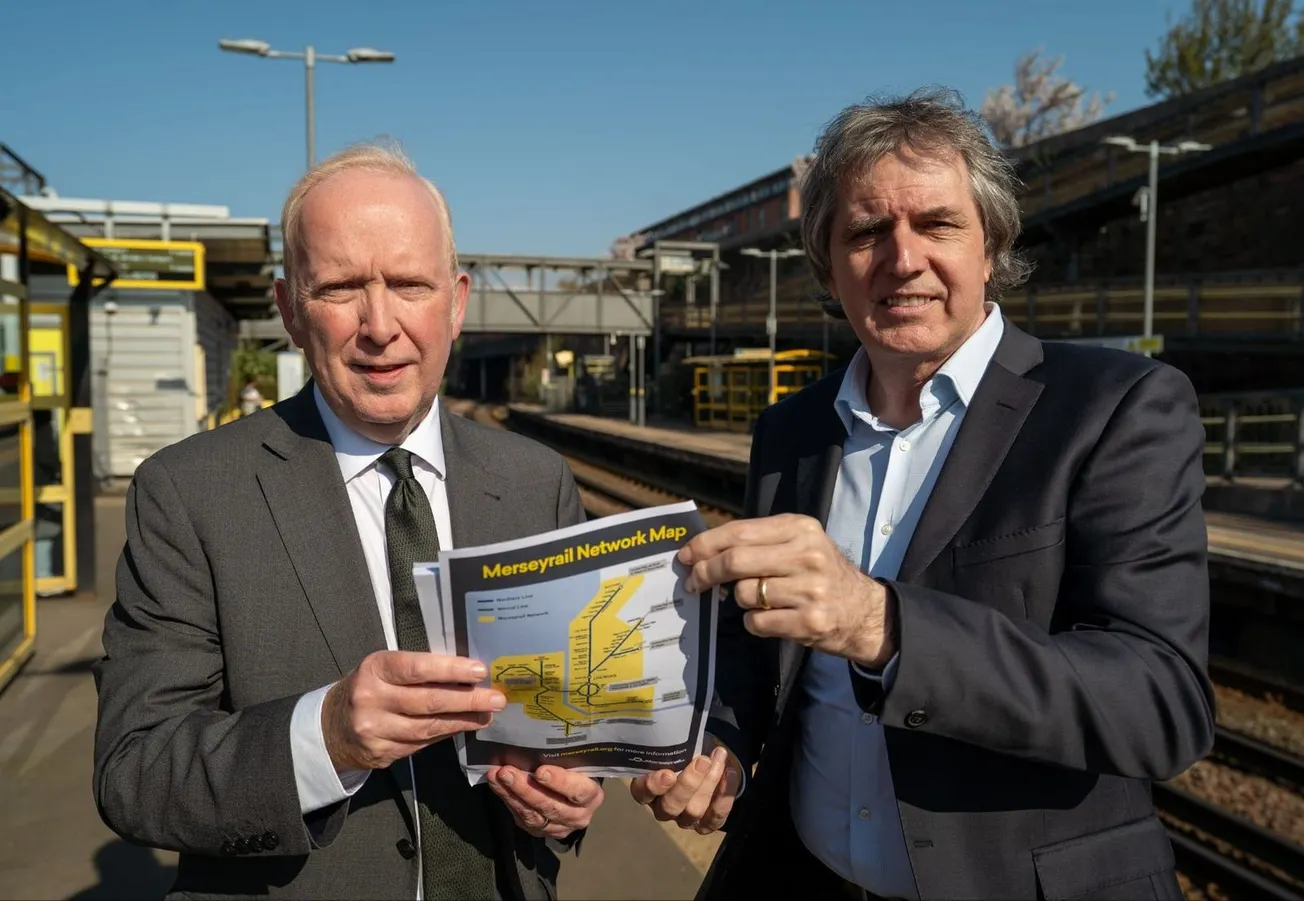
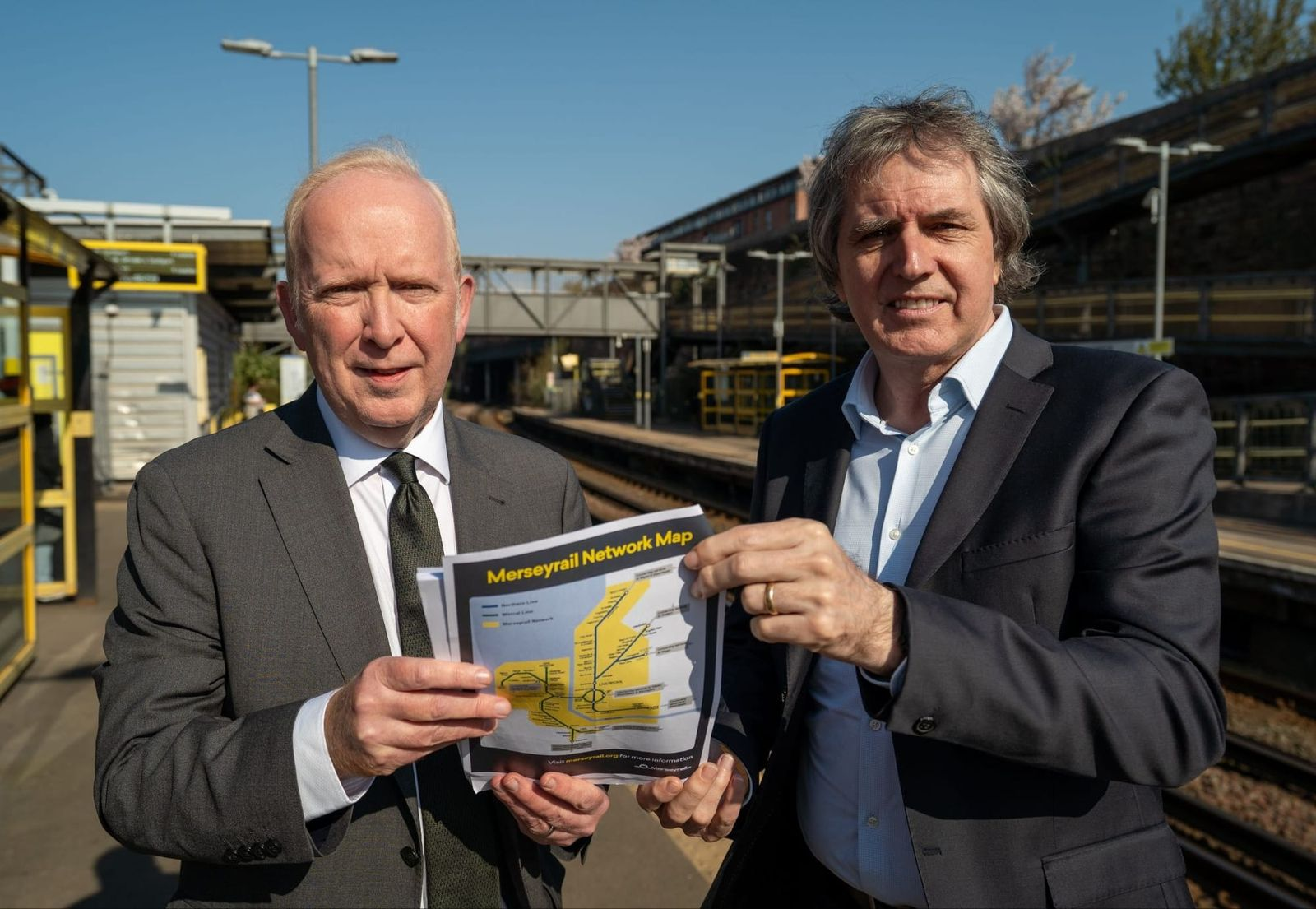
Discussions, in partnership with the Department for Transport, have been ongoing since March to assess the legal situation and financial implications of a new operating model. There appears to have been a breakthrough. Last week, it was announced that Merseyrail trains will be brought back into public control when the current contract ends in 2028.
"It's a much bigger question than who operates the railway, it's about who it works for,” Rotheram said. Meanwhile, city council leader Liam Robinson, a former Network Rail employee, said public ownership was "something I used to dream of when I was working nights at Lime Street station”.
Still apparently high on World Cup fever, Robinson added: “Merseyrail’s coming home.”
Wolmar’s book, British Rail: A New History isn’t an unblemished advert for nationalisation. From the mid-1950s up to its privatisation, British Rail failed to make a profit. And there are other potential issues with local public control, too: the metro mayor suddenly becoming accountable for every rail network issue in the region, as well as having to deal directly with union power. Perhaps it’s for this reason that Rotheram was accused of “dithering” over the trains by Makinson.
But there are other potential benefits of public control. Greater Manchester’s aforementioned initiative was to bring the buses within its Bee Network, an integrated system also incorporating rail, trams and active travel. Under this scheme, joint tram and bus travel became 20% cheaper with a combined ticket. Likewise, Transport for London allows (in theory) seamless transfers between the Underground, Overground, Docklands Light Railway, and red buses using a unified contactless payment.
According to LCRCA, investment is also being made in active travel infrastructure, a new Mersey Ferry and plans for a rapid transit system. Potentially, all of this could be integrated along with the publicly controlled trains and buses. (Not, of course, that Liverpool’s recent record on delivering contiguous walking and cycling routes has been perfect.)
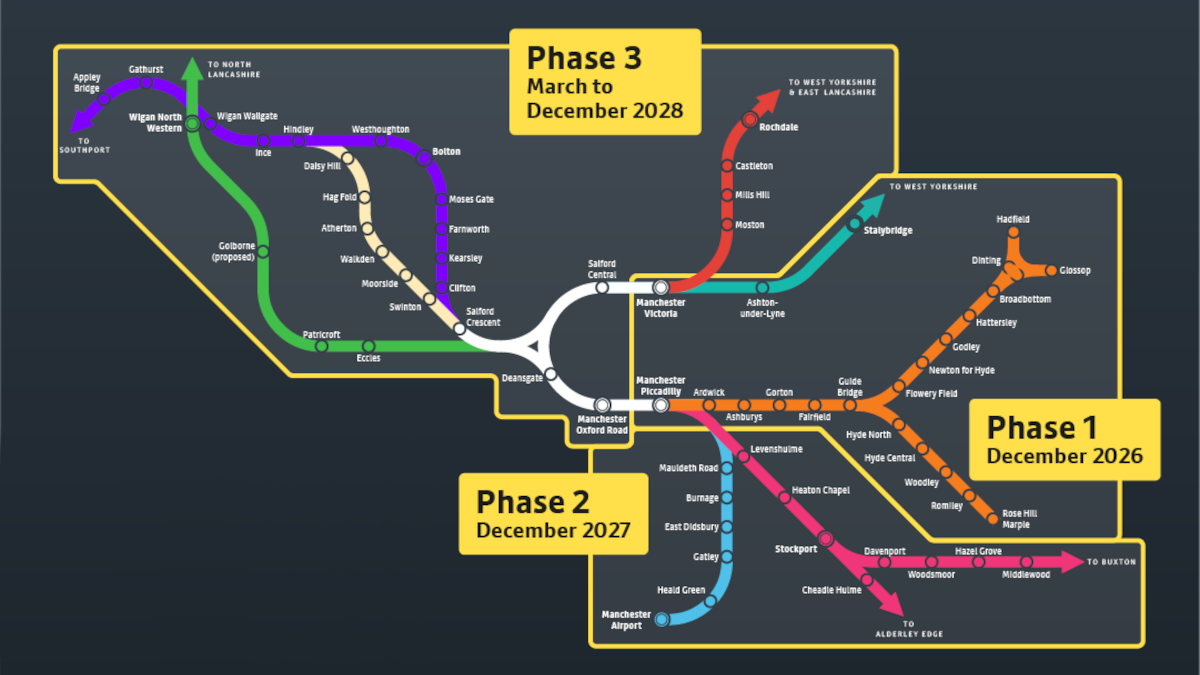
It’s worth noting that, although Burnham announced plans to bring rail into the Bee Network in 2028, Manchester’s heavy rail system is still run by a mix of private franchises and government-operated entities. We don’t yet know what a fully integrated transport system outside of London might look like or operate. But the successes of the Bee Network so far are encouraging: bus usage has increased by nearly 15% year-on-year, and punctuality has increased by 10%.
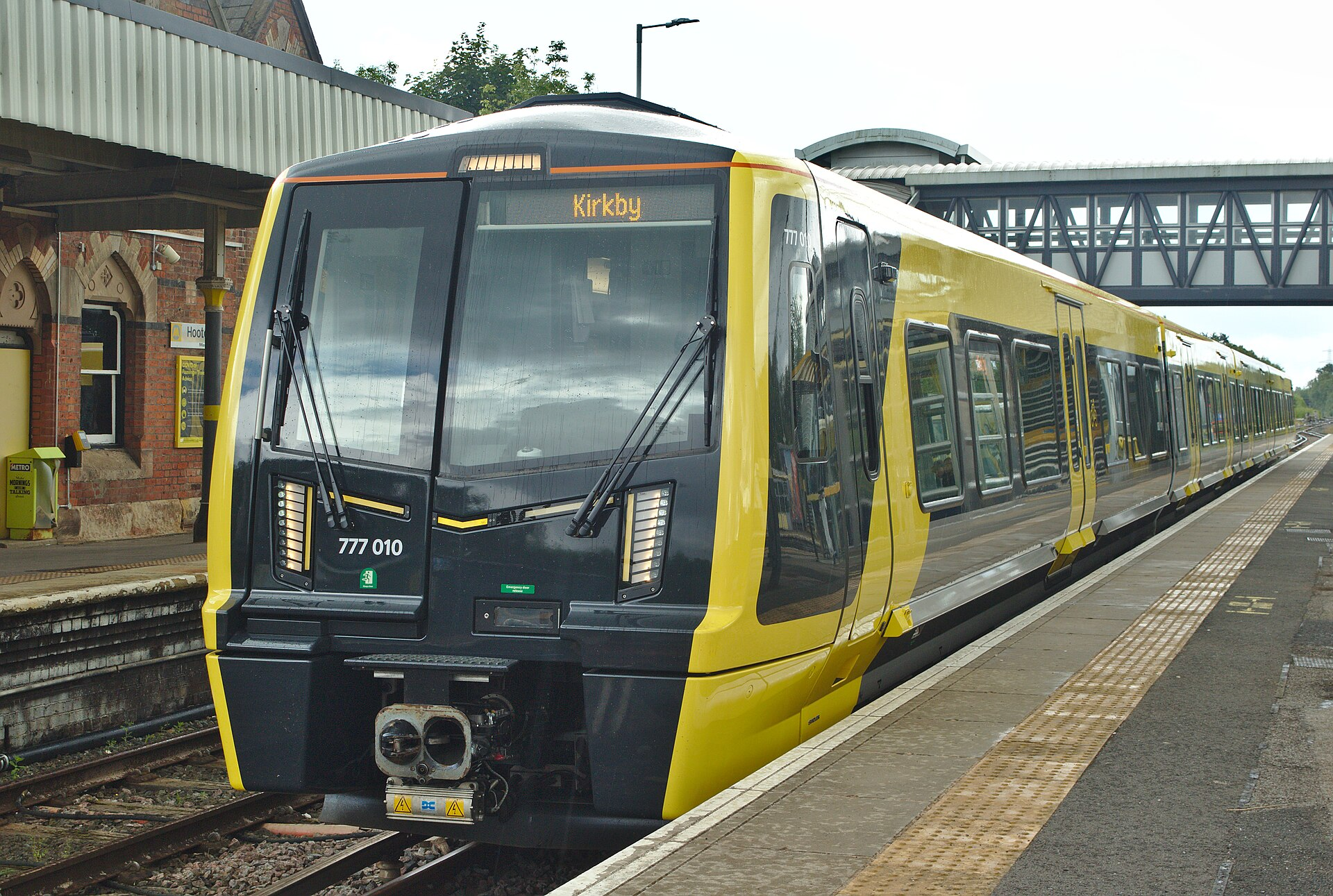
Bottom line: Rotheram’s tenure as metro mayor has not been without its successes on transport: new stations at Maghull North and Headbolt Lane, for instance. But transport issues have resulted in derision, like the hydrogen buses fiasco, the problems with the much-vaunted 777 series of trains and the seemingly endless Baltic Station saga. So to seize the initiative and return Merseyrail to public control is a bold move, one that will doubtless be applauded by union leaders and rail experts. But ultimately, it’s passengers that will have to see the benefit.
Photo of the week
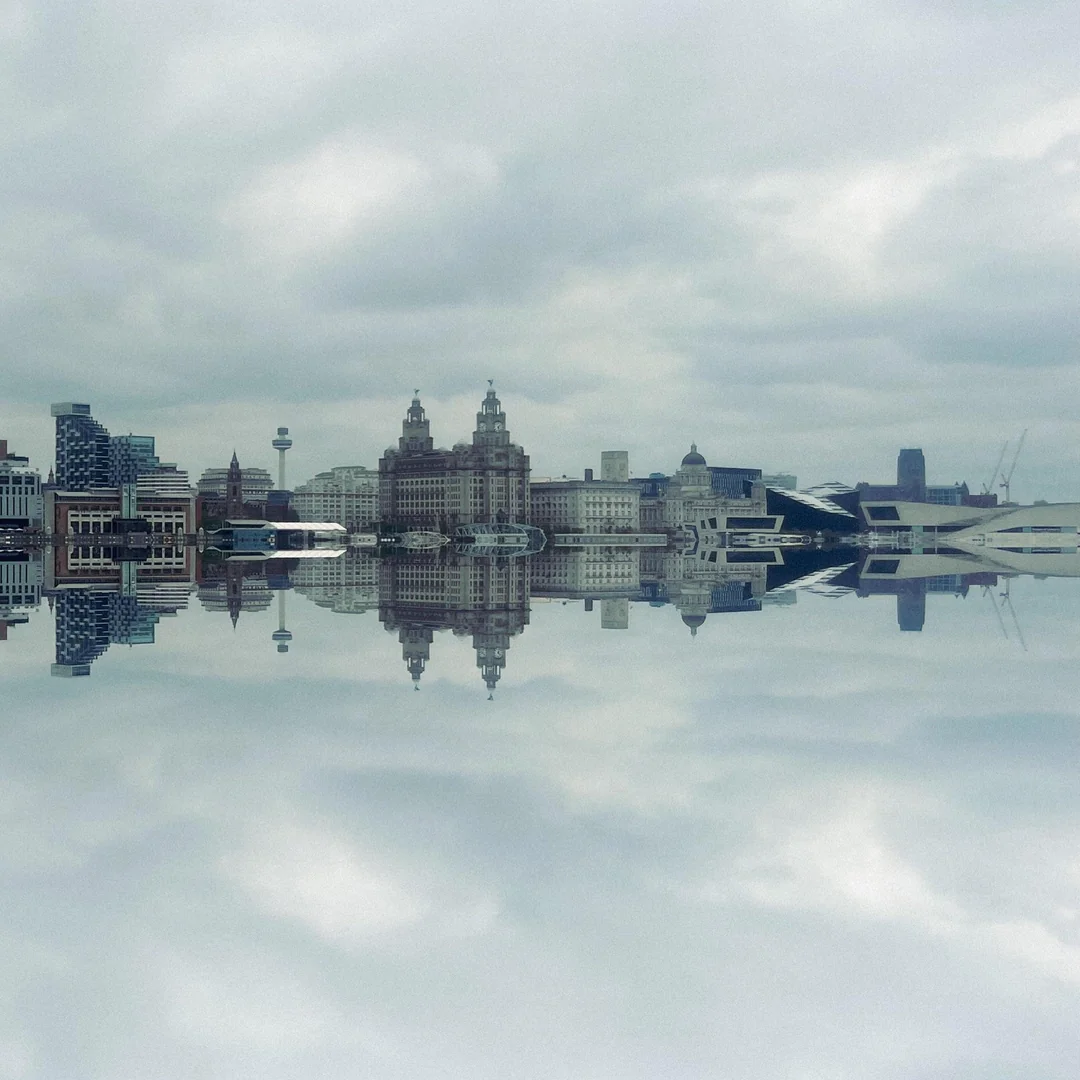
We love this reflection of Liverpool, taken by Reddit user DoubleHelicopter3072. “One of the most beautiful cities in the UK and you've captured it excellently,” said one user in the comments. We couldn’t agree more!
Your Post briefing
Sefton council ruffles some feathers: Council leader Marion Atkinson has announced the aviary in Churchtown’s Botanic Gardens will close next year, after she outlined problems with the welfare of the birds. In a public meeting last week, she said the aviary was an “unnatural habitat”, with each bird having “the equivalent space to fly four washing machines stacked two by two.” In response, David Cobham, who runs the Botanic Gardens Community Association, called the decision "crazy". “This park, and especially the aviary, people go back years and years when they brought their children here, when they came here themselves as children with their grandmas,” he told the BBC.
A man from Liverpool has been charged with assisting a foreign intelligence service after allegedly offering his skills to Iran. Vahid Aberi appeared at Westminster Magistrates' Court last week, and has been accused of engaging in conduct between 17 December 2025 and 16 July 2026. It’s alleged he offered his skills to a contact he believed to represent the Iranian authorities, identifying possible storage locations for his contact via the phone. Aberi is currently in custody and will next appear at the Old Bailey on 21 August.
And a horrendous sight at Calderstones Park over the weekend, when up to 400 fish died in the lake due to the hot weather. Angler Josh Edwards told the BBC the deaths were because of the algae growth "taking all of the oxygen". Liverpool City Council said it had investigated bodies of water during the heatwave and its lakes team had "used mobile aerators in the lake to introduce more oxygen and improve the water quality". But it seems it was too late for the fish of Calderstones Park…
Post Picks
📽️On Tuesday, there’s a special screening of My Father and Qaddafi at The Bluecoat. In the film, a daughter unravels the disappearance of her father, the peaceful opposition leader to Qaddafi, and pieces together her mother’s 19-year search to find him. Details here.
📽️And another film we’re excited about this week — East End Odyssey is being hosted at The Casa Bar on Wednesday. The series of films explore London's immigration, regeneration, culture and living conditions through the eyes of residents. Details here.
🎨On Saturday, The Little Theatre in Birkenhead is hosting a lino printing workshop, learning from experienced local artist Kell Pilkington. The session starts at 1pm — get tickets here.
I hope you enjoyed today's edition. Since you read all the way to the end, and you're already a free subscriber, I've got a suspicion you have an appreciation for what we do. Why not become a paid member? It'll only cost you £7 a month, and for that you'll receive all our lauded investigations, local reporting and cultural criticism. Liverpool deserves better journalism, and you can help us deliver it by signing up today.
Comments
Latest
The bakery rankings Merseyside didn’t ask for
Can The Beatles' tower revive Liverpool’s 'struggling' music scene?
BREAKING: Police probe horror maze at abandoned hospital
What’s behind Liverpool’s ‘XL gully’ problem?
We made it!
Plus: Merseyrail’s coming home