

Just what is happening with Peak Cluster’s CO₂ pipeline?
Plus: Littlewoods lethargy, Oxford innovation and a £90mn homelessness bill
Dear readers — it lives! Your Monday edition lives! Laurence here, turning the levers and flipping the switches alone at Post Towers like a deranged Igor, while Abi keeps the wheels of local democracy turning by attending the first day of the Operation Aloft court cases. Stay tuned.
Over the weekend, Abi published her investigation into Big Heritage, a company specialising in the restoration of historic sites, and how Wirral council may have bungled a project to build a new museum. If you haven’t read it yet, go and treat yourself to a few minutes of indignation or energetic disagreement. “Another example of how government moves further and further from the people,” says one reader, while another opines that this case is “symptomatic of how badly this country is run.”
 Abi Whistance
Coming up in today’s edition, we have an update on the always (but hopefully not literally) combustible Peak Cluster carbon capture and storage project threatening to split opinion on the other side of the River Mersey.
Also: our top events including jazz, film festivals and theatre scratch nights.
Welcome to The Post, the quality newspaper for Merseyside and the Liverpool city region. Sign up today and get two completely free articles per week delivered directly to your inbox.
That means a Monday briefing with cultural tips, top stories and everything else you need to know, and a weekend read diving deep into a subject, whether that’s lost department stores of local yore or bungled political promises. No muss, no fuss, just good journalism: click below for more.
The big story: What is happening with Peak Cluster’s CO₂ pipeline?
Top line: A Wirral MP says he’s extended the consultation deadline for the carbon capture and storage project. So why haven't Peak Cluster updated their website?
Context: Regular readers may remember that in January, The Post published our investigation into two carbon capture and storage (CCS) projects that concern Merseyside.

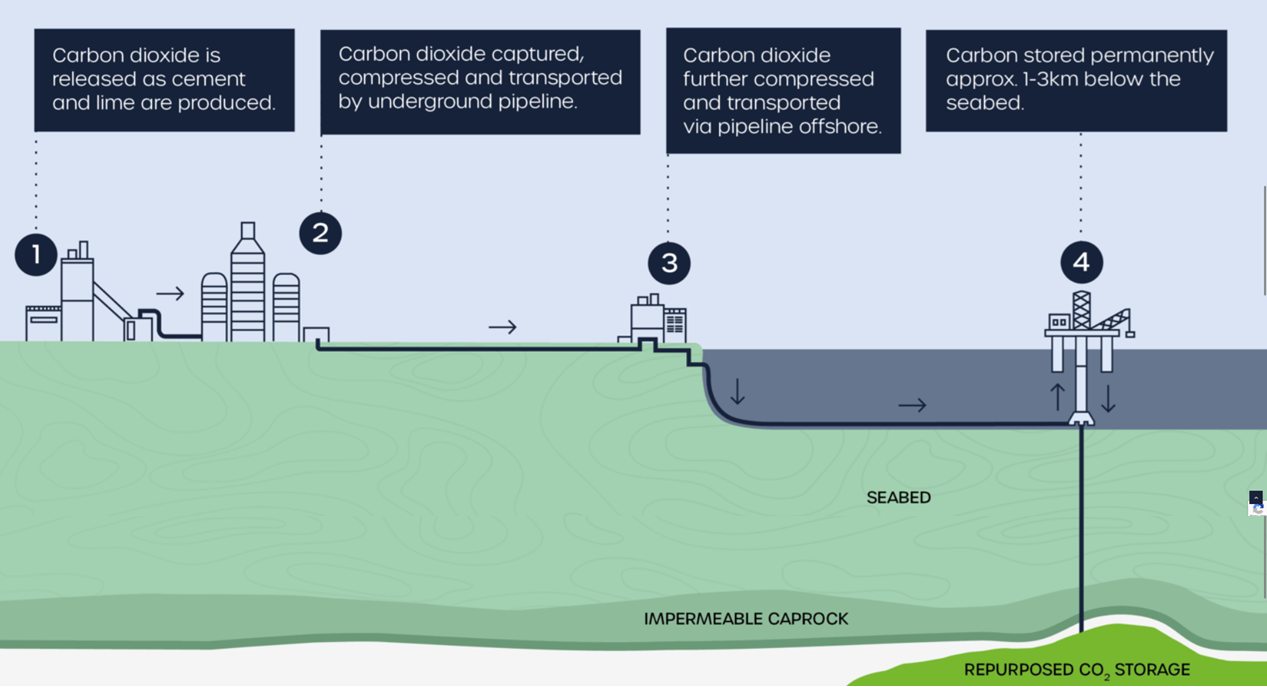
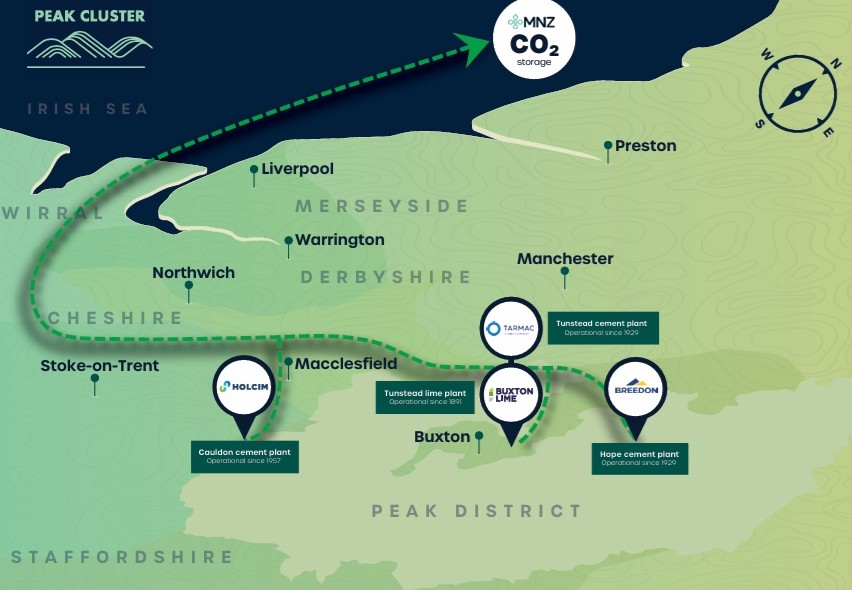
The first, HyNet, will pump compressed carbon dioxide (CO₂) through pipes mostly under Flintshire and North Wales to be stored under Liverpool Bay. The second, Peak Cluster, will take CO₂ from cement manufacturing sites in the Peak District and run it 120 miles through pipes under Cheshire and the Wirral Peninsula, to be stored in Morecambe Bay.
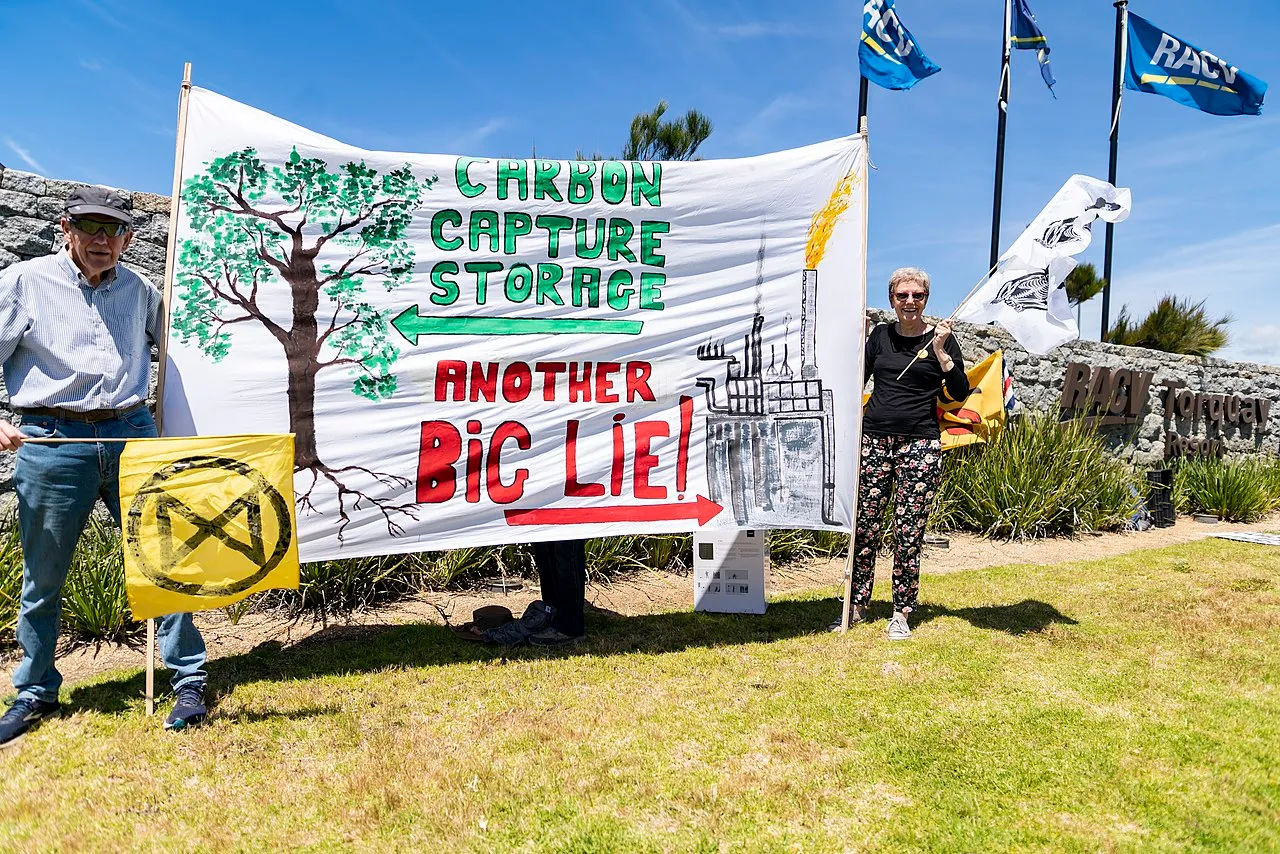
Since our story, Peak Cluster especially has become a public debate in Wirral. That very afternoon, a public consultation meeting in Hoylake turned chaotic, with protesters carrying signs and people queuing outside the venue to ask questions of Peak Cluster project director, Jon Egan.
Information, insight and empathetic entertainment — that's what The Post's journalism is all about. If you want to understand more about how Liverpool City Region functions, and get rich stories about the people who make it tick, consider signing up as a fully-fledged Post member.
It's just £1 a week for all our weekly editions for the first three months. Get investigations, news briefings, culture rundowns and deep dives into Liverpool’s history straight to your inbox, plus access to exclusive events.
We are a reader-funded publication, doing old-school journalism in an old-school way, without clickbait headlines or clunky ads. If that sounds appealing, click below to support us and sign up now.
Mr Egan was said to be taken aback at the opposition to the project. CCS is regarded by many industry experts and academics as a key component of the UK’s decarbonisation goals. But critics say both the transportation and storage of CO₂ in its “supercritical” (highly compressed, to the point at which it behaves as a liquid) state is dangerous, pointing to incidents in Mississippi and off the coast of Norway respectively. (To read more, see our article.) These fears have given rise to local campaigns including those led by StopCCS, HyNot and the Defend Wirral’s Green Spaces Facebook group.
Other decision-makers perhaps caught unawares were local politicians. During a BBC Radio Merseyside phone-in, metro mayor Steve Rotheram was confronted about Peak Cluster by Mark Fleming, who runs the StopCCS website. At first, Rotheram seemed to confuse Peak Cluster with HyNet, and then criticised Fleming’s “emotive” language when the caller referred to the Wirral as the scheme’s “waste pipe” — an echo of North Wales’s MS (Member of the Welsh Senedd) Carolyn Thomas, who described her own constituency as an “exhaust pipe” for HyNet. You can listen to the whole exchange here, beginning at 2 hours 14 minutes.
Meanwhile, although Thomas has been a staunch opponent of CCS, on the other side of the River Dee, her Labour colleagues Wirral West MP Matthew Patrick and Wallasey MP Angela Eagle had been very much in support of the Peak Cluster project. Their constituencies will accommodate the underground CO₂ pipes.
Since the Hoylake protest, and among growing discontent on social media, Eagle has said she will “keep putting forward the questions and concerns of Wallasey residents as it develops”. In a letter to a constituent seen by The Post, Eagle says she will work with Peak Cluster to ensure "everyone can feel that this project is not being forced upon our community".
Patrick, on the other hand, has taken matters a step further. Last Friday, Patrick posted a video to his Facebook page crediting himself for getting the consultation deadline extended after a meeting with Peak Cluster.
“The consultation has been extended,” Patrick enthused. “That’s [now] going to take place next month.”
The only problem is that Peak Cluster’s website kept the original deadline date for the consultation to end: 27 February. Ten days later, this has still not changed.
Answers: So what was going on? According to the Defend Wirral’s Green Spaces admin, residents who contacted Peak Cluster for clarification were told unequivocally that no extension had been agreed. They were advised that perhaps Patrick was referring to the project’s second phase. But when residents contacted Patrick’s constituency office in Hoylake, they were told no — an extension to the Phase 1 deadline had indeed been agreed with Peak Cluster the previous Friday.
The Post decided to get to the bottom of these claims. We reached out to Matthew Patrick — not just to clarify the consultation deadline date, but to also see the minutes of the meeting he held with Peak Cluster’s representatives and to find out whether he is still in full support of the project. Patrick’s office told The Post that the extended public engagement that he has secured is expected next month.
Meanwhile, Angela Eagle told The Post she was also told by Peak Cluster that the consultation would extend for another month, and that she has reached out to Peak Cluster and asked them to amend this on their website.
As for her support for Peak Cluster, Eagle told The Post: “I have been consistent in supporting critical infrastructure to decarbonise our economy, but it must be built in a way that is respectful to and suitable for the Wirral.” The Wallasey MP went on to call for more transparency from Peak Cluster and that they “hold real, meaningful consultation” to account for the local views and expertise of people in Wallasey.
We contacted Peak Cluster. David Parkin, chair, told us that “in response to the feedback we’ve received about the above ground installation at the end of the Wirral, we’ll be undertaking additional engagement specifically regarding our plans for this. The additional engagement will take place for four weeks from late March and will give the opportunity for the community to provide feedback.”
So that’s nice and clear. The “Phase 1” consultation will still end this week, but there will be an “additional engagement process” (Phase 1.5?) in March. Peak Cluster will then “use the feedback received from both the Phase 1 consultation and the additional engagement process” before sharing “the next iteration of our design for the project during a more detailed, Phase 2 consultation.”
Bottom line: Despite assurances that Peak Cluster is subject to democratic discussion, it’s hard not to feel like the project is a “done deal” and these consultation phases are a box-ticking exercise — whether the deadline is extended or not. The Labour government is wedded to CCS, with environment secretary Ed Miliband being a long-term supporter, and Peak Cluster has already received £28 million of taxpayers' money from the chancellor’s National Wealth Fund.
But in 2024, plans to build a carbon dioxide pipeline on the Isle of Wight were scrapped after ExxonMobil pulled out. A company spokesperson cited the government’s "continued lack of government policy certainty", but islanders had been actively campaigning against the CO₂ pipeline in the lead up to ExxonMobil’s decision.
A Facebook group against the project now has nearly 8,000 members while, according to the LDRS, 12,000 people have signed a petition started by Wirral Reform. Meanwhile, Wirral councillors are pushing for an emergency debate on the matter: council leader Paula Basnett has sent a letter to party leaders calling Peak Cluster “a matter that directly affects communities and requires full and focused democratic scrutiny”.
The Post asked Peak Cluster whether, theoretically, Cheshire and Wirral residents who object to the project could in fact stop it from commencing or if the “consultation” phase means little. Chair Mr Parkin replied that feedback from local communities does indeed matter to them: that feedback, alongside statutory consultation responses, and environmental assessments all form essential parts of a project like this. “Every response is read, recorded and plays a role in shaping the next stage of the project,” Mr Parkin said.
Your Post briefing
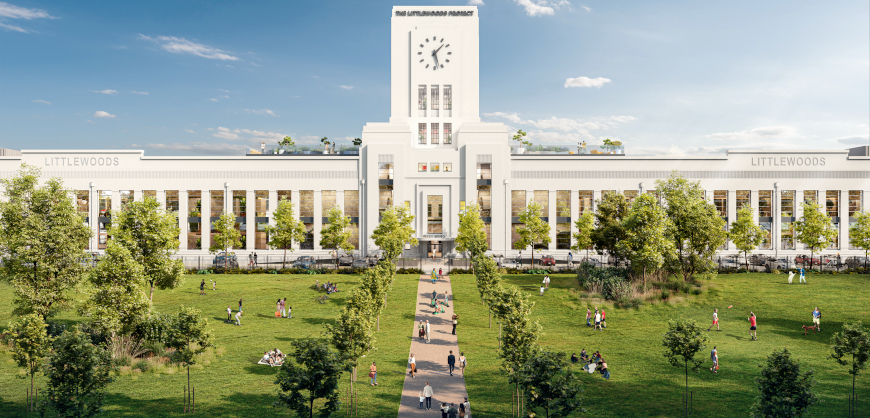
You may have seen that Steve Rotheram is requesting £50m from the government to fill the “viability gap” for the Littlewoods project. This saga goes back to 2017, when plans to transform the art deco former Littlewoods Pools building on Edge Lane into a TV and film studio complex were announced. The Post reported on the delayed status in 2024, and again last year as part of a larger piece about Liverpool’s film and television scene. Well, now the metro mayor, other leaders from the city region and the Liverpool Film Office are due to meet with ministers on 3 March to discuss its future. Conspicuous by its absence in the BBC’s article is Capital&Centric, the firm responsible for the development who told The Post last April they had “completed the remedial works on time and on budget” and are now “working towards being back on site by the end of year”. We’ll be reaching out for an update…
What do Oxford and Liverpool have in common? Historic buildings, world-famous writers, student accommodation, football fanaticism, and now a deal to retain talent and business in the UK. Signed by universities and authorities in both cities, the memorandum of understanding will see the two collaborate on research and development (R&D) in areas such as vaccine development, infection control, neuroscience and women's health, and Liverpool accommodate start-ups and businesses Oxford doesn’t have space for. Metro mayor Steve Rotheram aims to double annual R&D investment in the Liverpool City Region to £2bn by 2030. Of course, memoranda of understanding can be slippery things, being non-binding: it’s been almost a year since one was signed between North West mayors and Axiom Space and we’ve yet to see many spaceship parts built in Liverpool. Still, Apollo wasn’t built in a day, was it?
And homelessness could cost Liverpool city council £90mn over the next few years. A report to go before councillors tomorrow said factors included "family breakdowns and affordability concerns” as well as no-fault evictions. In 2024, no-fault evictions — which allow landlords to give a tenant notice that they must leave their home without having to demonstrate the tenant has done anything wrong — hit a record high across the country, accounting for half the notices served on tenants; in the two years since, just under 1,200 Merseyside households have been subject to no-fault evictions from their homes, contributing to the overall number of homeless families and individuals. While the city council says it’s reduced the cost-per-night of putting people up, it is appointing multinational firm Perk UK to manage housing up to 1,600 cases, with “the total value of the contract expected to be about £90mn” according to the report.
Photo of the week


Here at The Post, we’re all about making connections. That is why we were overjoyed to see that one of our favourite resident photographers, Kris D’Aout, has been shooting snaps for a football match over at the Eldonian Village. Kris has taken some wonderful photos for our stories about the Eldonians over the years — so it was fantastic to see him connect with residents of the village once more. Take a look at all of the images here.
We’re always keen to feature photos from our readers — if you have a snap you’d like to share please email it to editor@livpost.co.uk for a chance to be featured in our Monday editions.
Post Picks
🎺 Liverpool International Jazz Festival begins this week. Running from Thursday 26th February to Sunday 1st March, the Capstone Theatre will host concerts from a stellar line up of artists. See here to book tickets and for more info.
✍️ Ever wanted to write yourself? The Unity Theatre is hosting an introduction to working as a Writer-in-the-room workshop tonight at 6pm. If you can’t make that, maybe Wednesday's “scratch night” to try out new dramatic works is worth a go?
📽️ And on Thursday, the Banff Mountain Film Festival brings a thrilling selection of short films about extreme places to the wonderful Plaza community cinema in Crosby. Click here for more info and tickets.
Recommended reads
🗞️ As a regular face in disreputable pubs and dive bars, Laurence really enjoyed this unexpected BBC article about the Eagle and Child in Huyton, which had “a bad reputation” but was also “full of characters.” When these spaces are gone, they're gone for good.
If someone forwarded you this newsletter, click here to sign up to get quality local journalism in your inbox.
If you’d like to sponsor editions of The Post and reach over 35,000 readers, you can get in touch or visit our advertising page below for more information
Comments
Latest
Just what is happening with Peak Cluster’s CO₂ pipeline?
A ‘stitch up’? How Wirral council bungled Big Heritage
Merseyside’s buses are coming back into public hands. Why not trains too?
From Jimmy McGovern to Len McCluskey: The household names rallying behind Writing On The Wall’s employees
Just what is happening with Peak Cluster’s CO₂ pipeline?
Plus: Littlewoods lethargy, Oxford innovation and a £90mn homelessness bill