

It’s time for Greater Liverpool
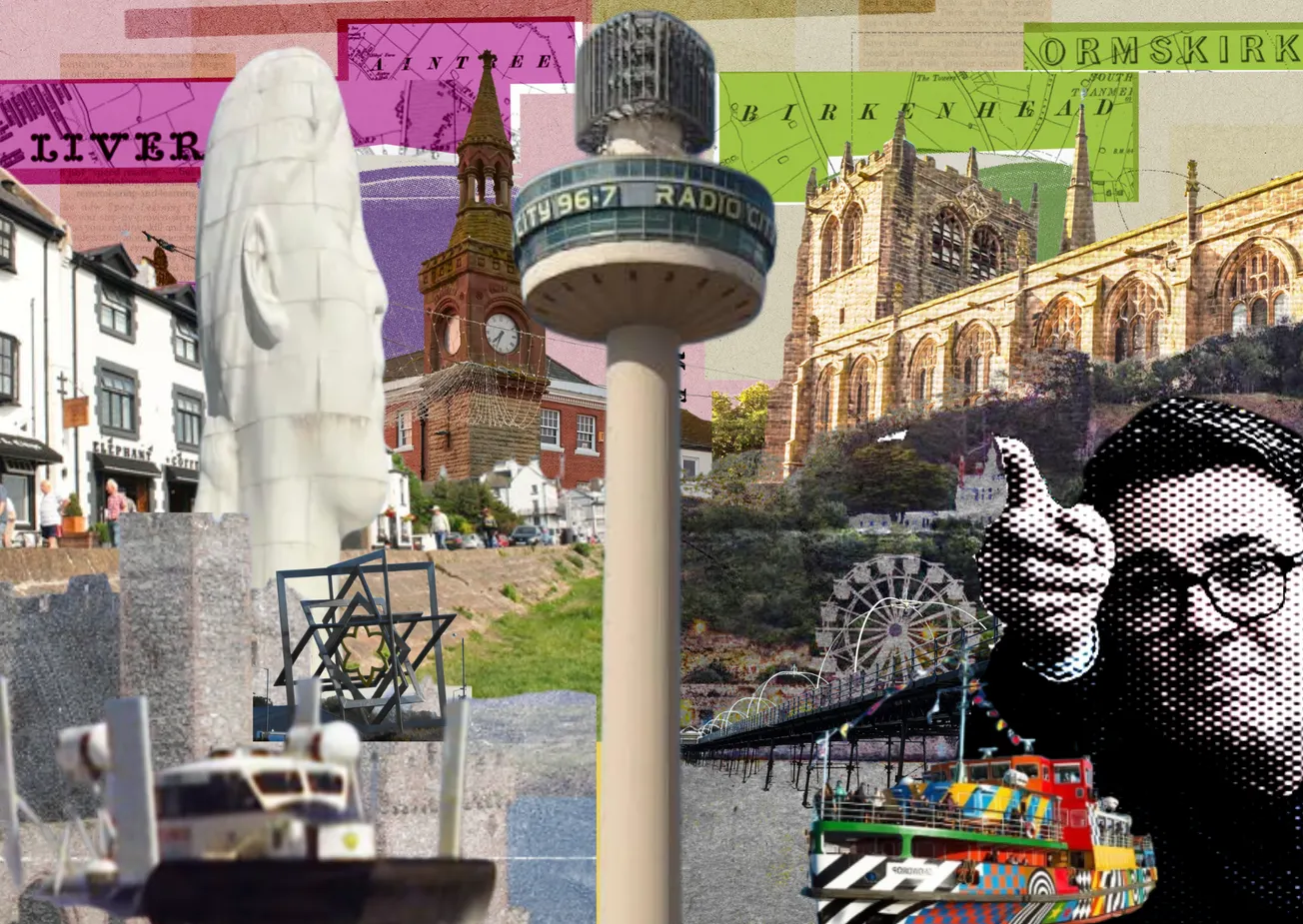
“We think like a village while Manchester thinks like a city.”
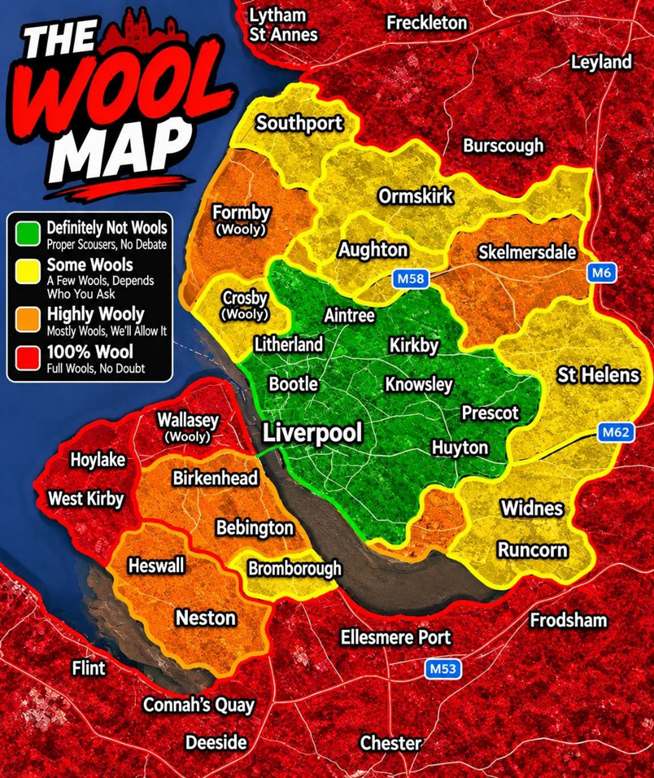
Last week, a certain map went viral on social media. You may have seen it, or something like it: a demarcation of Merseyside’s social faultlines, with a “proper Scouse” green zone to the river’s north-east. Born within this Eden of Montirex trackies and Air Max trainers? You may consider yourself eternally Sound, having won, as Kipling never quite said, the pools at birth. Outside, and you may be a Wool: “the demons in Liverpool’s urban cosmology,” to quote Josh Mcloughlin in these pages.
“I just don’t buy into all that,” Maria Toolan, former Liverpool city councillor for Central ward, tells me over the phone. “‘Oh gosh, no, you’re not from Liverpool unless you're born here.’ You know, I think that's all just ridiculous.”
For Toolan, who has also worked in Manchester, Widnes and Halton — that strange borough that is not part of Merseyside but falls under Steve Rotheram’s mayoral authority — Liverpool should be expansive beyond its city limits. She is now pushing for West Lancashire, the district that contains Ormskirk and Skelmersdale, to be added to the Liverpool City Region Combined Authority (LCRCA).
In a recent letter to Rotheram, Toolan outlines the reasons for West Lancashire’s inclusion: transport links are already directed southwards, with more residents commuting to Liverpool, Knowsley and Sefton than Chorley or South Ribble; housing markets increasingly operate across the West Lancashire-Sefton boundary; and many residents access healthcare, education, retail and leisure facilities within Liverpool City Region. In short, the economic ties are already there; now the locals want to be involved in the decision-making.
“People want to have a joke about it, fair enough,” Toolan says about the map. “But you've got to look at the benefits for the region. This is about job opportunities and infrastructure.”
The benefits of being part of the LCRCA are hard to quantify. Formed in 2014 and codified with a mayoralty in 2017, it’s still a relatively recent project. We also don’t have the counterfactual of, say, a St Helens that didn’t join the combined authority. But it has received £300m in investment that Skelmersdale hasn’t. If you’re in the LCRCA part of the Wirral peninsula, your bus fare is capped at £2 versus £3 in the Cheshire bits. That’s all part of a slowly coalescing integrated transport system that should eventually advantage the citizens of Sefton over residents of the Ribble Estuary further upcoast.
There are, of course, good reasons for the exclusionary self-identification of the Scouser, a flamme de résistance lit in the economic crucible of the 1980s. But these considerations must come second to what makes good economic sense. “People in Ormskirk feel more part of Merseyside than they do Lancashire anyway,” Toolan tells me, whether or not people in Liverpool would decry them as Wools. Likewise, I identify far more with Liverpool than with Chester, despite my Wirral home being part of historic Cheshire.
“Do you think people do this identity stuff to themselves in, say, Nottingham?” Liam Fogarty wonders aloud on the phone to me, describing this navel-gazing as “a byproduct of our chronic self-absorption.”
This story is free to read - you just need to join our mailing list. And why wouldn't you? By becoming a Post subscriber, you'll get our scoops, features, and insights, in your inbox, the second we hit publish. No card details required.
Already have an account? Sign In
Latest
It’s time for Greater Liverpool
It’s been decades in the making. Will the Mersey Barrage finally happen?
How Liverpool is bringing down drug deaths
How green is Liverpool, really?
It’s time for Greater Liverpool
“We think like a village while Manchester thinks like a city.”