

How the National Bank became housing’s biggest headache
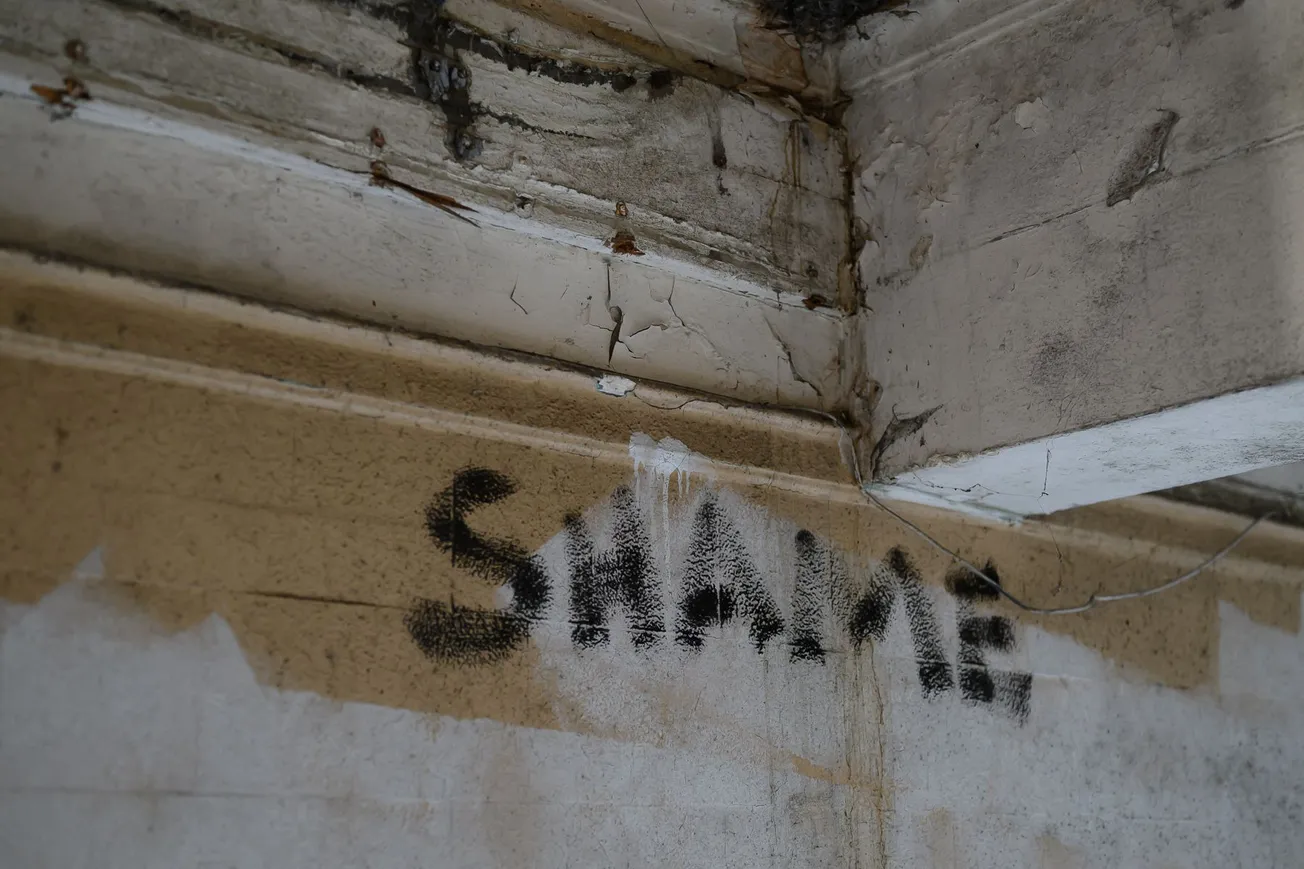
Walls of mould, collapsing ceilings and no working lifts in a 14-floor building

Hello! It's Abi here. Today's weekend read is a great example of how you start with what you think is the story, and then in the process of reporting it uncover an even stranger one. Last month, freelance writer Charlotte Robson began investigating the declining state of Liverpool's National Bank building. But when she attempted to get to the bottom of exactly why such an iconic building has been left in ruin, she stumbled across a web of companies all of whom had a stint running the National Bank. Of course, we wanted to ask them some questions. What followed was a lengthy chain of communications, ranging from the threatening to farcical...
I hope you enjoy today's story, which is paywalled part-way down. Right now, for new members it's just £1 a week for all our weekly editions for the first three months. Get those alongside news briefings, culture rundowns and interviews straight to your inbox, plus access to exclusive events. To keep The Post reader-funded and ad-free, click below to support us and sign up now.
Very little feels nicer in this life than coming home after a great night out. You’re weary, enjoyably blitzed, perhaps you’ve grabbed a kebab on the way home and are still basking in the culinary afterglow. You settle on your sofa, maybe text the group chat that you made it back, watch a bit of telly.
None of that was on the cards for Luke when he returned home after a night out back in late 2020. At the time, he was living in the National Bank, a picturesque early 1920s building that had been converted into flats years before. If you’ve walked past, you might have been struck by its elegant exterior. But like your Hinge date showing off their vast book collection on their profile and seeming borderline illiterate in person, appearances can be deceptive. That night, the rain was pelting down outside. On opening the door to the flat, Luke discovered that the entire hallway ceiling had caved in. Pools of dirty water covered the floor, while more water dripped through the freshly exposed brickwork above his head. This sounds horrifying, but Luke remembers taking a practical approach: “I just had to clean it up and get on with it, to be honest!”
Still, the ceiling falling in bothered Steve Lindsey rather more. The name might sound familiar, and with good reason: Birkenhead-born Steve has been Deaf School’s bassist for 50-plus years and fronted new wave band The Planets. More pertinently for this story, he’s also the person who owns the flat Luke was living in. Steve was unhappy to hear about the hole, but he wasn’t exactly surprised — it was the third time that year the hall ceiling had caved in.
Luke – which isn’t his real name – was a friend of Steve’s son. Steve had let Luke stay there rent-free over the past 12 months in exchange for something resembling stewardship duties: rolling out a hotchpotch of trusty bins to catch bathtubs’ worth of water pouring through the ceiling in the middle of the night, funnelling leaks through bin bags, keeping records — that sort of thing. Installing a temporary steward felt necessary — a point of urgency, even. Living in Ireland, Steve no longer trusted the state of the building to leave the flat uninhabited.
“The simple fact is that I’ve got a flat that’s crumbling around my ears,” sighs Steve when I speak to him. So why not just repair and maintain it properly? Steve and the other tenants in the building have less power than the average mortgage holder in this country. This is because they’re locked into a leasehold arrangement — essentially a long-term tenancy agreement, where a company (or person) owns the building.
Since leaseholds don’t equate to building ownership, they don’t allow for much control over the upkeep of the property, meaning if things go wrong, the leaseholder must rely on the building’s manager or landlord to put things right, funded by the service charges they pay them. When I dug into this issue, I found at least three other residents at the National Bank enduring similar issues, and the photos of the communal areas suggests their experiences are not anomalies. So how has this beautiful historic building been allowed to get into such a sorry state?
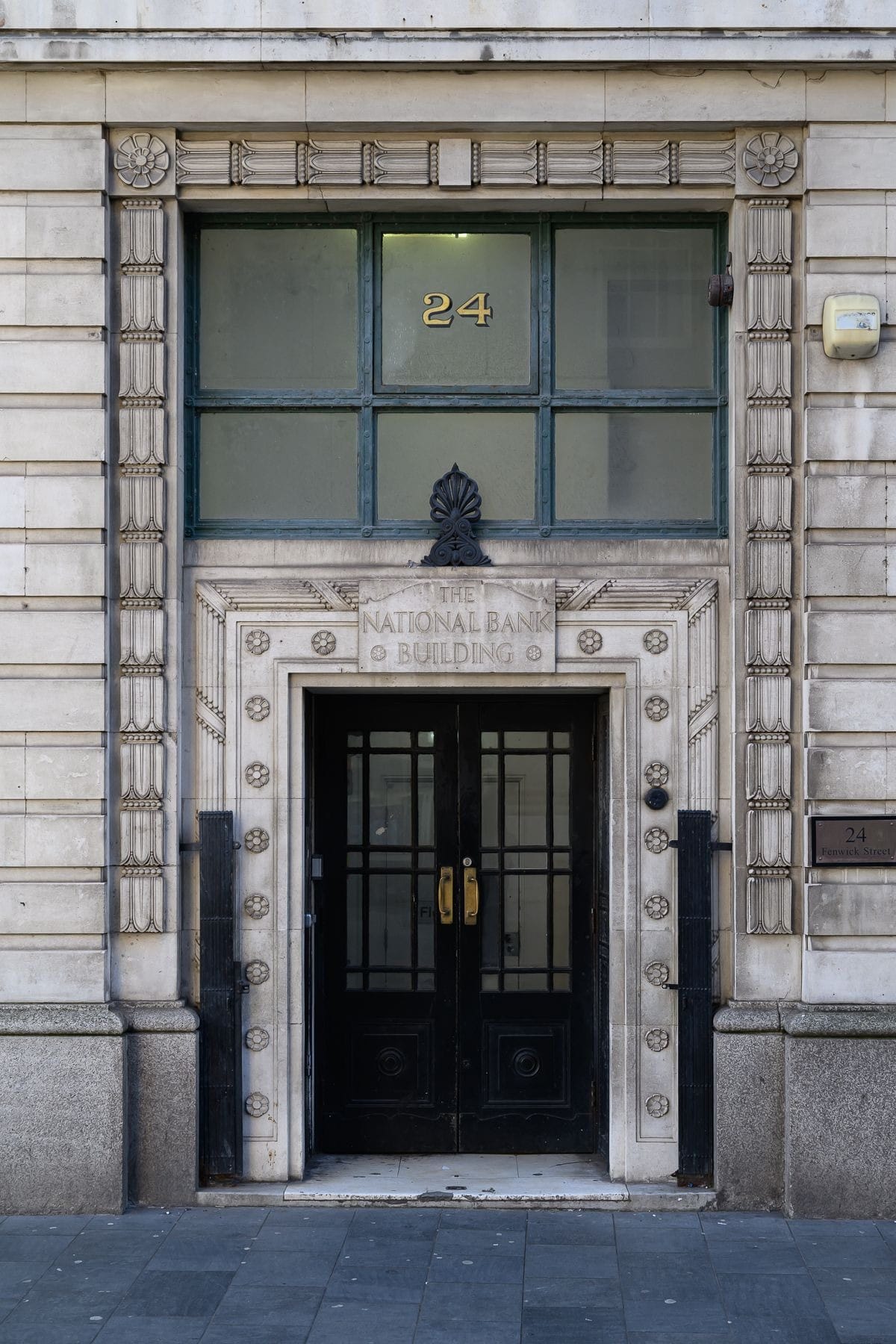
Let’s start with the facts — and the building itself. Established as the National Bank of Ireland in 1835 and headquartered in London, the National Bank Limited operated a network of branches across England and South Wales before shuttering its doors in 1970. Its Liverpool branch opened on the corner of Fenwick Street and James Street in 1923 and was a sight to be seen: designed by Castle Street architects Messrs T Arnold Ashworth & Son’s, Greek influences can be read across the facade in the mix of column elements and ribbons of Meander motif. By 2000, the upper seven floors, all former offices, had been converted into 28 flats.
Steve recalls being very happy with the flat when he and his now ex-wife bought it as a rental back in 2008. He loved its prime city centre location, and the stature of the building was a plus, too. Living in Ireland, he didn’t visit the National Bank a lot in the early days. But a local letting agent managed things on his behalf, and he remembers only the odd, small-scale problem, like a cupboard door that needed fixing. This quiet and easy period stretched on for a good decade with nothing major cropping up. When one tenant moved out, there was always already another one lined up to replace them. It wasn’t until visiting in 2018 that he noticed a few “dodgy-looking” stains on the master bedroom ceiling, as though damp could be getting in. He asked the letting agent to take a look and they ended up giving the place a fresh lick of paint.
By the following year, there was quite a severe leak from the roof above in the hallway. There were also defects across the whole flat — water leaking into the property from outside showing around the windows and signs of water damage and mould on the ceilings and walls. He believes these issues led to his tenants leaving. Still, while Steve was struggling, the flat next door actually fared far worse. He tells me water had torn through both its ceiling and its floorboards, only stopped from going any further by the apartment below. It has been vacant, suspected uninhabitable, ever since, he says.
Welcome to The Post, the quality newspaper for Merseyside and the Liverpool city region. Sign up today and get two completely free articles per week delivered directly to your inbox.
That means a Monday briefing with cultural tips, top stories and everything else you need to know, and a weekend read diving deep into a subject, whether that’s lost department stores of local yore or bungled political promises. No mess, no fuss, just good journalism: click below for more.
Steve’s ceiling was repaired with the letting agent’s help, following assurances from then-landlord Keppie Massie (who managed the building between 2014 and 2021) that “the roof had been dealt with…however, the actual problem was not identified”. Not long after, the same thing happened again. And as we know from Luke’s story — again.
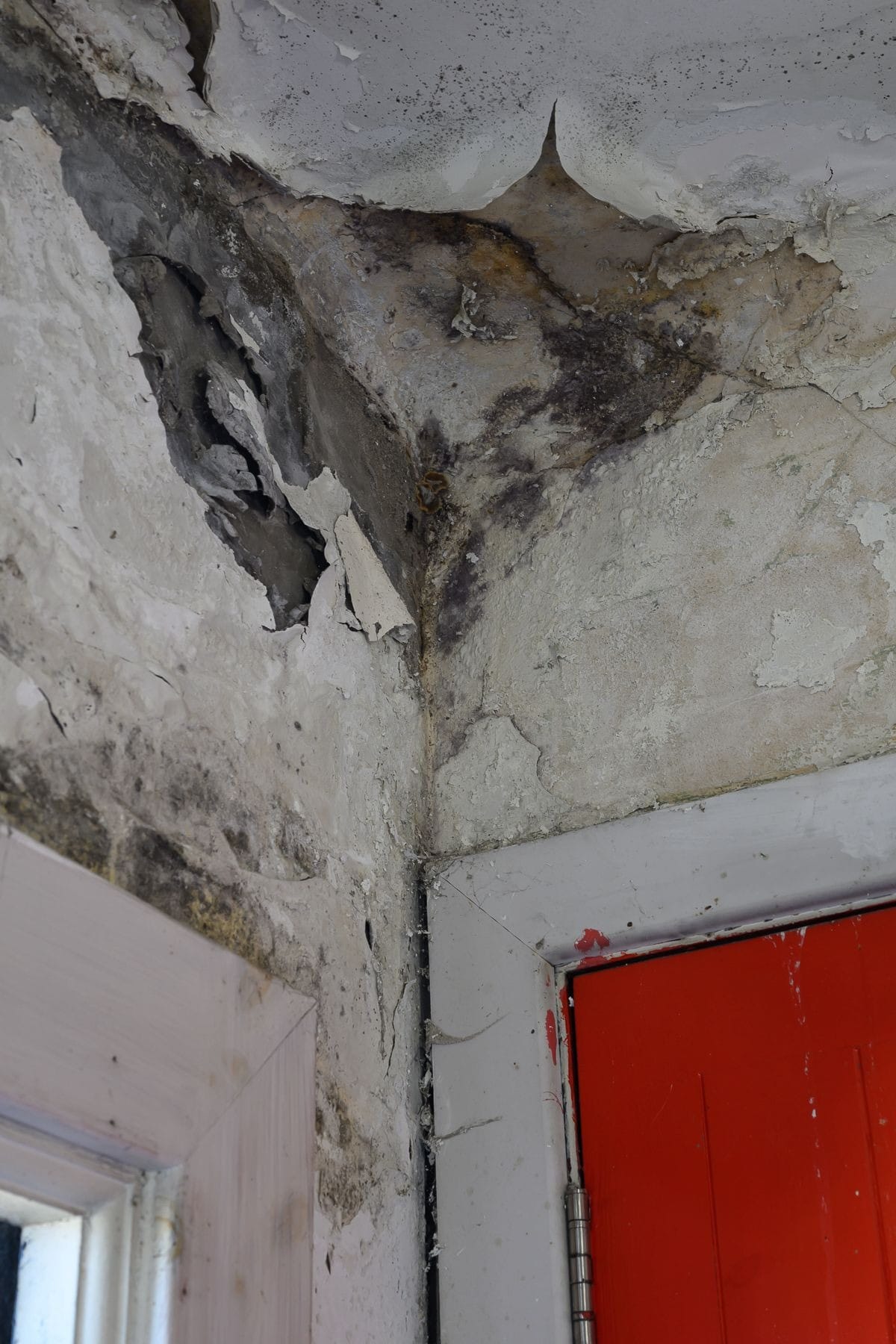
The more time Steve himself spent at the flat after moving back from Ireland in 2023, the more he learned from his neighbours that many of them had experienced similar — if less dramatic — issues in their own homes. Problems with pervasive damp and mould, leaking and broken windows, a sense of the eight-storey building’s general declining cleanliness and complaints about the on the blink lift were commonplace.
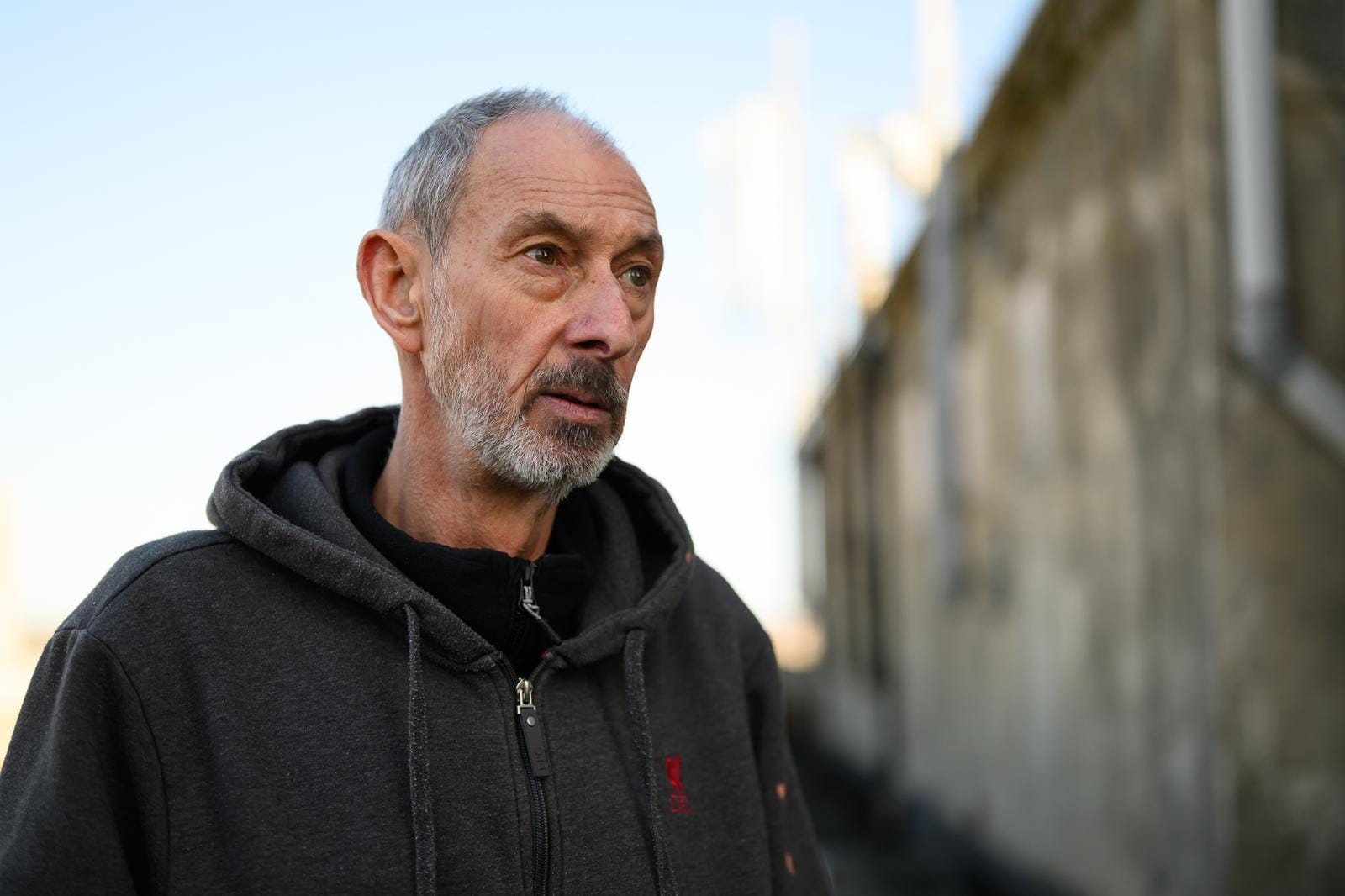
All of this sounds bad enough in the abstract, but I want to see it for myself, so Steve offers to take me on a tour of the building. Sporting a grey LFC hoodie, he demonstrates how the building acts as the thoroughfare’s main perspective point. Only it and its next-door-neighbour, Fenwick Street’s the Britannia Buildings, survived the Blitz intact.
Less triumphant is the scene on entering the interior. There’s an incessant peeling of layers of white paint from the soffit, ceiling and walls of the stairwell. Between this and the lack of a working lift (out-of-order for the past two years) it is hard to fathom how it must feel to lug bags of shopping up 14 long flights of stairs. I’ve dressed warmly enough, but I’m still surprised by the chill. This makes sense: I observe that at least one of the steel windows serving the communal lift area can no longer be closed. Another in one of the flats I visited can’t be opened at all, the leaseholder tells us, lest its 1920s frame dislodge entirely into the street below.
Up on the roof with Steve, he points out countless water and wildlife entry-points like missing doors and broken-off window panels from what he terms earlier patch-up jobs, and gestures to the black sludge leaking from pipes next to our feet. It has taken him years to trace some of these less obvious water inlets to the leaks in his apartment, directly below.
As we work our way through the building, I hear how the lack of a functioning lift has already left one resident, who asked to remain anonymous, bereft of two summers outside. They tell me that they just wish they had been able to spend more time sitting beside the river in the sunshine. Since they were suffering from blood clots in their leg, as well as pneumonia at the time, they had simply been too scared to risk so many flights of stairs potentially disrupting the clots — so once they were in, they stayed in, until work commitments demanded they leave again.
A different tenant raises another concern: And what about if a fridge or oven needs replacing? Right now, this tenant worries they wouldn’t be able to get anybody to fit one, since an engineer would have to navigate those winding stairs.
Meanwhile, twenty-something financial services employee Harry, was puzzled as to why he kept waking up each morning with a bad chest, bloodshot eyes and a sore throat. Shortly after moving into his flat in 2025 there was so much black mould spread across his bedroom wall that he had to move into his smaller second bedroom — that is, his home office —for the sake of his health. Working and sleeping in the same, reduced square footage can be tough, Harry says, but he doesn’t expect the problems with his living situation to be resolved any time soon. He’s not yet lived in the flat, which he co-owns with his dad and brothers, for a full year. The extortionate service fees really bite, Harry says, given the flat’s poor condition.
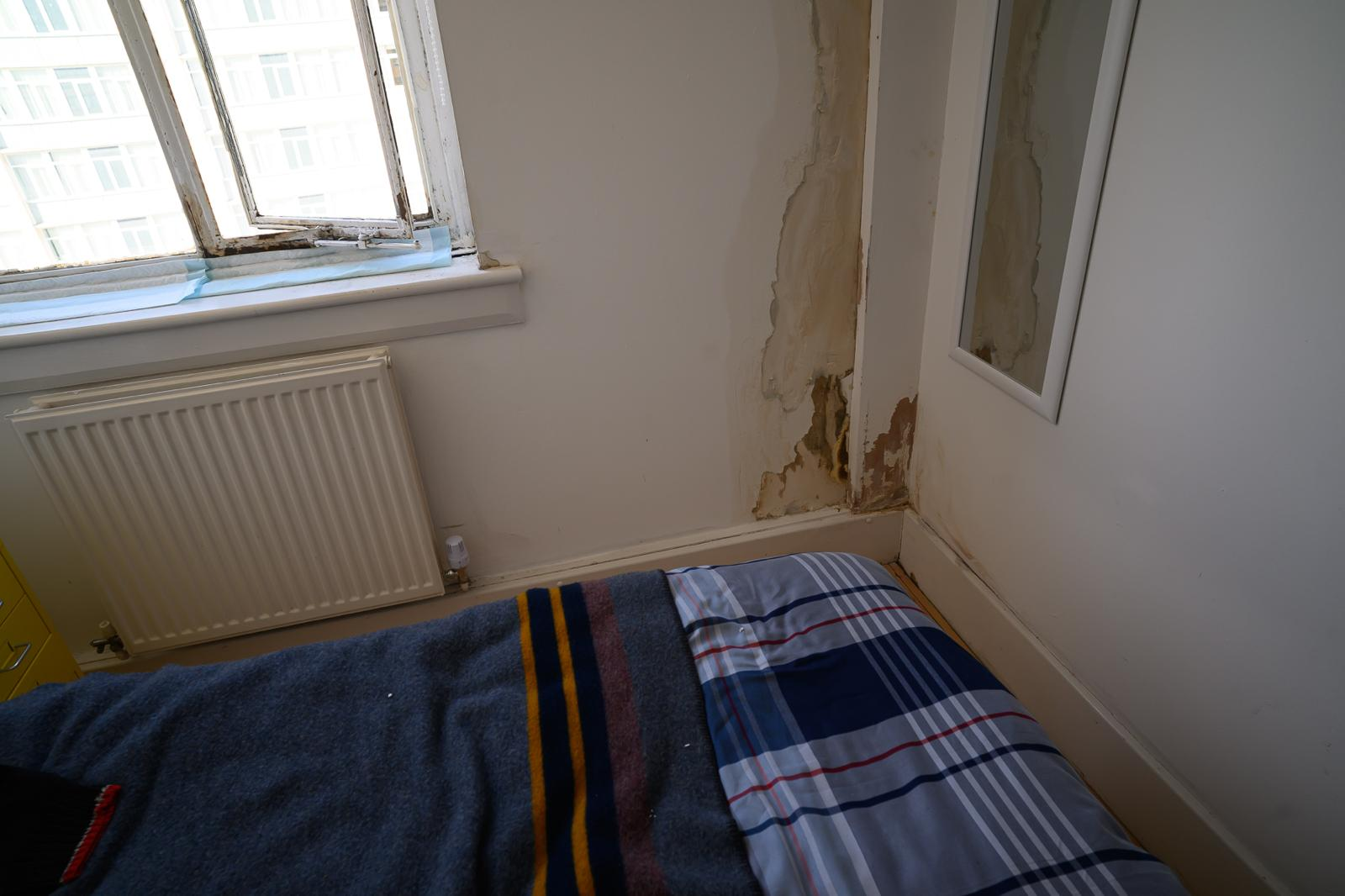
The extreme level of damp is one issue. But a larger problem seems to be the building being maintained by a number of different management companies over the past years. Changing management companies has meant beginning anew each time with a different team, reshuffled priorities, re-reviewed budgets and an even older building to set about tending to, all stalling progress.
With a complicated story like this, there can be a risk of boring your readers to death by subjecting them to every last detail. In the interests of you making it to the end of this piece, attention intact, I’m only going to give you the details you need. When Steve bought his flat, the building and its cleaning, maintenance and repairs was managed by the company Trinity Estates. Steve’s relative satisfaction in this time period sounds like an outlier. Trinity Estates were ousted in 2009 for reasons Steve is uncertain of, but he does know the residents were so unhappy they united to bring a case to court against them and won. Around the time Steve’s trouble began, management company Keppie Massie had taken over, and by 2020, Regalty Estates were in the driving seat, remaining the management company until a legal quirk meant Trinity Estates — the company that had been ousted shortly after Steve’s arrival — took back over in June 2024.
Sign up to The Post today and get two completely free articles per week delivered directly to your inbox. No fuss, just good journalism: click below for more.
When I reach out to the various housing management companies to put the residents’ complaints to them, a spokesperson for the current housing management company, Trinity Estates called the situation “very complex and involved.” They say they cannot comment on how the building was allowed to deteriorate in the 15 years they weren’t managing the National Bank. While Harry and Steve both describe frustratingly slow progress when it comes to anything more than basic fire safety works, Trinity tells me they have improved fire detection and general health and safety since taking back the reins in 2024.
Keppie Massie say they can’t comment. They stopped offering property management services in 2021, and as such, the staff who once managed the National Bank have been transferred to a different company.
My exchanges with Regalty Estates — via the company’s director, Alan Williamson and a colleague of his — prove rather more colourful. Throughout our correspondence, Alan says he has almost no time to respond to the Post’s queries. In an early email, he mentions his father is dying. In a subsequent email, he seems to correct this detail, saying his father-in-law is dying (perhaps in addition to his father? It’s unclear), and the best friend of his romantic partner, who works at the firm, is also dying.
To read to rest of this story, you'll need to be a paying member of The Post. For new members it's just £1 a week for all our weekly editions for the first three months. Get those alongside news briefings, culture rundowns and interviews straight to your inbox, plus access to exclusive events. To keep The Post reader-funded and ad-free, click below to support us and sign up now.
Liverpool deserves great journalism. You can help make it happen.
You're halfway there, the rest of the story is behind this paywall. Join the Post for full access to local news that matters, just £7/month.
SubscribeAlready have an account? Sign In
Latest
How the National Bank became housing’s biggest headache
The one rule making Liverpool uglier
Liverpool vs UKIP: Round 2
The Killing Fields of Wirral
How the National Bank became housing’s biggest headache
Walls of mould, collapsing ceilings and no working lifts in a 14-floor building