

A dish best served cold: Laurence Westgaph sued us to reveal our sources - and lost
The former TV historian waged a legal campaign to find out who had spoken to The Post. A year later, we met him in court
On the first day of the trial earlier this month, TV historian Laurence Westgaph was asked to turn to page 255 of the hearing bundle: the thick ringbinder of documents that chronicle a year-long legal battle that was now, finally, coming to a head in court.
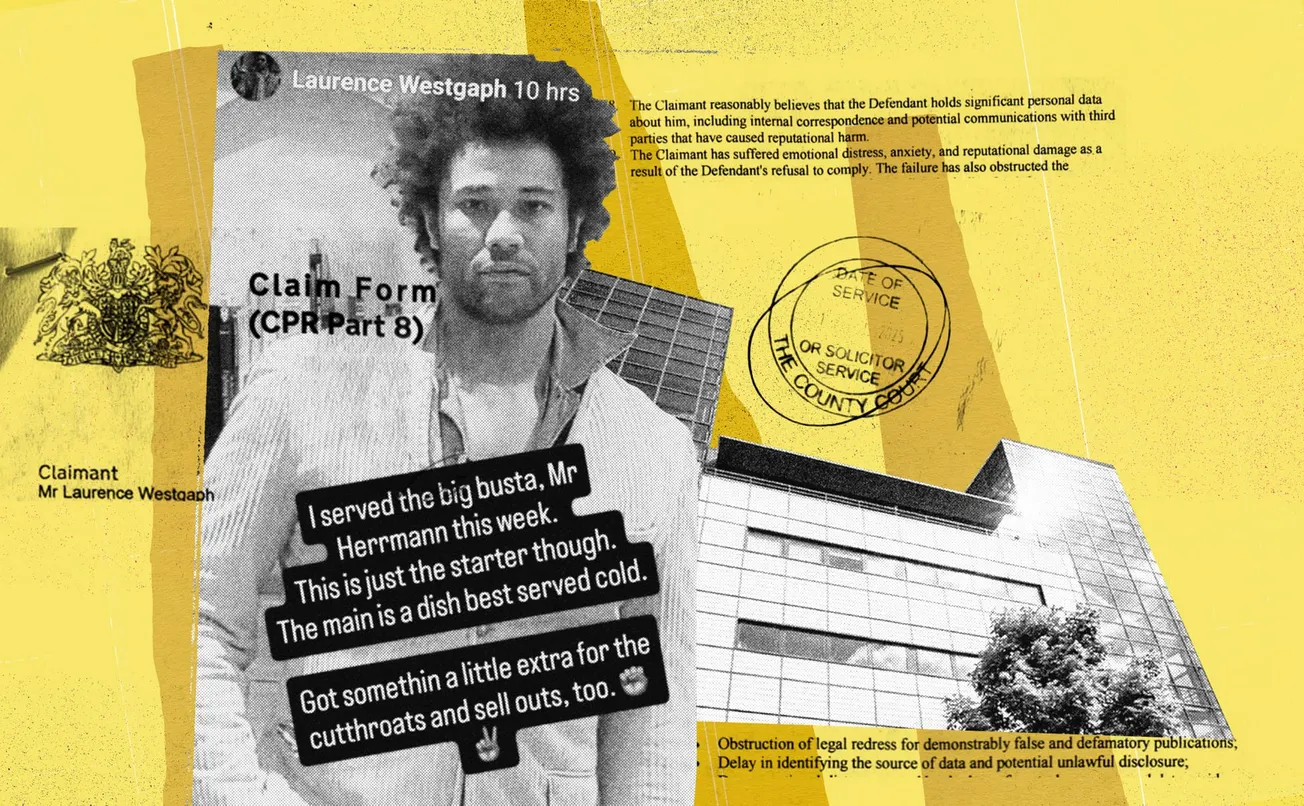
Westgaph, a well-known figure in Liverpool who has presented history shows on the BBC, was asked to read a Facebook post he’d published about me in July last year. He began to read it out.
“I served the big busta, Mr Herrmann this week…”
Our barrister, Claire Overman, stopped him. She hadn’t meant for him to read the post out loud. Everyone in court read the Facebook post in silence. “This is just the starter though,” Westgaph had written on top of an image of himself staring at the camera with his shirt unbuttoned. “The main is a dish best served cold.”
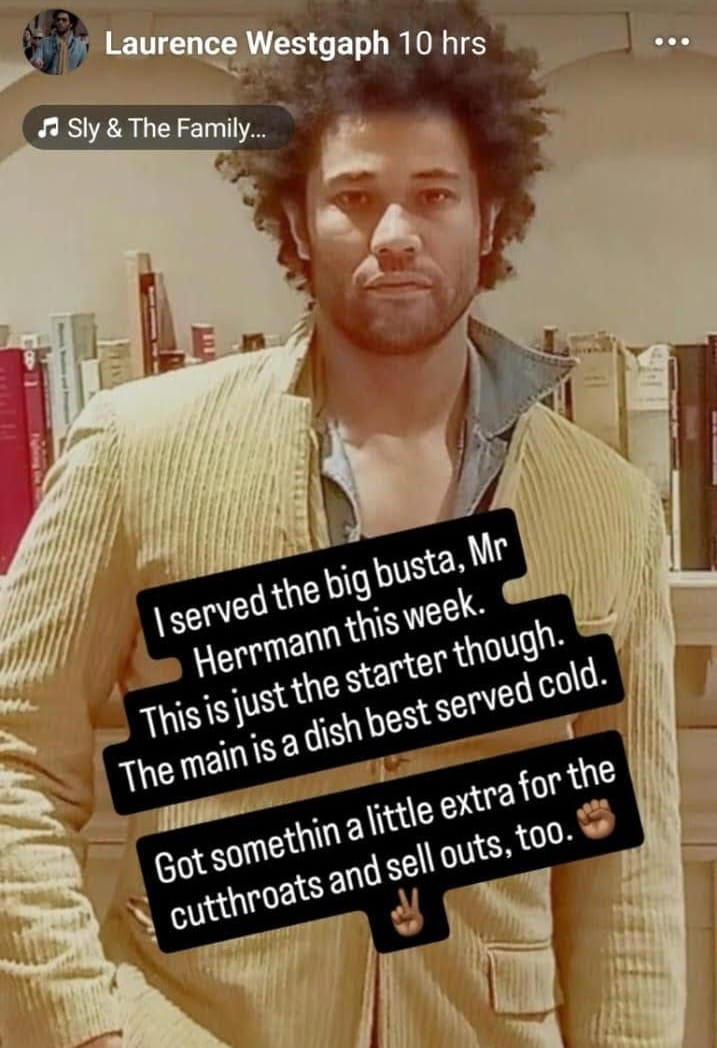
This was the denouement of a tough hour-long cross-examination of Westgaph, in which it often looked like he was struggling to explain why he had initiated this lawsuit in the first place. Claire, representing The Post, asked him about the dish “best served cold”.
“Is that a reference to revenge?” she asked.
“It’s a colloquialism, isn’t it,” Westgaph replied.
What about the threat towards the “cutthroats and sell outs”? Is that a reference to our journalistic sources, she asked? He said it wasn’t.
With her last question, Claire got to the heart of why we were there, sitting in a courtroom in Liverpool on a summer’s day. The social post shows that this entire lawsuit was an act of revenge, wasn’t it? Westgaph denied that, too.
“I find that explanation unimpressive,” District Judge Lindsay Clarke would go on to say. “I find the Facebook post unimpressive.” On the balance of probability, Clarke said it was designed to send the message that “he will get his revenge.”
Hunting for sources
The next day, the judge would decide a case that has profound implications for press freedom in this country and that we have spent more than £75,000 fighting. Fundamentally, it comes down to this: Westgaph tried to use data protection laws to force us to hand over documents that would reveal the sources behind a series of articles we published about him in early 2025. And we refused to do so.
The stories – reported by my colleague Abi Whistance and shortlisted for a British Journalism Award last year – revealed that National Museums Liverpool (NML), the biggest cultural organisation in the city, had hired Westgaph as a resident historian despite being warned about his record of "sexual and domestic violence". Abi's reporting also suggested NML didn’t act on several other warnings about him while he was employed there from 2020 until 2024.

In response to our story, NML said it had not received “any internal formal complaints about his behaviour” but it launched an investigation and encouraged colleagues to come forward. It later said this probe showed that NML “acted in line with its policies” in the appointment of Westgaph, but it “identified ways it could strengthen its internal policies and procedures”.
The Post’s reporting was based on detailed interviews with more than a dozen sources, including women who had been in relationships with Westgaph in the past. In March last year, a few weeks after the third story was published, Westgaph got in touch, trying to find out who these women were and what they had told us.
He did this via a Subject Access Request (SAR), a statutory right that allows any person to find out if an organisation is processing their personal data and to request a copy of that data if they are. It stems from a piece of EU legislation called the General Data Protection Regulation, or GDPR, which came into force in 2018. The law is supposed to protect an individual’s right to transparency to prevent companies secretly harvesting their personal data. Westgaph wanted to use it for something else.
His SAR demanded we send him “all personal data you hold about me”, including any correspondence mentioning him. Crucially, he wanted us to hand over “any information regarding the source(s) of allegations published about me.”
This was a critical line – one that would trip him up in court. By the time this month’s trial came around, Westgaph was insisting that his SAR had not been sent in order to force us to reveal our sources.
This wasn’t true. In fact, he had shown an obsessive focus on the women who he suspected had spoken to Abi. In an email to one of our editors in June last year, which he sent to her personal email, he referred to one of his former partners by name. “I now require the following,” he wrote, demanding that she “provide full particulars of all communications you have made to third parties concerning me”. If she didn’t comply, he threatened: “I will immediately apply to the High Court for an injunction against you”.
After hearing his evidence, the judge told Westgaph she didn’t believe his argument that he hadn’t been trying to identify our sources: “I have to say that his attestations at court are not supported by the contemporaneous documents.”
An on-stage ambush
When Westgaph began his campaign of SARs and threats, we were initially confused. No one had ever tried to obtain confidential source information from us via an SAR before, and we went looking for legal advice on how to respond. I remember how disconcerting the situation was, and how stressful it became as further emails and SARs came in from Westgaph, often demanding a response within an arbitrary deadline like five or seven days. His tone was swaggering and threatening, and he gave the impression of someone who knew he had us on the run. For a while, I have to admit, he did.
Abi spent a huge amount of time reviewing hundreds of documents in which Westgaph’s name or initials appeared. Eventually, we responded to his initial SAR, albeit one day after he was entitled to it (we sent some additional information he was entitled to 22 days late, which the judge described as a “trivial” delay).
We handed over basic internal messages where his name appeared, but drew a hard line at anything that could compromise our sources or reveal our processes. To protect them, we relied on the 'journalism exemption' — a rule specifically designed to protect the ‘special purpose’ of journalism.
Before we could send this response, Westgaph had already filed a lawsuit at Liverpool County Court against The Post's parent company Mill Media, which I founded in 2020. By not giving him the data he felt he was entitled to, Westgaph said he had suffered “significant and ongoing emotional distress and reputational harm”.
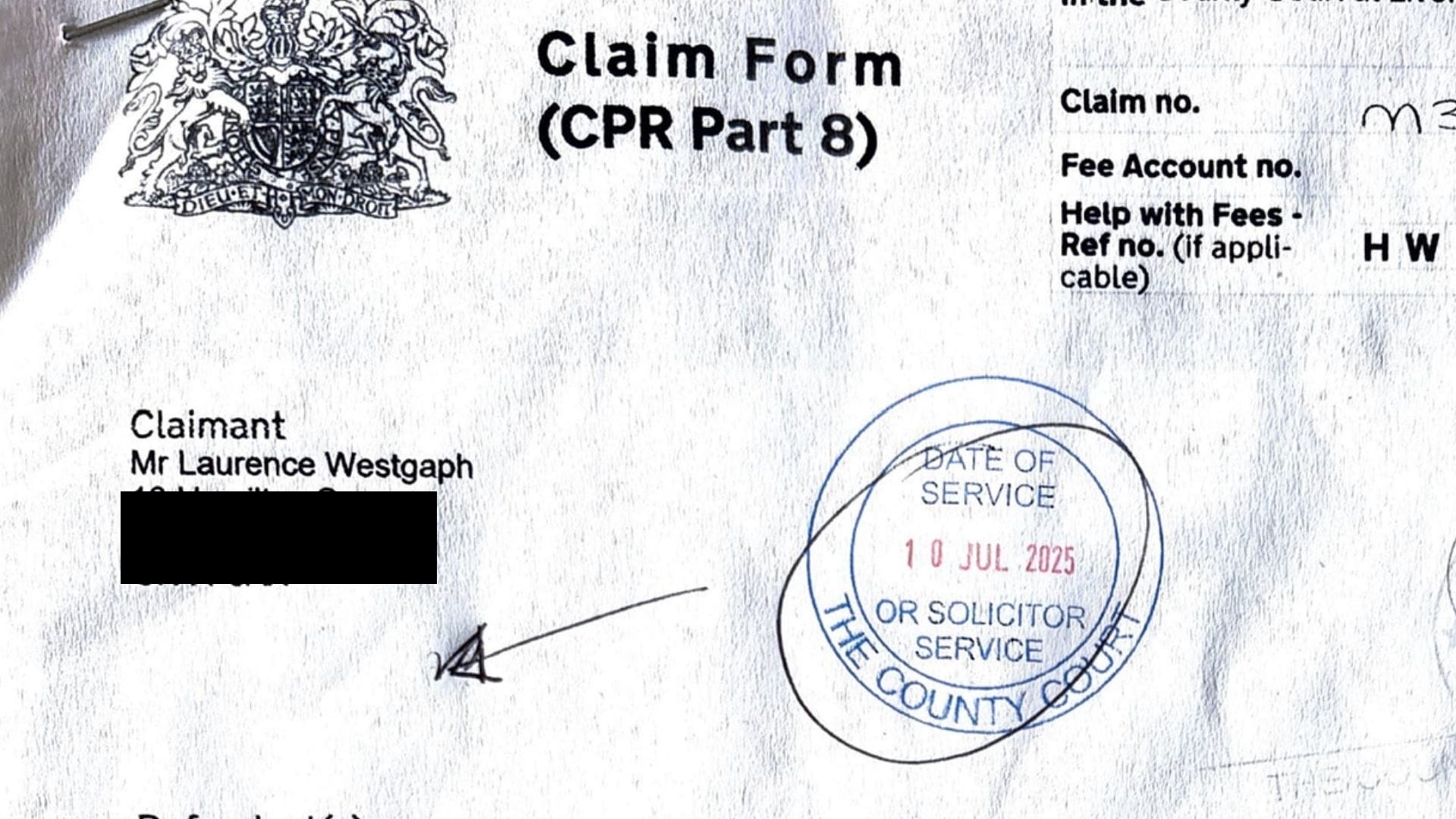
His claim demanded an order requiring “full compliance” with his SAR, damages for emotional distress, reputational harm and two other forms of harm, “aggravated damages” and his legal costs.
Not long after the court claim arrived in the post, I was on stage at an event in Manchester and noticed Westgaph slip into the room. I recognised him immediately but it was too late to ask the event’s organisers to kick him out. At the end, Westgaph walked over to me on stage and said he was “serving” his lawsuit on me, handing over an envelope with documents identical to ones he had already sent by post.
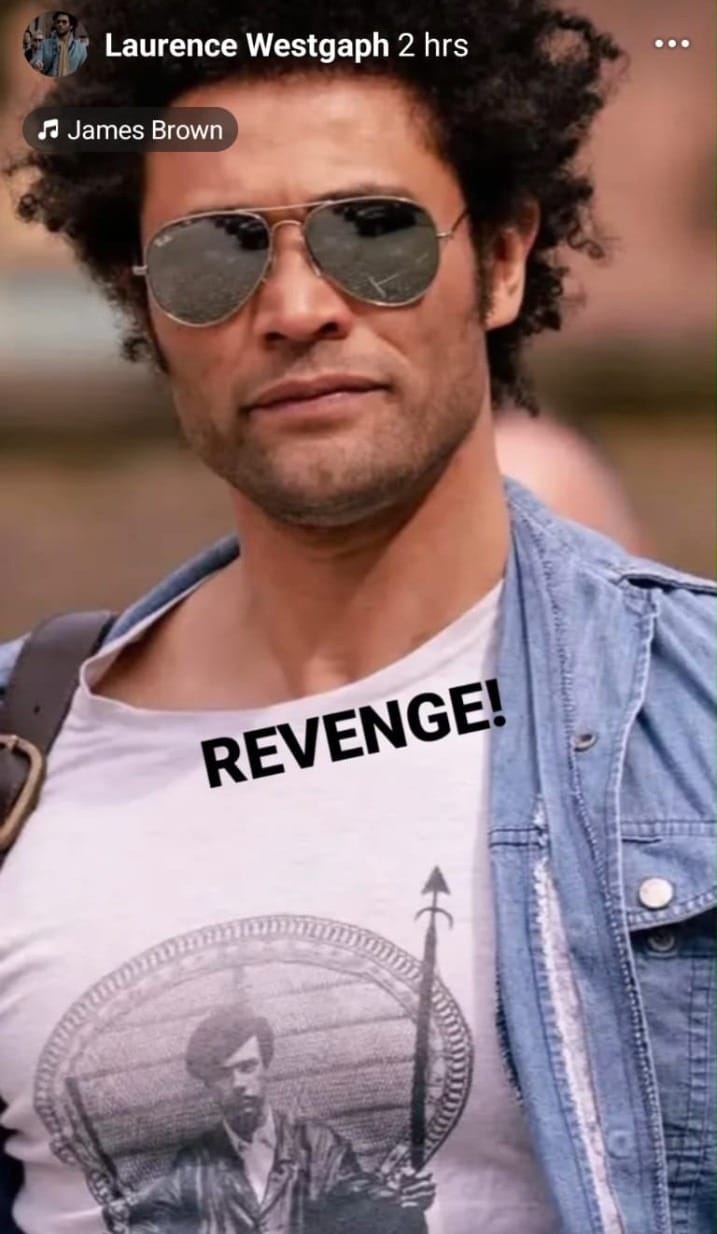
It was obvious that he had made the trip from Liverpool to Manchester to perform this stunt in front of an audience. The next day, he posted his “I served the big busta” Facebook post. Not long after, he posted again on Facebook, this time with “REVENGE!” written on a photo of himself in sunglasses.
Around this time, we also learned that we were not the only recipients of SARs from Westgaph. He also sent them to various ex-partners of his, demanding that they hand over messages in an explicit attempt to uncover who had spoken to The Post. He must have known that individuals processing personal data for purely personal reasons are not required to comply with SARs, but he gambled that the women in question did not know this. Several of them told us they felt scared and panicked when they received his emails.
Responding to Westgaph’s lawsuit against us, we told him we would go to court to fight his claim rather than reveal the sources of our journalism or take the stories down. But we knew it would cost us tens of thousands of pounds, and that the outcome was uncertain because the journalism exemption – and in particular the details of how it is applied in the context of SARs – hadn’t been tested in court before.
A case dismantled
The hour in which Clarke read out her Judgment was one of the most stressful experiences of my life. This happened ten days ago in Liverpool’s civil court, following a day and a half of evidence in which Westgaph and I both took the stand.
For the first 20 minutes, I had a horrible feeling that it was going against us. Clarke slowly went through the arguments about the delay in sending our full response to Westgaph’s SAR, finding that the bulk of our response was sent one day later than it should have been.
Then she turned to the key substance of the claim, and it began to dawn on me that she was dismantling Westgaph’s case in front of our eyes. She said his argument in court that he hadn’t been seeking to identify our sources wasn’t supported by the documents, and said: “It’s very clear he wanted the identities” of the women.
Crucially, she said she was satisfied that we had taken “all reasonable steps” to search for the data and apply the exemptions. Our brilliant solicitor Anne Mannion glanced up from her note-taking and smiled at me. When I looked over at Westgaph on the other side of the courtroom, he had his eyes closed.
Then she moved on to Westgaph’s claim that our approach to responding to his SAR had caused him “distress”. “There is no evidence of distress caused by delay,” she said, noting that Westgaph’s case had “changed dramatically since he first filed it.”
As a result, Westgaph’s case had failed. His request for the court to enforce his SAR and force us to hand over more documents was denied. As he and his barrister filed out of court behind me, I felt incredibly relieved that this case was over and the court had vindicated us.
I was prepared for the prospect that we wouldn’t recover our costs and we didn’t, even though we had clearly won the case on all of the key points. Clearly, GDPR rules need to be amended to stop people like him harassing small companies with bogus, bad-faith cases that are incredibly expensive to defend.
There was one final legal thread still hanging which meant we couldn’t yet relax. In February this year, Westgaph did what he has always threatened to do: he filed a defamation claim against us in the High Court. This was always the nuclear option because a High Court case can easily run into hundreds of thousands of pounds to defend, if not millions. It was his chance to challenge the truthfulness of our articles about him.
After filing the claim, he had a four-month window to formally serve us the paperwork. Our lawyers warned us to brace for a last-minute ambush on the final day: Wednesday, 17 June. If the papers arrived, it would trigger a fresh, ruinous legal battle that could drag on for years.
The next morning, I went into work and unlocked my office door. There was a letter on the floor, but when I picked it up, it felt too slim to be a court claim. I opened it up and breathed out. This wasn’t a defamation claim. Westgaph had run out of time. A year of threats, stress and large legal bills was over.
It costs £75,000 to beat a bully.
Taking a stand to protect the sources of my reporting was the right choice — but it came with a staggering price tag. Laurence Westgaph's retaliatory lawsuit cost us more than £75,000 to defend.
That is a massive blow to a small, independent newsroom like The Post. It was an attempt to bleed us dry and scare us into silence. It failed because we fought back, and our victory sets a vital precedent for press freedom across the UK.
But we cannot absorb a £75,000 hit alone. To keep digging into the stories that matter — and to ensure we have the financial muscle to survive the next legal threat — we need to rebuild our funds immediately.
If you believe local journalism is worth fighting for, please don't just read this. Join us as a paying member today. It costs just £7 a month — less than the price of two coffees — and it directly funds the fearless reporting Liverpool needs.
Comments
Latest
Can Formby’s red squirrels be saved?
Luxury student housing’s well and good — but I miss when Liverpool was bedsit land
Sefton aviary dispute continues to ruffle feathers
Brezhnev’s back!
A dish best served cold: Laurence Westgaph sued us to reveal our sources - and lost
The former TV historian waged a legal campaign to find out who had spoken to The Post. A year later, we met him in court