

A decade of harassment
After years of antisocial behaviour, the neighbours are at breaking point. So is the vulnerable man involved
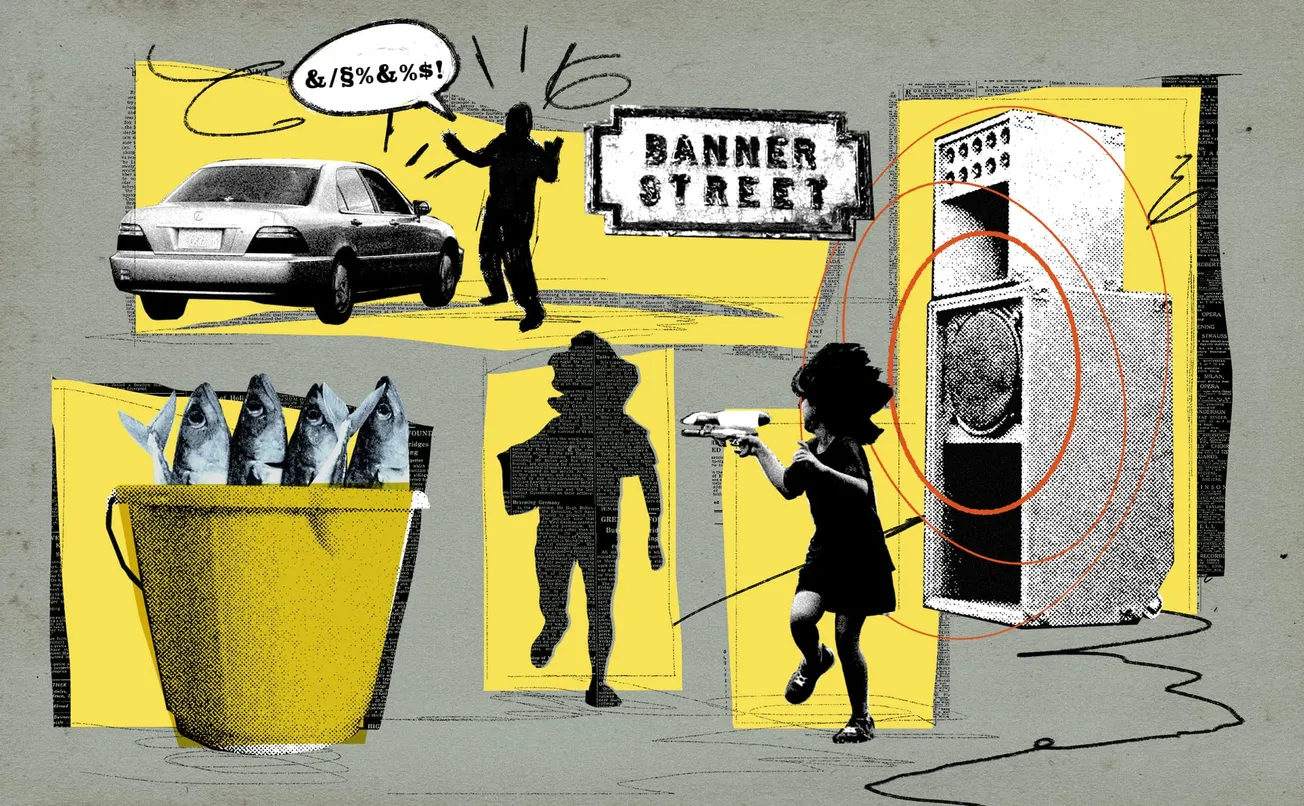
Peter remembers the first day he saw the man who moved in across the street. “He had a bucket, inside the bucket was dead fish and he was throwing dead fish at the cars.” After that, he thought: okay, I’m staying away from him. That was ten years ago. As has become clear over a decade of escalating complaints — involving residents being prevented from parking by being shouted at, people insulted and filmed in videos uploaded to YouTube, and neighbours kept awake by banging on their walls — keeping a distance from Helder ‘Melo’ Demelo was easier said than done.
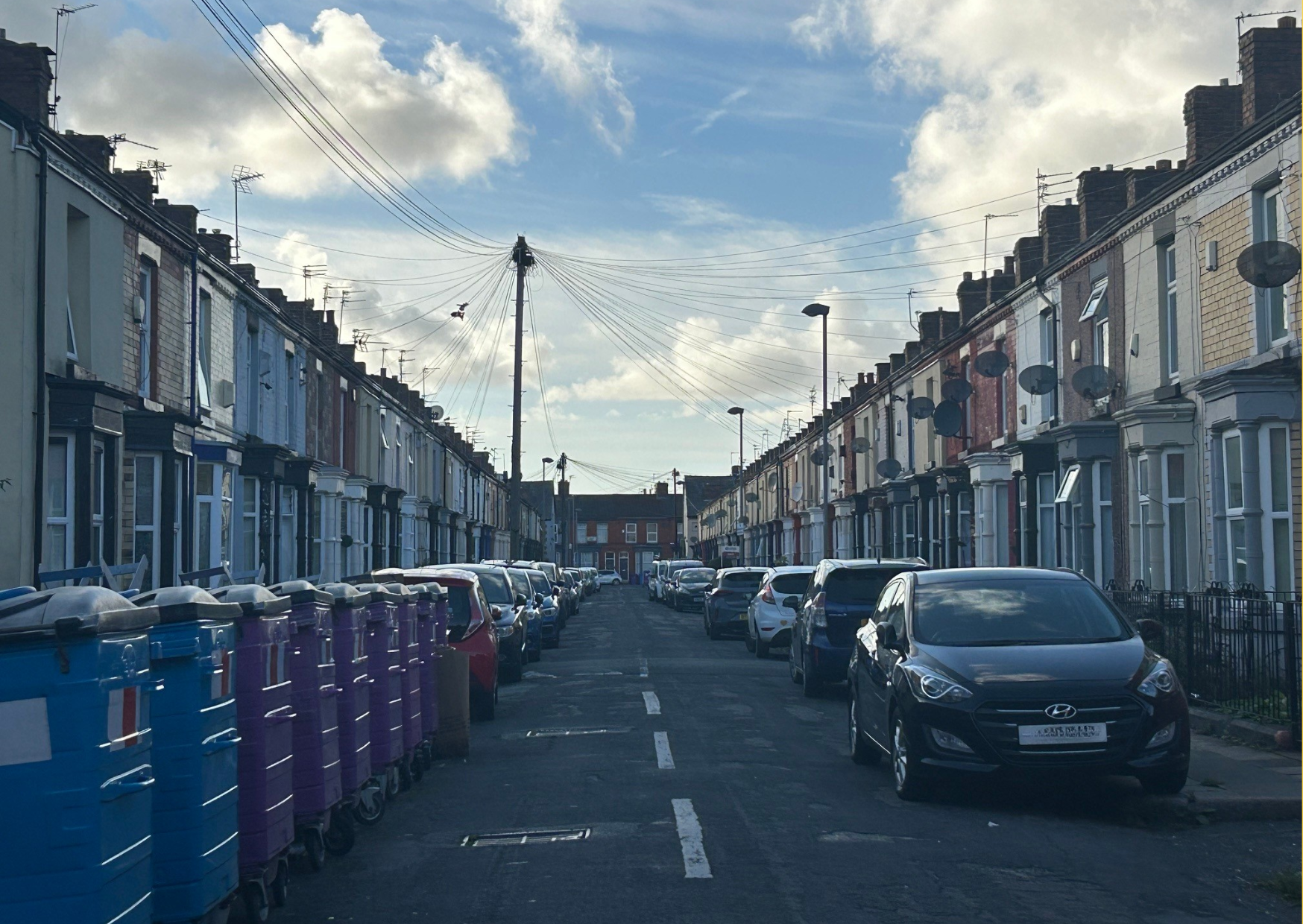
For one thing, there’s the layout of Banner Street in Wavertree — a narrow road bracketed by terraced houses. It’s a close community: everyone has a very small front yard, front doors are left open, and as I interview different residents, people poke their head in to say hello while children weave in and out.
Helder Demelo sees the street differently. When he talks about his neighbours, he suggests he wants to be left in peace. But there must be some part of Melo that wants contact, because in the many years he’s lived here, he has certainly made his presence known: whether by shouting on the street at night, blasting loud music at all hours, playing bongos through the night, phoning the police on one neighbour for minor or imagined infractions, throwing rubbish in the road, and dropping bird seed on and around parked cars. I’m told that multiple former residents found him so wearying that they moved away.
But it is also clear that Melo has mental health issues. The overwhelmed neighbours feel they’ve been left to fend for themselves, but the situation seems markedly worse for Melo himself. The social housing group that runs his accommodation is trying to evict him, a result of him having received a criminal conviction for racially-aggravated harassment. If that happens, he could become homeless, with none of his underlying issues addressed. How has this impossible situation come about — and why do cases like this take so long to resolve?
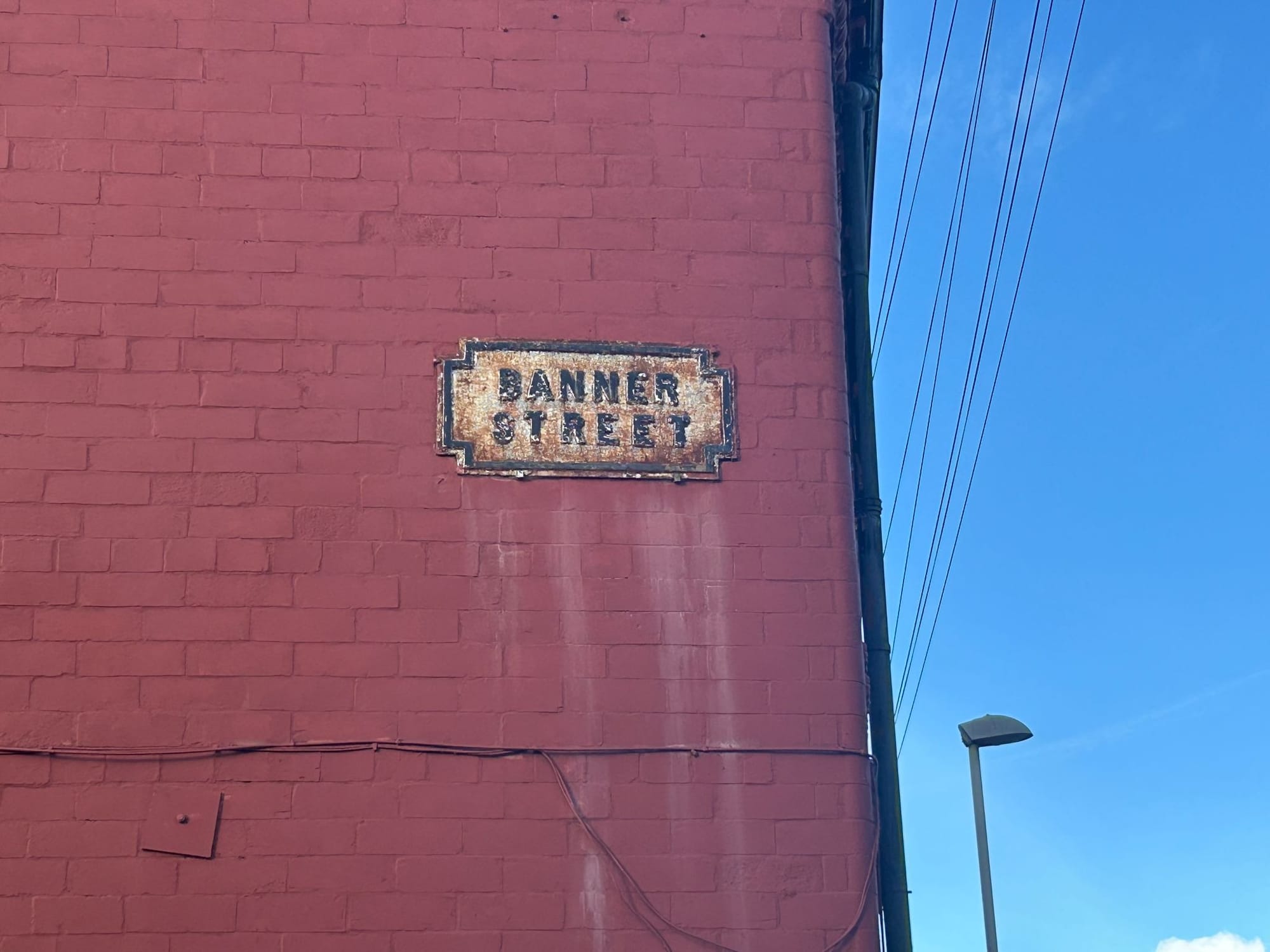
Melo moved to Banner Street approximately a decade ago into a house owned by the social housing company Your Housing Group. According to the Echo’s previous reporting, he originally hails from Portugal. Peter tells me Melo moved in next door to a former resident called Dave. “I’d basically hear and see Melo call him things like ‘fat f*ggot’ [and tell him] ‘you’re a child abuser,’” Peter says. Dave struggled with Melo’s propensity for playing the bongos or blasting music all night; eventually, he tried to pursue an eviction in the courts, which Peter believes was ultimately suspended during the Covid-era moratorium on evictions. Multiple residents tell me that Dave finally relocated because he couldn’t live near Melo anymore.
Peter and Melo used to enjoy a warmer relationship, but they fell out over an allegation of stolen trainers (a special pair of LeBron 10s — Peter had imported them from America, so when he saw Melo wearing them after they’d vanished from his window bay, he knew who had stolen them). Melo denies this accusation. It seemed trivial, but from then on, Peter noticed an uptick in Melo’s animosity towards him. He claims Melo would follow him around, calling him a “liar lawyer” (Peter is a barrister, though he’s currently between jobs) and uploading videos of him to YouTube. “He kept on following me down the road and screaming and shouting at me,” Peter says.
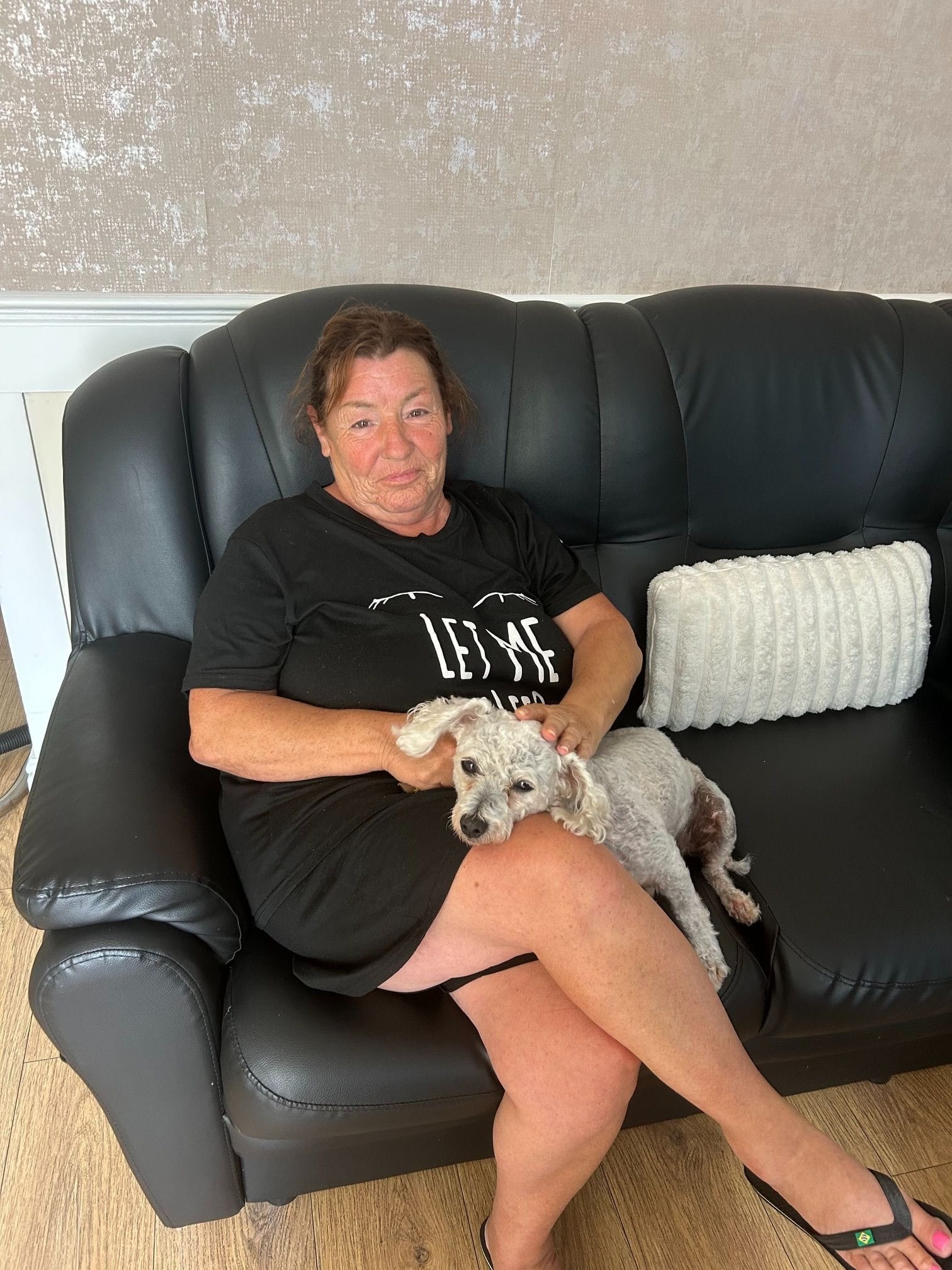
Peter says that Melo has specific (if equally bizarre) grudges against the others on the street: Lillian, for owning a dog that’s too loud; Barry because he parks his car outside Melo’s house; Lee for trying to help him by giving him a sofa. Each of the seven other residents I speak to on the street tells me stories of their own, but the person who seems most affected is Nadira, a Bangladeshi woman who moved here five years ago, shortly after giving birth to her son. She suffered from postnatal depression and says her anxiety was intensified by living near Melo. “Whenever I see him, he just shouted with people or just [played] loud music or arguing with people or even also the children,” she says. She is still too worried to leave the house unchaperoned and won’t even use her garden: “We will leave as soon as possible, but for financial reasons, we cannot for now.”
Peter, now 38, has lived on the street since he was a teenager. His family are British-Nigerian and moved here after experiencing a racist attack and vandalism of their property in their previous neighbourhood. One day, Melo, who is black himself, said to Peter, “You’re not a black man; you side with white people.” On another occasion, Peter felt like Melo was mocking his Nigerian heritage when he said, “You’re meant to be Nigerian,” though Melo denied this when I spoke to him. For Peter, these comments were the final straw. He pursued a criminal case against Melo for racially aggravated harassment — and won. But he didn’t believe prison would help, and included this in his victim impact statement to the court. Peter thinks this may be why Melo was eventually sentenced in June 2025 to a 16-week sentence, suspended for two years.
This detail initially puzzles me — if Peter didn’t want to send Melo to jail, why did he bring a criminal case against him? “It was just so that he would get a criminal conviction which could then be used to evict him,” Peter says. “For me, that was the only route, because I’ve literally pursued every statutory instrument, every guidance on antisocial behaviour, have went through the ASB [anti-social behaviour] local authority route.”
Peter first tried to solve this in 2016 by reaching out to Melo’s landlord. From there, his attempts to find solutions rippled outwards. In the ten years he has spent repeatedly pressing for action, he has made formal complaints to Liverpool City Council’s antisocial behaviour team, reported the problems on the street to his housing provider, corresponded with Merseyside Police and gathered evidence to try to persuade them to apply for a closure order (a temporary restriction of access to a property, often prompted by criminal activity or persistent antisocial behaviour). He also pursued the matter with his councillor, James Robert, and local MP, Paula Barker. Peter expresses disappointment with all of the above.
Peter argues that the fact that all the evidence and witness statements were collected by him, not the police, suggests that the police have failed to investigate the matter properly. A spokesperson for Merseyside Police confirms they have “received multiple reports over the last six years involving a dispute between two neighbours in the Wavertree area. We took every incident seriously and extensive enquiries were carried out, some of which resulted in prosecution. On other occasions, reports were thoroughly investigated and it was found that no offence or a criminal act could be identified and advice was given to both parties.” He feels similarly about the council’s antisocial behaviour department, which he began reaching out to in 2016, claiming that a representative from the department only visited the street once, in 2024. A Liverpool City Council spokesperson said: “Our Safer Stronger Communities team were involved and liaised with Your Housing Group and Merseyside Police as they secured a criminal prosecution… We have not received any complaints since the criminal proceedings concluded.”
There’s the MP and the councillor, who Peter doesn’t believe have done enough, both of whom deny this. Councillor James Roberts says he feels “for the neighbours who have put up with [Melo’s] behaviour” and has had multiple phone calls with Peter to offer advice. MP Paula Barker tells me she has “done everything within the scope of the limited power that [she does] have to raise these issues” and refers me to a detailed timeline of the tasks she’s supported Peter with, showing even if she hasn’t taken precisely the action he wants, she has taken action. There’s also the housing provider, Your Housing Group. Peter believes they’ve breached their duty of care towards vulnerable tenants. A spokesperson points out that they hold the RESOLVE standard (that is, an accreditation which demonstrates the excellence of their antisocial behaviour service). They say: “Our approach focuses on early intervention, evidence-based case management and taking appropriate action where needed to protect residents and help create safer communities.”
But what about the man at the centre of the story — Melo himself? On the same day I met Peter for the first time, a voice on the street called behind us: “Stalker! Creep!” (Melo has claimed Peter is obsessed with him ever since their court date in June 2025).
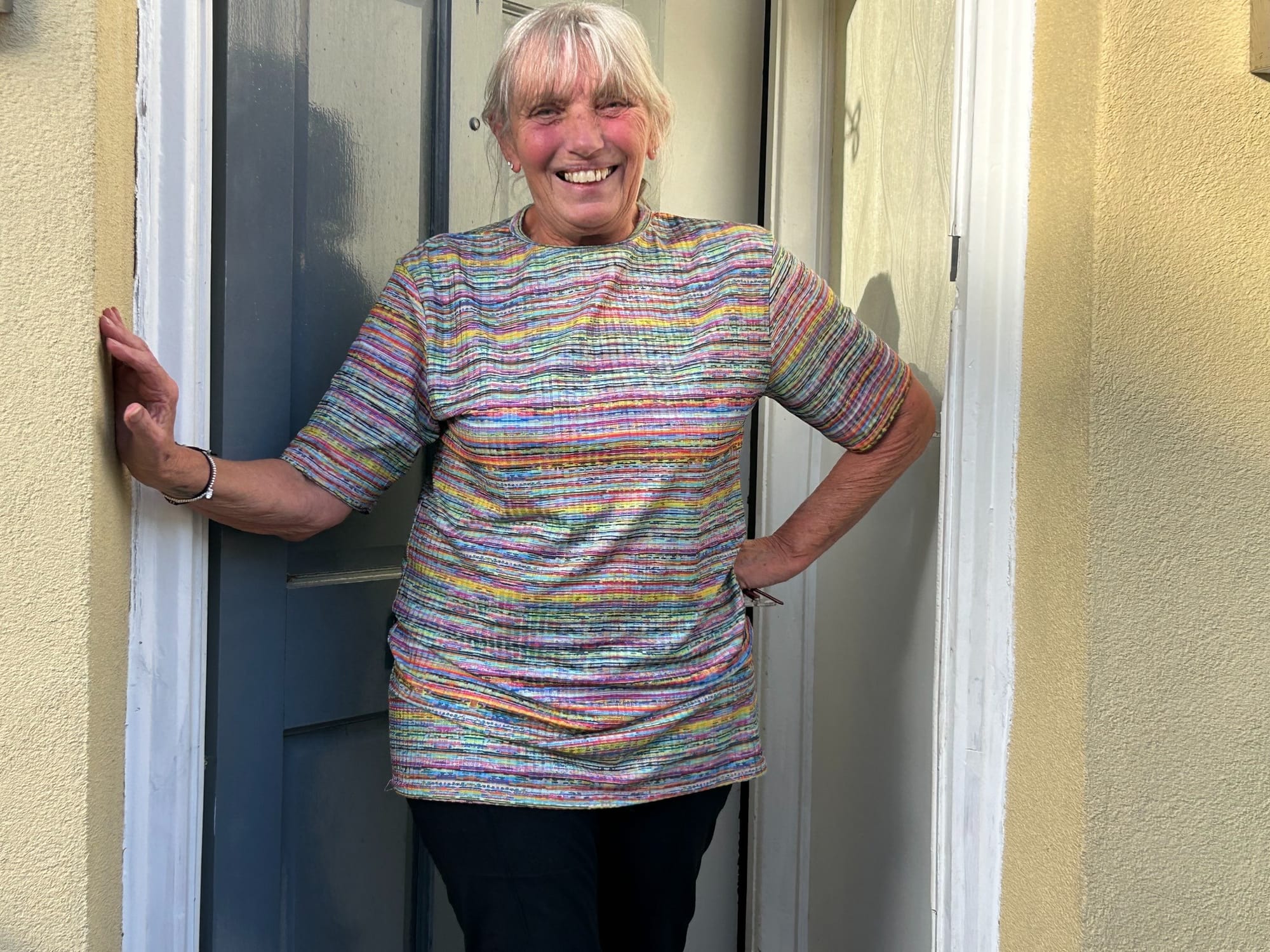
Melo was standing in his front yard in a colourful t-shirt and black trousers. He initially seemed happy to see me and my colleague Jack, and began telling us about his relationship with Peter. But when I told him that we were journalists, something in his face closed. I said I wanted to ask him about his side of things. “No, don’t worry, there’s no side of things, there’s the one [version of events] I just told you,” he retorted. When I asked if I could tell him about the allegations his neighbours had made, he started shouting. “I don’t care about it! They’re just liars, they’re one bunch of liars. People get punished by planet earth, I’ve seen other people get punished and some of them died. I don’t need to do this no more. Look, their smirky face.” He gestured at Peter and another resident Barry, who were indeed standing watching us, leaning on a car on the other side of the street, laughing.
Melo may be challenging to live around, but he’s clearly vulnerable. Multiple residents on the street tell me that men broke into his home in August and stole his musical equipment (Melo is a keen busker), which left him notably agitated. Peter says that there was a period mid-pandemic that Melo had no electricity, heating or access to running water in his home. Peter has seen NHS community nurses visit the property, but says Melo never lets them in. Another resident, Tony, tells me something different: that the nurses are too afraid to go into his house, so he doesn’t get the care he needs.
I ask others on the street about whether Melo is violent. While some argue he could theoretically be violent, the anecdotes I hear are mostly about Melo provoking people, who end up snapping. A long-time resident, Rose, tells me about a little girl’s birthday a few months ago, when all the kids were in a huge paddling pool on the street. She remembers Melo holding his phone up in the direction of the pool as if he were filming the children; one of the dads charging over and “went for him, pushing him.” The parents phoned the police, who checked Melo’s two phones. “And on one phone, there was just the edge of the paddling pool.” Rose screws up her face. “Why is there just the edge of the paddling pool? Why are you doing that?” Incidents like this are leading to steeping hostility towards him; multiple residents tell me someone graffitied the word “paedo” on his house afterwards, although this wasn’t visible when I visited. I worry that if nothing changes, someone in this neighbourhood could get hurt.
A community mental health worker in the north west, speaking anonymously, expresses shock that the situation has gone on for a decade. If Melo is unwell, then consideration needs to be given as to whether mental illness is driving his behaviour. Normally, any person suspected of mental health problems would expect an assessment of their needs under the Care Act. If there are significant risk concerns but they refuse to grant access to their property (as Melo has allegedly been doing), the local authority could apply for a warrant under the Mental Health Act to move them to a place of safety for a mental health assessment. So what’s the hold up? She speculates that there could be a waiting list, but ten years feels like an incredibly long list.
Perhaps there are administrative tangles. On Tuesday this week, Peter phones me out of the blue, having discovered Melo’s civil hearing is about to begin — the eviction proceedings the housing group has brought against him. Peter estimates there’s only a “40%” chance that eviction will happen.
Melo arrives late to the Liverpool Civil and Family Court. I wonder if it will upset him to see me. The last time we spoke, five days earlier, I tried to offer him a right of reply to all the allegations in this article, and Melo grew upset, telling me the other residents on the street are “liars”. But the shocking thing is that now he doesn’t seem to recognise me at all. He even holds the door open for me: “Girls first.”
Melo attempts to address the judge, but his solicitor hisses at him to be quiet. The judge gives him a stern look: he has perfectly good representation; there’s no need for him to speak, she says. Melo eventually sinks into his seat and indulges in small acts of resistance: dragging the chair next to him back and forth, or miming the scales of justice, both hands held, palms tipped upwards, one low, one high, then vice versa. Soon, the others are discussing him as if he’s not in the room at all.
It turns out there’s an administrative obstacle to even beginning eviction proceedings. The court wants Melo to undergo an assessment and get a ‘certificate as to capacity to conduct proceedings’ (the paperwork that will tell us whether he has the mental capability or not to appear in court). If he demonstrates a lack of capacity, he would then get a ‘litigation friend’ (someone who could make decisions about a court case on his behalf, like a family member or friend or, in the absence of both, a government-appointed public official). But the judge has been waiting for this certificate for over a year. The psychiatrist needs access to Melo’s GP records, and the GP lost Melo’s form of authority — that is, the signed consent form that allows a GP to share health information with a third party. The judge says the court should adjourn for four weeks for Melo’s solicitor to ensure he undergoes a medical assessment, to give the solicitor time to solve the form of authority issue and to get the certificate.
Leaving the court, I’m struck by the absurdity of the situation. Melo seems to find something as simple as face-to-face conversation challenging, yet he’s been submerged in a bewildering amount of bureaucratic back-and-forth that he does not seem capable of dealing with. This situation is bad for him and bad for residents. It creates more work for the individuals and institutions who are supposed to help.

What’s next for Melo is hard to say. If he were evicted, he might well become homeless. In June, the government repealed the two-centuries-old Vagrancy Act, decriminalising rough sleeping. It seems unlikely that eviction would prevent him from spending time on the street he’s called home for the last decade. Even if he did decide to sleep elsewhere, it would only move the problem of Melo’s behaviour to another neighbourhood, making it someone else’s issue. The system has failed him so far, and there's little to suggest it'd work any better the next time around.
In 2020, the Civil Justice Council’s ‘Anti-Social Behaviour and the Civil Courts’ report concluded that anti-social behaviour injunctions were not working; that it’s difficult for each relevant body to identify whether the person involved has a mental health issue. Then, as now: “Access to medical history and any professional opinion has been difficult to obtain if the individual concerned has not co-operated”. Short-term support is available for those at crisis point, it states, but is cut off once the individual has begun to recover, “albeit not fully.” All this is relevant, since a 2002 Home Office review found that for 60% of those issued with an ASBO, there was a contributing factor like mental illness, addiction or a learning disability.
I’m sure there are plenty more Melos out there — those who can’t and won’t fit into tidy tick boxes to access help, who might not be able to accept it when it comes to their doorstep. The system’s difficulty in helping such people has serious consequences. Melo’s neighbours have seen this for themselves.
Comments
Latest
A decade of harassment
Forget Manchester, Liverpool runs the Labour Party now
Merseyside councils are serving up padel — whether you want it or not
Free Post subscriptions for 16-25 year olds!
A decade of harassment
After years of antisocial behaviour, the neighbours are at breaking point. So is the vulnerable man involved