

The children in the Travelodge

An extract from Frank Cottrell-Boyce’s new book
Dear readers — who remembers the Queen parachuting from a helicopter during the opening ceremony of the 2012 Olympic Games, oft-cited as the last moment there was any vague kind of unity at all around the concept of Britishness in this country? Or the Queen, again, sharing a marmalade sandwich with Paddington Bear, in a little skit a few months before her death. A writer on both, if it hadn’t been for Bootle-born Frank Cottrell-Boyce, perhaps the Queen would never have been famous.
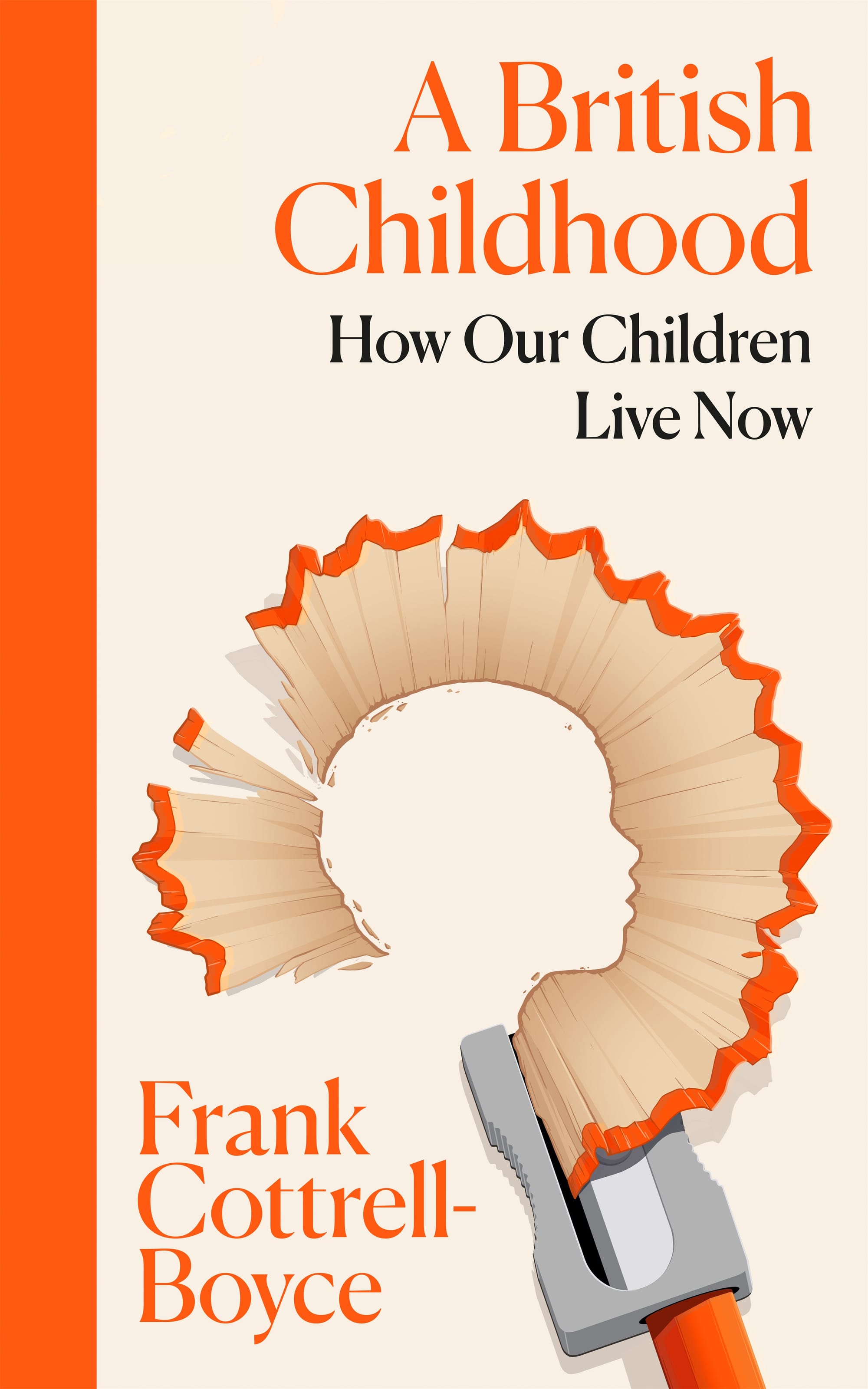
From skit writer to the palace to here, the pages of the Post, Cottrell-Boyce has had quite the career. His books include Millions and Chitty Chitty Bang Bang Flies Again and since 2024 he’s been the UK’s Children's Laureate. Today, we’re publishing an extract from his latest work, A British Childhood, about what it means to be young in Britain today. We hope you enjoy it.
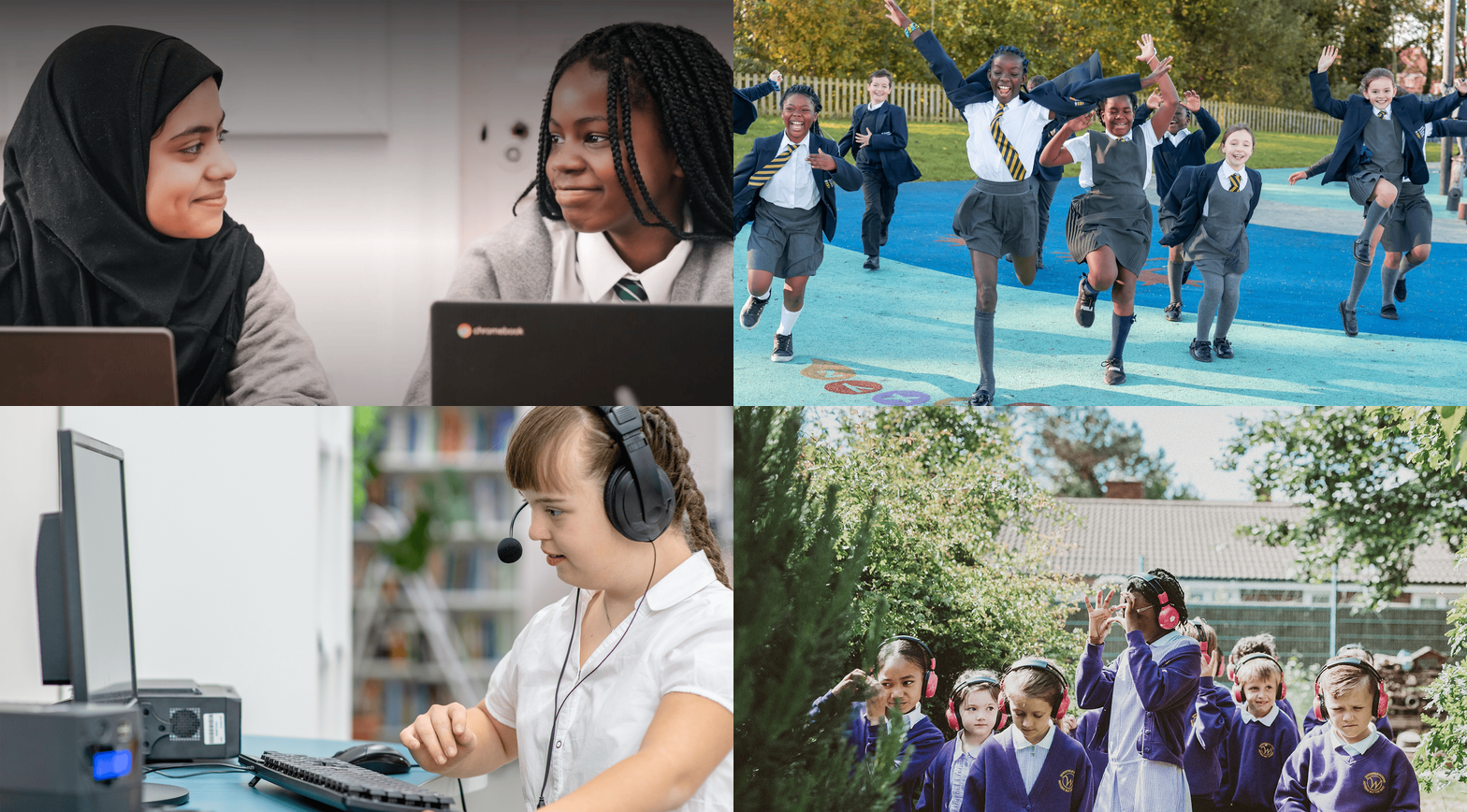
How can technology improve education?
The UK is in the midst of a huge discussion about how children interact with digital technology. The proposed ban for under-16’s rightly puts social media in the spotlight. But technology in schools also has the potential to free up teacher time, improve student inclusion and support learning.
Edtech UK works with schools to understand how teachers, parents and students can benefit from the appropriate use of technology. Click below to read how teachers in Liverpool are already implementing these technologies and how Edtech UK is helping guide their next steps.
The children in the Travelodge
Then there are the children of the refugees who I met while volunteering at Asylum Link Merseyside. ALM is a charity that was founded in 2001 in response to the arrival of asylum seekers who had been sent to Liverpool by the government's dispersal policy. It was set up largely through the effort of Father Peter Morgan and is housed in the enormous presbytery of St. Anne’s - the parish in which he was born and raised and of which he eventually became parish priest. It may seem surprising that a Catholic presbytery should be given over to the service of mostly Muslim young men. Liverpool Catholicism has a strong cultural memory of its own origins in a different refugee crisis. Ireland’s Great Famine is part of its own origin story. In 1845 the local Poor Law - “The Liverpool Select Vestry” - had to deal with 900 requests for relief. In the first ten months of 1847 the number rose to 116000. And the need went from poorly dressed and hungry to half-naked, starving and diseased. These needs were met first and foremost by the church. Liverpool’s leading children’s charity is still named after one of the heroes of the era - Father James Nugent. Until recently the only public statue of a Catholic priest in the UK was his memorial in St John’s Gardens.
St Anne’s is in Edge Hill - scene of that terrible civilian disaster in 1940. It’s where the main railway lines hesitate before hitting Liverpool Lime Street Station. It’s a puzzle of tunnels, bridges and stock yards, a waiting zone, a place where things are not quite happening yet. In Liverpool, “getting off at Edge Hill" is slang for coitus interruptus. Despite all that goes on at ALM - they serve lunch, give English lessons, play table tennis, have a choir and allotment and a bicycle repair shop - most of the refugees are - like trains waiting for platforms - waiting for their papers so they can finally start their lives. I volunteered there for about six years.
At the beginning of that time many of the applicants were women from the Democratic Republic of Congo or Cote d’Ivoire. Some of them would ask to speak to Le Pet’t Algerien. It took a while for someone to work out that - because I speak decent French and have dark skin (due to a blood disorder) - they had somehow decided I must be Algerian. These women would often bring their children in with them. Children adapt and learn languages more quickly than adults, of course. So I’d often see a role reversal whereby the child was doing all the talking, steering their mothers through the niceties of the language and unfamiliar etiquette. These kids had thrown themselves into being British partly to fit in at school but also to look after their parents. The mothers with their rolling, mellifluous accents - English flavoured with French - would point to their children who were growling away in a nasal, slangy Scouse and say proudly “His English is really good now, wouldn’t you say?”
If I’d ever doubted the importance of family, then watching that slow passing back and forth of responsibility from parent to child really brought it home to me. I ended up specialising in Family Reunion visas. This is a route by which asylum seekers who have been given leave to remain can bring their spouses and children to the UK. It’s a tedious, bureaucratic and sometimes troubling business, then run by two volunteers - myself and a retired head teacher named Mo. Very few of the applicants are refugees in the conventional sense of people who’ve fled from bombs and bullets. Most of them were people who had offended the prevailing power in some way and had decided to get out before they were arrested or worse. They’d often had time to prepare and had come with all their relevant papers. Increasingly they were young men from Iran, who turned up with armfuls of signed, sealed and be-ribboned documents. Few of them had realised just how lengthy the asylum process was. By the time they were eligible for family reunion, most applicants had already spent years away from their families. When we FaceTimed applicants’ families back in their home countries, we could see the familial bonds fraying. Spouses accused husbands of delaying their arrival on purpose. Of not wanting their families any more. Children aged out of the business of showing excitement at the sight of Dad. Applicants would sink into lethargies of despair and become sullen and uncooperative when they saw how long the process was taking. For some of them flight had been a margin call and they were beginning to think - too late - that they had called it wrong. If you want to get a feel of the atmosphere, imagine Asylum Link as Casablanca with me and Mo as Sydney Greenstreet and Peter Lorre.
Today's story is free to read, but why not consider becoming a subscriber? By doing so, you'll get two completely free articles per week delivered directly to your inbox.
That means a Monday briefing with cultural tips, top stories and everything else you need to know, and a weekend read diving deep into a subject, whether that’s lost department stores of local yore or bungled political promises. No card details required, just good journalism: click below for more.
But one day a different energy swept into the room in the shape of a Somali dad who we’ll call Bajuni. He came in glowing. In the weeks that followed I’d discover that his default mood was a kind of stoic melancholy. This glow was really unusual. He is from Chula - an island just off the South coast of Somalia. He had a wife and five children and had been earning his living - like nearly everyone on the islands - as a fisherman. In 2017 Al Shabaab - a Sunni militia - turned up on the island and kidnapped some of the men, taking them to a training camp on the mainland. They were to be press-ganged into the militia. Bajuni escaped and managed to reach Yemen. After that his story gets a bit hazy but he ended up in the United Kingdom at the beginning of 2018. After his escape Al Shabaab went to his house and threatened his wife in an attempt to discover his whereabouts. She fled. So Bajuni and his wife lost contact.
Then - I'll quote his Family Reunion application- “After arriving in UK, I did not even try to contact my family as in Somalia they had no mobile phone or internet. But in October 2018, I met a man from Chula at the Liverpool Islamic Centre. I asked him if he had any news of my family. He told me that he had sailed with them to Mombasa where they had taken shelter in a mosque. He tried to use his contacts to see if he could get more news of them. From then on, I would ask in the mosque if anyone from Mombasa had news. In January this year I found someone from Mombasa who took the names of my family and contacted people in Mombasa on my behalf. On February 15th this year - one of the happiest days of my life - I was finally able to speak to my wife again. I went to the Red Cross. They referred me to Asylum Link.” Which is how he came to burst into our office. The story felt like a romance from World War two. We were all energised by it. He was under the impression that he would be able to get his family over to the UK in a few weeks. And if his wife had gone to the refugee camp in Mombasa that might have been the case. Instead she had taken shelter in the mosque and thus accidentally put herself at one remove from the official channels.
Having fled with few belongings he had more or less no documentation. We had to build their case from the ground up with DNA evidence. It took a while. Finally, with the application complete, all we had to do was find a slot for the family’s interview in Mombasa. But then COVID struck. The embassies closed. When they re-opened, they did so piecemeal, releasing just a handful of slots at apparently random intervals. I was away at the time on a filming project. I checked the websites over and over and eventually - thrillingly - found a date for them.
Before COVID the official wait time between interview and decision had been three months. In fact even then it was often nearer to six. Post Covid the official time was changed to six months but it was more usually nine, going on twelve.
At last Bajuni’s letter came. He was hugging himself with excitement. But I will never forget the pain of having to translate its rococo legalese and tell him the news it was trying to communicate . . . his application had been refused. It took us a while to find out why. It was a clerical error. The clinic that had taken their blood samples had written their own tracking number in the box on the form instead of the family’s passport numbers. The Home Office took this to mean that the family had passports but were trying to hide them.
You would think it might be a good idea for the Home Office to set aside a few days’ grace after a decision in which the applicant could point out any obvious errors. But there was no grace period. Instead there was a long, drawn out, potentially expensive (for the state) appeal process. Once again he had to endure a long wait for a hearing. We resubmitted his evidence. Bajuni found a job as a nurse in a secure psychiatric unit while training as a chef at the community college. But mostly he just waited.

Then, on the date of the appeal, after the long wait, the Home Office withdrew their objection. His wife and children got their visas. Bajuni raised the money for their air fares from people at the mosque. In the depths of December the family arrived.
You can’t apply for housing on the grounds that you’re expecting some family to arrive. It’s only when you are actually living in inadequate accommodation that the council has to take responsibility. The day the family finally arrived Bajuni sent me texts and WhatsApps that gushed with gratitude and pleasure. These were accompanied by photos of his family at a rain-drenched bus stop, under a coffin-lid grey sky, looking as cold as misery and miserable as sin. I wondered how they’d fare.
Housing volunteers at Asylum Link Merseyside tapped their parish SVP groups (the local branch of the St Vincent de Paul Society) for coats, hats, bits of furniture and Aldi gift cards to make sure they had a good Christmas. The neighbours helped carry all these gifts into the house and took the time to brief Bajuni on that most complex and defining aspect of British life - bin day. “Good will,” as Cormac McCarthy wrote in All The Pretty Horses, “has the power to heal a man and bring him back to safety after all other resources are exhausted.”
Post Covid the United Kingdom that these children finally arrived in had changed a lot from the country Bajuni had found a few years earlier. It was darker, more divided. The Reform Party had pushed immigration to the centre of the political stage. This would make life even more difficult for the children. It put a frame around them and presented them as figures in a divisive political drama.
Enjoying today's edition? Why not become a Post subscriber for free today? No card details required, just good journalism: click below for more.
I thought about children in the Travelodge. Children who had ended up in bad living conditions for often more isolating reasons. Domestic violence, debt break-ups, addiction, prison sentences, redundancy. The shame attached to these circumstances made them harder to reach.
And then there were families who were just ignored, of course. In 2018, the teenage Kwajo Tweneboa and his family moved out of their temporary accommodation - a converted garage - into a property on the Eastfields Estate in Mitcham, South London that was managed by a big housing association - Clarion. The new accommodation wasn’t much of an improvement. The usual problems - damp, black mold, cockroaches. It’s a litany I can recite by now. When the council refused to do anything about their conditions Kwajo tweeted pictures of the mold. They went viral and then got picked up by the press. In a panic, Clarion turned up and did the work, and then issued one of those fashionable “Not Sorry” apologies (“We apologise if Mr Tweneboa feels we haven’t provided the service expected from us”). Enraged Kwajo decided to leaflet the whole estate along with members of the Residents’ Association, asking people if they were having similar problems. They were. And worse. Kwajo hadn’t even finished walking the estate when his phone started to blow up. He kept tweeting their stories - stories of people becoming ill, even dying - because of their living conditions, until the BBC did a feature and once again brought Clarion to the table, but this time with a more structural, systematic plan.
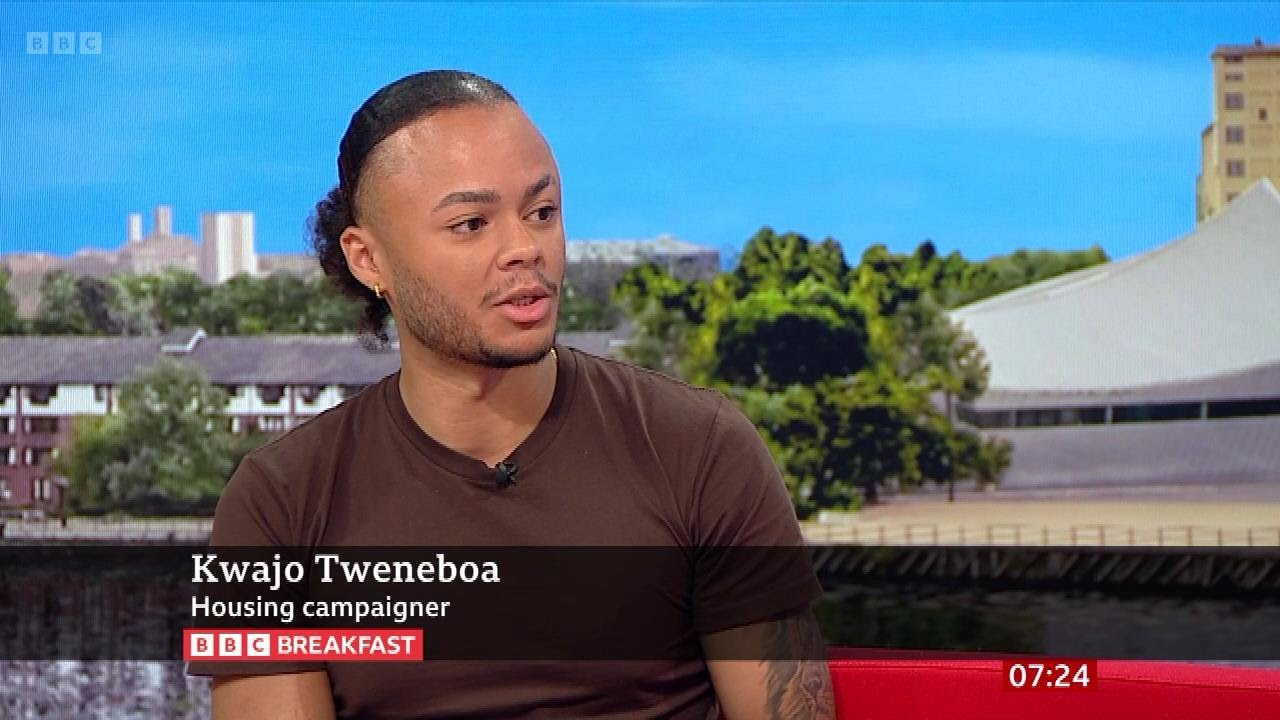
Kwajo has become a leading campaigner for better social housing, largely by keeping up this naming and shaming. These days people send him unsolicited material from as far away as New York. I’ve heard him speak - brilliantly - several times. One point he makes always strikes a chord with me. He talks about the lack of urgency. About how these problems can often be solved but how those with the means to do so don’t act except when shamed into doing so.
The thing is, the situation is urgent. Childhood is fleeting. Memories of bad housing - of black mould and cockroaches, of moonlight flits, of unfurnished bedrooms - stay with a child forever, becoming part of who they are.
When I started writing this book I thought I would go and visit Bajuni and see how he was getting on. He and his family had ended up in a neat little house on a street of semi-detached houses with small front gardens. It was not far from a big park. It was December and was getting dark when I arrived so I had to peer at the door numbers. Someone saw me and asked if I was lost. I mentioned Bajuni’s name and the fact that he had five kids. “Oh yes. Bless him,” said the neighbour. “They’re in that one there.”
I rang the doorbell. One of the kids - a big, confident lad in his mid-teens answered. I started to explain myself but he said, “I know who you are. Come in.” Other kids piled down the stairs and introduced themselves. I’d only met them once before but I’d filled in so many forms about them that I still knew all their names, middle names and birthdays.
In the space beneath the stairs I saw a bike and a massive stock pot. “Oh,” I said, “Did you become a chef? Did you open a restaurant?”
“No. Not yet. Things are hard,” he said with a melancholic sigh. But then he was always sighing and melancholy was his natural disposition, so I didn’t ask more.
I had two massive bars of Fruit and Nut with me so I said I would put them under the tree. But one of the children handed a bar to a beautiful two year old, with a big smile crowned with a cloud of curls. “Oh this one’s new!” I said. “Born here!”
By now the baby had opened the huge Fruit and Nut and started to eat it. The scene should have made me pause. But I was too interested in chatting to the teenage boy. He had a strong Scouse accent. We talked about football and about where he would go to do his A-Levels now that the school had closed its sixth form. We discussed the virtues of apprenticeships as opposed to university. He could not have sounded more at home.
Bajuni mentioned that the oldest girl had got married recently and he showed me the photos on the phone. I realised that his wife was not in the wedding group. I asked where she was.
‘Six months ago’ Bajuni replied. ‘Very sudden. The neighbours were so kind. It was a blood clot.’
Those years of separation. Those years of working to be back together. That ecstasy of finding someone you thought was lost. And now it was all over. He was a single dad now, far from home.
When my Mum stood there in Nodffa, listening in memory to a voice she’d heard in the night long ago, my mind had gone immediately to the eerie, magical story in the Book of Samuel - how Samuel heard a voice calling him in the night. He answered three times saying, “Here I am”, before realising it was God and not his boss Eli who was calling him. I know she was remembering the same story because when she died a few months later I found a sheet of paper on which she’d written the hymns she wanted at her funeral mass. “Here I Am” was on there. In fact “Here I am,” was the last thing she said to me.
That’s what these children are saying urgently with no-one listening. The ones sleeping on coats, with their clothes in bin bags, the ones who have to deal with damp and disruption, the ones constantly on the move. They look at us from the windows of Travelodges and the doorways of a Void Standard house, empty of furniture. “Here we are.” they try to say.
As Derek Mahon puts it in his great poem ‘A Disused Shed in County Wexford’:
They are begging us, you see, in their wordless way,
To do something, to speak on their behalf
Or at least not to close the door again.
I hope you enjoyed today's edition. Since you read all the way to the end, and you're already a free subscriber, I've got a suspicion you have an appreciation for what we do. You may know our current target is reaching 2,100 paid members by the end of June. Why not help us get over the line? It'll only cost you £7 a month, and for that you'll receive all our lauded investigations, local reporting and cultural criticism. Liverpool deserves better journalism, and you can help us deliver it by signing up today.
Comments
Latest
Luxury student housing’s well and good — but I miss when Liverpool was bedsit land
Sefton aviary dispute continues to ruffle feathers
Brezhnev’s back!
In Mossley Hill, one primary school’s parents are fighting against the Archbishop
The children in the Travelodge
An extract from Frank Cottrell-Boyce’s new book