

Michael Heseltine 'saved' Liverpool. Didn't he?
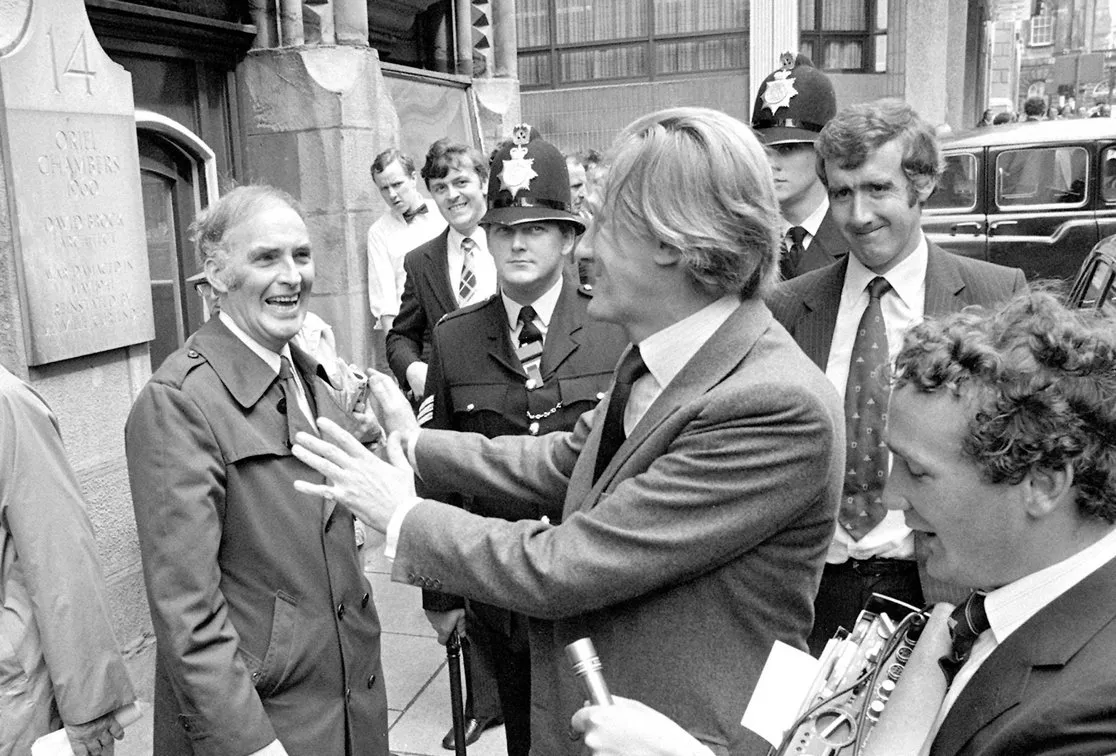
The environment secretary is credited with sparking Liverpool's late 20th regeneration. Try telling that to the neighbourhood he was dispatched to help
Dear readers — welcome to 2026. We wanted to start our year in weekend reads with a big feature for you all to get stuck into. So we're going back to 1981, a year that lives on infamously in British history for widespread unrest across the country, particularly in areas with large Black populations. Fed up with being overpoliced, underemployed and treated as second-class citizens, places like Brixton, Handsworth and Toxteth erupted.
In Liverpool, home to the oldest Black population in England, issues had been bubbling for decades, thanks to segregation and racism in the city. Prime minister Margaret Thatcher was under pressure to address discord in the city — and the impact de-industrialisation was having on Scousers. Enter an ambitious Cabinet minister: Michael Heseltine.
Heseltine is remembered today for spearheading Liverpool's regeneration. But when he was dispatched to the north, in the summer of 1981, it was in direct response to the upheaval that had seen police descend on L8 just two weeks earlier. How much did his efforts improve things for the Black communities that lived there? Today we're publishing an excerpt from journalist Lanre Bakare's critically lauded book, We Were There, which examines that very question.
Walk through the doors of Thenford House, a Grade I-listed country manor in Thenford, Northamptonshire, and you are immediately confronted by a bust of Michael Heseltine – the house’s owner — complete with the Tory politician’s trademark swept-back hair. The bust captures the proud attitude of a public figure with a reputation for, if not outright arrogance, then certainly bulletproof self-belief.
The Conservative politician Julian Critchley was at school with Heseltine and remembers him mapping out what he wanted from life on the back of an envelope: he would make a fortune in his twenties, become an MP in his thirties, a cabinet minister in his forties and, finally, prime minister in his fifties.
By 1981, he’d checked off most of the list. After a short wait for Lord Heseltine, who is now 90, he emerges, moving slowly but purposefully, and shakes my hand. “What are we going to talk about again?” he asks. “Liverpool and 1981,” I remind him. “That’s right.” He nods his head and silently leads me into his study. Books line the walls of the cosy room overlooking the front of the estate, where two large statues of dogs keep guard. There’s a huge painting of a hare that sits above his desk. “It is a copy of a famous Holbein,” he tells me. This is very much Heseltine’s turf — and it’s a world away from Liverpool, the city he was sent to help heal four decades ago.
L8 on the brink
In the 1970s, Liverpool was seen by white authorities as a racial success story, especially after rioting in Notting Hill and Nottingham in 1958 and more protests sparked by Kelso Cochrane’s murder in London during the summer of 1959 failed to ignite disturbances in the city. In 1961, church groups backed by local businesses hosted the South Liverpool Festival, boasting that their area — which included the South Liverpool postcode of Liverpool 8, or L8 for short — was “the most racially mixed area of Britain” and they were “anxious to show how well the races live and work together”.
But the apparent racial harmony was a veneer: in reality, Black scousers were often confined to L8. L8’s residents were essentially living a life of segregation and the fact they’d been there for several generations seemed to make no difference.
On 3 July 1981, Leroy Cooper, a young Black artist and poet whose family had a long history of being harassed by the police, was arrested after being manhandled by officers on Selborne Street, L8. Three carloads of police had turned up on the street to take Cooper in. The incident was the spark that triggered several nights of unrest.
Shops were ransacked, barricades were erected and, for three nights, police were bombarded with bricks and petrol bombs. In total 1,000 officers were deployed and 460 were injured. Rubber bullets rained down during clashes that left much of South Liverpool looking like a war zone, and aerial shots showed smoke billowing from dozens of sites across L8. As the unrest spread, the sound of The Specials’ ‘Ghost Town’ – the band’s song about Margaret Thatcher’s Britain —– could be heard playing on repeat from boom boxes. These were the biggest disturbances mainland Britain had seen since the Luftwaffe’s bombing raids during the Second World War.
A damning Commons committee report on race relations produced in the aftermath of the unrest that raged during the summer of 1981, ventured the reasons behind this: it found that Liverpool was “the most disturbing case of racial disadvantage in the United Kingdom’ and that the deep roots of the city’s Black population showed racism ‘cannot be expected to disappear by natural causes”.
In 1973, Dorothy Kuya — from her position as one of the UK’s first race relations officers — investigated racial discrimination in Liverpool. She found there were only two school governors, three social workers, three policemen, twenty shopworkers, three street cleaners, two postmen, twenty-one teachers (although seventeen were immigrants rather than British-born), one councillor and two station porters, who were Black, out of a population estimated to be around 7,000 in a city of half a million people.
It was incredibly rare to find any of L8’s residents in a position of seniority or one that required interacting with the public. But by the start of the Thatcher era there was another problem in the city, one that would affect all residents of Liverpool, regardless of race.
Unemployment was seen as one of the main causes of the trouble that erupted in July 1981, and now Thatcher’s government was under pressure to do something about it. Her response was to send an ambitious, slick politician — a man who’d made a fortune in property and magazine publishing and had one eye on 10 Downing Street — to find solutions.
In the aftermath, Thatcher decided to dispatch her then environment secretary Heseltine to the city, announcing the move on 17 July — almost two weeks after the unrest had erupted.
A city saviour?
His new role saw him dubbed ‘Minister for Merseyside’. Heseltine took an office on the fourth floor of the Liver Building overlooking the River Mersey as he began a three-week ‘fact finding mission’. He’d host visitors to hear about their concerns and proposed solutions for the city. Local politicians and business leaders bent his ear, as he tried to formulate a plan for a city on the brink.
Thatcher had come to the city herself on 13 July and met with a group of young people from L8 and Wally Brown, a community leader who represented the area during the summer of 1981. Brown, who had been trained in community work with Ansel Wong, a race relations advisor on Ken Livingstone’s radical Greater London Council, recalls his meeting with Thatcher at the City Hall. “She wasn’t listening,” he told me.
He attempted to explain the challenges the Black community faced in L8, from unemployment to poor housing and the history of police tensions. Thatcher’s only response was “there’s no excuse for violence”, a line she repeated like a mantra. “She was dismissive of us,” Brown says. “We were just like shit on her shoe. She had to speak to us, but she didn’t want to.”
Thatcher told the young people that their skin colour didn’t matter to her, but “crime did”, before urging them not to resort to violence or live in separate communities. Later in her memoirs the prime minister reflected on what she thought had caused the problem. For Thatcher, the situation was simple: rioters were young men “whose high animal spirits” had been unleashed to “wreak havoc”.
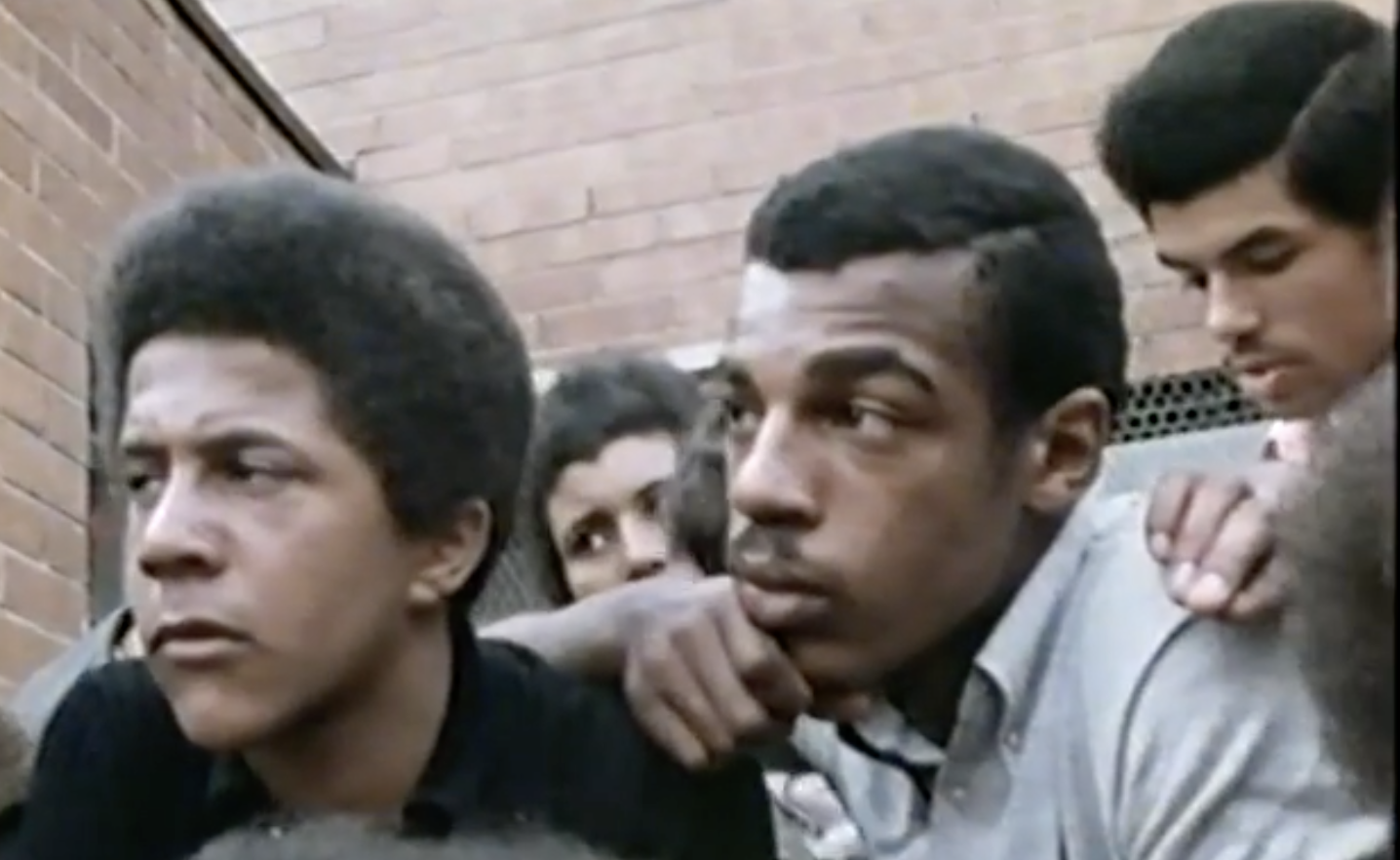
Brown, who went on to be chair of the city’s Community Relations Council, insisted the biggest issue was policing, pointing out the unrest had started with the heavy-handed arrest of Leroy Cooper. He was so insistent that the prime minister later wrote that she was appalled by the “hostility to the Chief Constable and the police”. In truth, few Chief Constables during the Thatcher era had healthy relationships with the Black populations they policed, but nowhere was that relationship more fraught than in Liverpool.
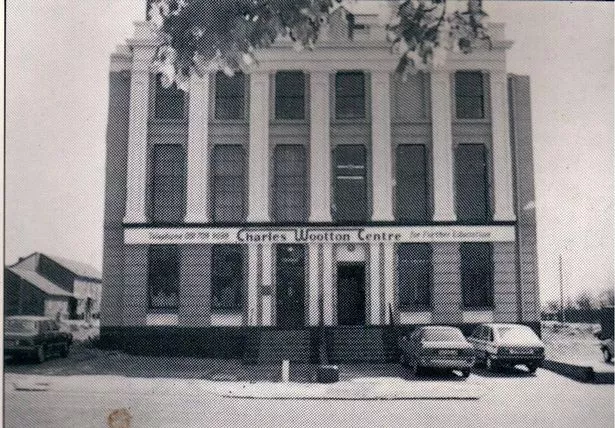
For his part, Heseltine made clear that policing did not come under his remit, arguing that it was the preserve of Willie Whitelaw, the Home Secretary. Nevertheless, he met with representatives of L8 at Charles Wootton House, the community facility named after the Black seaman killed by a mob during the 1919 race riots. The meeting was hosted by the L8 Defence Committee, a collection of community activists supporting those facing legal action in the wake of the unrest and presenting an alternative view to the press.
The committee was formidable: there were reports of photographers having their cameras snatched and film destroyed, while other members of the press claimed they were threatened with physical violence. Heseltine remembers palpable tension in the room on arriving at the community meeting in Charles Wootton House. A journalist whispered to him that the group were planning a walkout. They did, en masse. Another meeting was arranged, again at the Charles Wootton.
“The room was packed,” Heseltine recalls in his memoirs. “Some of those present had cuts and bruises sustained in recent events. I would be the first to admit that it was the most demanding meeting I have ever chaired.” Every row was filled with members from the Black community. The meeting was around an hour old, and members of the audience had spoken about the discrimination they faced, from the police and in employment in the city. Then people — “movers and shakers” — according to Heseltine, began to walk out again.
Once more, the tension rose. “What people are concerned about is the police, and the policing of this area,” the chair of the defence committee, Rashid Mufti told TV crews after the meeting. “Mr Heseltine wanted to talk about other things like unemployment, housing and resources, of course people want good housing and jobs, but people weren’t talking about that . . . those riots were the result of continual police harassment over years.”
By the time of the meeting, certain members of the defence committee had become minor celebrities, most notably Michael Showers. The son of a Nigerian and a local Black L8 woman, Showers was regularly found at the frontline of protests and was an effective and assured spokesperson for the cause, batting away journalists’ questions with ease. When TV crews came to L8, it was often Showers who’d act as their guide. Though he sounded like a radical activist straight out of Blacks Britannica, he drove a white Rolls-Royce and eschewed the alternative aesthetic of his peers in favour of a sharp suit.
And while Showers might have come across as an activist in interviews, he was also one of the most successful criminals in the history of Merseyside, a major drug trafficker importing cannabis from Nigeria via Liverpool’s docks. When Heseltine arrived in the city, he said he received an intelligence briefing informing him that Showers was the real power in L8.

While other members of the defence committee — including Alan Gayle, Linda Loy, Rashid Mufti, Solly Bassey, Maria O’Reilly and Wally’s brother Manneh — played far bigger roles in the organisation, Heseltine and the city’s law enforcement viewed Showers’ involvement as an indictment of L8’s population as a whole.
“There are no simple generalisations about Toxteth,” Heseltine tells me four decades on. “Was there discrimination? Yes. Was there poverty? Yes But it was also one of the most cash-regenerative bank branches in the National Westminster bank chain. Why? Because it was riddled with crime.” There isn’t any evidence to suggest L8 had a crime rate that was higher than other postcodes in Liverpool, but the perception that it did, stuck, fuelled not just by events in 1981 but from decades of biased reports and lazy generalisations.
While Heseltine might have been threatened by the actions of the L8 Defence Committee, for the younger generation of L8 activists, they showed how authority — of any level — could be confronted and challenged. “They set the marker for all of us,” said Quarless, who would go on to found the Steve Biko Housing Association in the city. “We became quite staunch in our views, and we weren’t afraid to confront the establishment. By the time 1981 comes along we could set up organisations, we could get funding, we could coordinate and strategise, we could do anything.”
Welcome to The Post. We’re Liverpool's quality newspaper, delivered entirely by email. Sign up to our mailing list and get two totally free editions of The Post every week: a Monday briefing, full of everything you need to know about that’s going on in the city; and an in-depth weekend piece.
No ads, no gimmicks: just click the button below and get our unique brand of local journalism straight to your inbox.
Heseltine’s three-week reconnaissance stay in Liverpool in 1981 resulted in a series of headline-grabbing announcements and media events. He arranged a tour of Liverpool for 29 businessmen who were put on a coach and driven through areas of deprivation, such as Everton, and via the defunct Tate & Lyle plant. He thought the private sector would re-energise the city, but many of the leaders on the coach were appalled by the poverty on view.
 Abi Whistance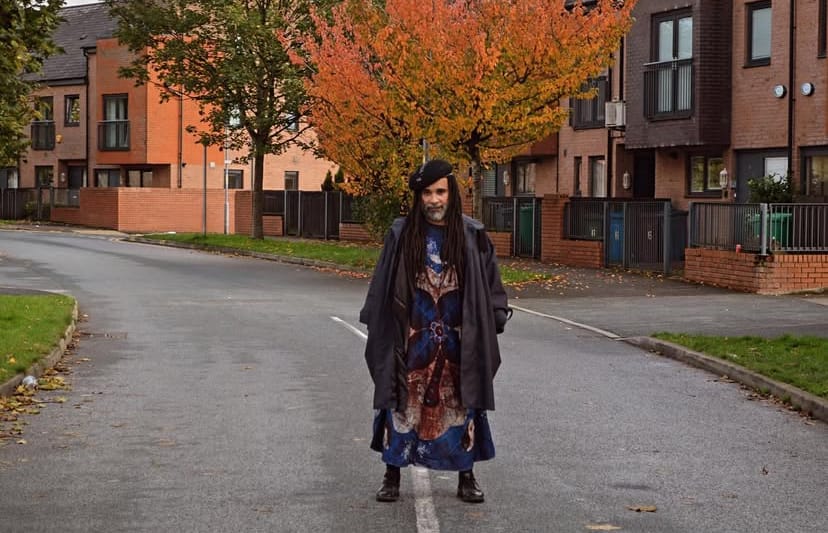
Heseltine and his team created a fourteen-point plan for improving the city, which included redevelopment of the Albert Docks, training schemes for young scousers and the creation of an art gallery that would bring back a great name to the city: Tate Liverpool. A quango called the Taskforce would implement his vision and interact with local government and L8 groups to try and meet their needs.
Heseltine’s initial plan impressed many in the city, and in cabinet he pressed the case to save Britain’s inner cities. In his report ‘It Took a Riot’, he asked for £200 million to turn Liverpool around.
In private, Thatcher’s closest advisors were telling her it was futile to invest. Her Chancellor Geoffrey Howe advocated instead for a policy of “managed decline”, arguing in a private note that Heseltine’s plans for a “massive injection of additional public spending” were folly. In response to his request for investment, Heseltine was given £15 million, with the condition that “no publicity should be given to this figure”.
Not every aspect of Heseltine’s plans was well received. His proposal for an International Garden Festival was met with incredulity by many activists. “What we needed for our health and wellbeing was trees, and flowers,” says Bea Freeman, who was also part of the L8 Defence Committee. “And that would stop rioting. Not education or employment — we needed the Garden Festival.” While more than 3.5 million visitors attended the event over its five-month stretch in 1984, the festival cost £30 million and created few opportunities for the local population.
I ask Heseltine if he knows how many Black people were employed: he can’t say. South Liverpool Personnel — an employment agency in L8 — said of the dozens of people they sent for work, only five were employed; other estimates put it as low as two. Claire Dove, who ran South Liverpool Personnel, said the festival felt like a way of making the route into the city centre — which passed by L8 — more attractive rather than helping to create any lasting change in the postcode.
“They put trees down Parliament Street which is the main thoroughfare into town. You put trees up for those people in their cars, so they have a nice vista but hidden behind that are the houses where Black people live. They were using architectural design to make L8 more palatable for the people passing through.”
The work begins
The legacy of Heseltine’s high-profile fourteen-point plan was and remains contested. While government was bringing about change in Liverpool, it was accused of giving with one hand and taking with the other. About £130 million in urban aid and dockland redevelopment assistance had eventually been pumped into Liverpool by 1984 but during the same period it lost about £200 million from Whitehall, with housing subsidies and financial assistance to the council being slashed as Howe squeezed budgets.
And despite being the area in the most need of help, L8 was largely ignored by the plans. “We’ve got riots in Liverpool 8” Willy Brown told me, “but Michael Heseltine is appointed as Minister of Merseyside. Well, Merseyside goes as far as St Helens, it goes over the Wirral — they had nothing to do with the riots. I thought he should have concentrated on Liverpool, or even just Liverpool 8, to sort out the issues here.”
Heseltine’s biggest projects — the development of a technology park in Wavertree; the renovation of the Albert Dock and the arrival of Tate Liverpool; improvement of a large industrial estate at Knowsley; regeneration of land in front of the Anglican cathedral; council house modernisation — were all concentrated in areas where few Black scousers lived.
In 1985, Channel 4 broadcast a documentary called ‘They Haven’t Done Nothing’. Made by a group of Black scousers and produced by Bea Freeman, the film looked at the aftermath of 1981. Leroy Cooper, the artist whose attempted arrest was blamed for triggering the unrest, appears on Granby Street in dark sunglasses, short dreadlocks, a white shirt and black leather jacket. He recites a poem that offers a bleak view of the options available to the young and unemployed in L8: the dole, ‘slave jobs’ or crime. “Blag mask, shotgun – I’ll take my chance; it’s either five years in Walton or a lifetime in France.”’
Now he pops up again outside the law courts, impersonating a judge passing sentence on a young Black man: “You come before me charged with the most serious crime of being Black and alive / you not only have the arrogance to breathe in but you insist on breathing out as well.” It’s a funny intervention, but like most good jokes there’s a serious point underpinning it. In the early 1980s, Black people, while less than 2% of the general population, were 17% of the prison population while 36% of young prisoners — those aged 21-years-old and younger — were Black.
Freeman’s film finds that by 1985, the country’s focus had shifted to other stories — the Falklands War, the miners’ strike — while, locally, Liverpool was mired in political infighting and scandal. The City Council had been taken over by Militant Tendency, the Trotskyite group led by Derek Hatton that had infiltrated the Labour Party. While the Conservative central government demanded an ever-smaller state and reduced budgets, Militant Tendency and Hatton refused to cut theirs, and were also at loggerheads with the Labour leader Neil Kinnock, who wanted them out.
 Abi Whistance
Back in Westminster, Liverpool had slipped down the list of priorities, the problems of Liverpool’s Black community fading from view. But while the government’s attention may have moved on, the legacy of 1981 can be seen in the generation of community activists that came from it. L8 wasn’t waiting for Heseltine or central government to bring transformation; they’d started themselves.
There was the Liverpool Black Organisation; the youth club at the Methodist Church run by Wally Brown; the Charles Wotton i-Tec (a centre that provided IT training); South Liverpool Personnel was an employment agency that had support from the Martin Luther King Foundation; the Liverpool Black Sisters – a Black feminist group that formed in 1979 and started after-school clubs to support Black women in L8. The Black Caucus, a grouping that interacted with the City Council had been taken over by the L8 Defence Committee. The street signs on Granby Street, L8’s main thoroughfare, had been painted the Rastafarian colours of red, gold and green by Leroy Cooper.
Quarless argues that L8’s self-organised infrastructure sent a clear message to the local council and central government: “We don’t need you anymore.”
I spoke to the current mayor of Liverpool, Joanne Anderson, about Heseltine’s role in the aftermath of 1981. “He was raising his profile and using Liverpool [to do that],” she tells me, while acknowledging he did help improve relations between the city and the Conservative Party.
Was it possible that Heseltine had been genuinely committed to his task and also seen it as an opportunity to raise his profile with one eye on a future leadership bid? “I never thought in those terms,’ he says, looking at me sternly. ‘I do assure you.”
He has a comeback for Anderson too: “It wasn’t me who gave me the Freedom of the City,” he says, referring to the honour he received in 2012. “It was 68 Labour councillors.”
Heseltine never did become prime minister — though responsible for ousting Thatcher through a leadership challenge, he would ultimately lose out on the premiership to John Major in the Conservative Party election of 1990. In her memoir, Thatcher is less than complimentary about his time in the city, arguing that ‘most of his efforts only had ephemeral results’, and concluding with the words: “I would not blame him for that: Liverpool has defeated better men than Michael Heseltine.”
'Liverpool is a tale of two cities'
Today, much of Heseltine’s vision for Liverpool has been realised. The Garden Festival might have been mocked by many but, as Nassy Brown observed, it turned ‘the city itself into a proper English place, suitable for investment’.
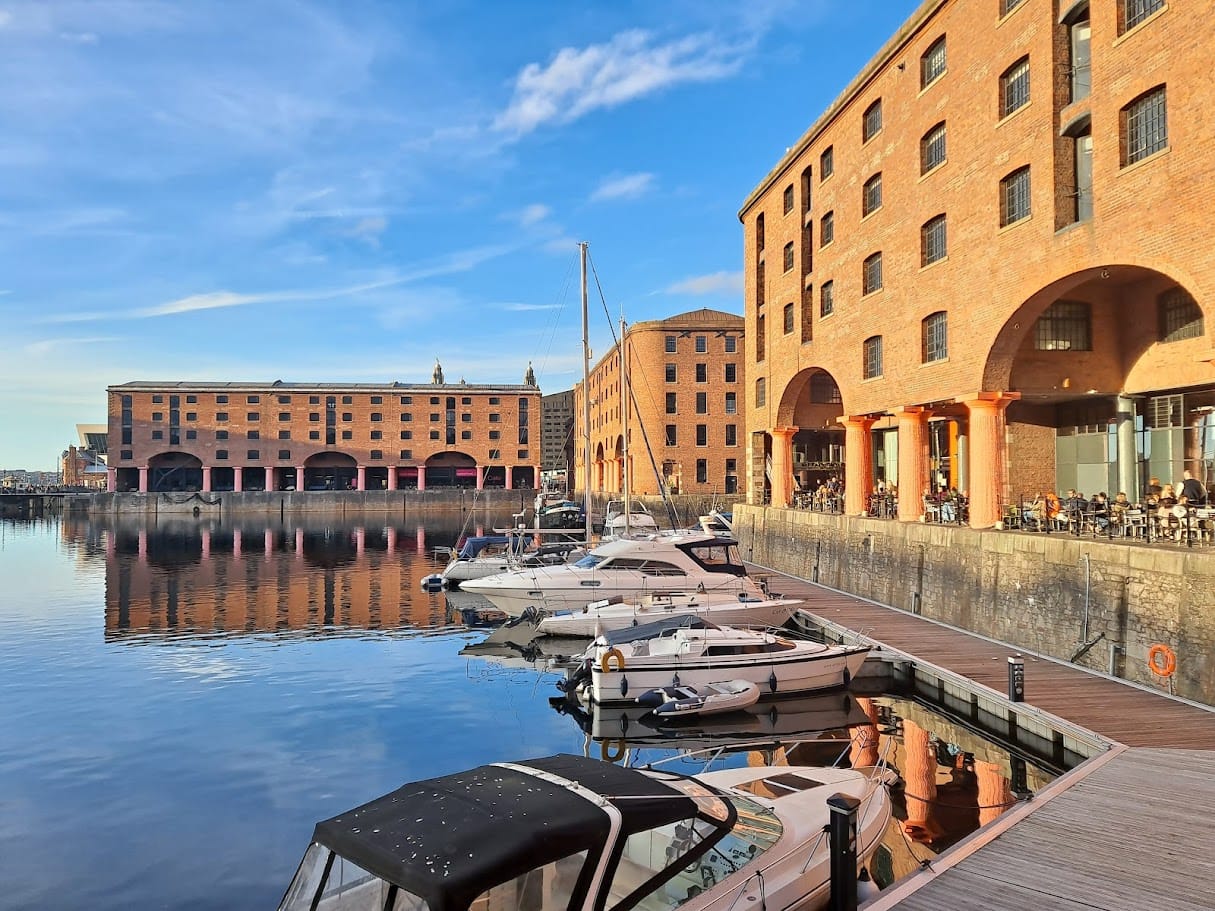
The port has been transformed, with Tate Liverpool sitting in the middle of a shiny new marina in the Albert Dock; the shopping development Liverpool One dominates part of the city centre that overlooks the final resting place of 'Abell', a formerly enslaved man who died in 1717 and is considered to be Liverpool’s first recorded Black resident; and Everton FC are building their new multi-million-pound stadium by the water. Almost seventy million people visit Liverpool annually, making it one of the most popular cities in the UK for tourism, and in 2008 it was named European Capital of Culture.
I ask Heseltine what he thinks his biggest achievement is, but he refuses to answer. ‘You can’t single out any one thing; that misses the point,’ he says. ‘If you want to have dynamic cities, you have to build comprehensively on their strengths, eradicate their weaknesses, seize their opportunities. And this is something you do across the board, not in any one, small compartment.’ It’s an answer that’s typical of the politician who has spent the last four decades lobbying successive governments to invest in his model of urban regeneration that’s been implemented in London Docklands in the east of the city and Cardiff ’s port area.
But his claim that regeneration has to happen ‘across the board’ is something Black scousers will raise an eyebrow at: in the wake of 1981, the wishes of L8 went almost entirely ignored.
Black Liverpool has seen its own changes in the intervening period, and tells a different story to that of the rest of the city: Charles Wootton House is long gone, as are all the historic Black clubs that once lined the area, and so is the L8 Defence Committee. The community has changed, with new influxes of immigration, notably from Somalia, shifting the demographics of the postcode.
‘Even though there was poverty, even though there was discrimination, the way that we all came together then – I wish we could do that now,’ says Michelle Charters, who was part of the Liverpool Black Women’s Group. ‘I think that’s missing a little bit.’
But there is a tangible legacy of those days in the city. Kuumba Imani Millennium Centre, an arts institution that has its roots in the Liverpool Black Sisters group; while other 1981-era organisations, like the Steve Biko Housing Association, remain. Since 2007, Liverpool has been home to the International Slavery Museum, which Charters currently runs. With its permanent home by the docks, the institution ensures Liverpool’s Black history is secured in one of the UK’s most popular museums.
Perhaps the most obvious legacy is in political leadership. When you compare how many positions of influence are held by Black people in Liverpool and neighbouring Manchester, the difference is startling. Only 4.6% of people in prominent public positions in Manchester are Black, in a city where Black people account for almost 15% of the population.
In Liverpool, 5% of leading public positions are held by Black people, a figure roughly in line with the city’s 5.2% Black population. A lot of those positions are in politics, with many figures either coming directly from the 1981 generation or growing up in its aftermath.
The improved political representation hasn’t served as a panacea. Black youth unemployment is still significantly higher than other groups: in the aftermath of the Covid-19 pandemic, 41.6%of Black people aged 16–24 were unemployed, compared to 12.4% for whites. Despite Sus laws being abolished four decades ago, Black men are still twice more likely to be stopped by police across Liverpool than their white counterparts, with police using force disproportionately against Black scousers. For many members of the community there hasn’t been enough progress since the summer of 1981.
In Wally Brown’s memoirs, he laments the fact Granby Street is now made up of a few shops, and no longer even has a post office or a bank. "Houses were built," he wrote. "But without any community infrastructure." It’s still rare to see Black faces from the L8 community working in the shiny new retail developments like Liverpool One in the city centre, a short walk from Adell’s grave. Anna Rothery — the city’s first ever Black Lord Mayor — complained that even decades after the disorder of the early 1980s, "We are still not a visible community. Liverpool is a tale of two cities."
This is an abridged and edited extract from 'We Were There: How Black culture, resistance and community shaped modern Britain', by Lanre Bakare. Available to buy in hardback now, or pre-order in paperback for 16 April 2025. Click here for more details.
Last year on The Post, we exposed corruption, abuse, held politicians to account and got nominated for two of the top journalism prizes in the country as a result. We're doing reporting no other paper in Merseyside is.
So why not become a full-time paying member and support our mission? You get four editions a week and right now, it's just £1 a week with our special offer.
That's £4 a month for everything from award-winning investigations to our pick of the best things to do in Merseyside — less than the price of weekly pints or your morning coffee. Sign up below to support local journalism at a 50% discount.
Comments
Latest
The Post presents: Total Stranger
Goodbye to the Royal Iris, a vessel of memories
Is the tide turning for sites polluting our rivers?
The Post in Wonderland
Michael Heseltine 'saved' Liverpool. Didn't he?
The environment secretary is credited with sparking Liverpool's late 20th regeneration. Try telling that to the neighbourhood he was dispatched to help