

A postcard from Colwyn Bay
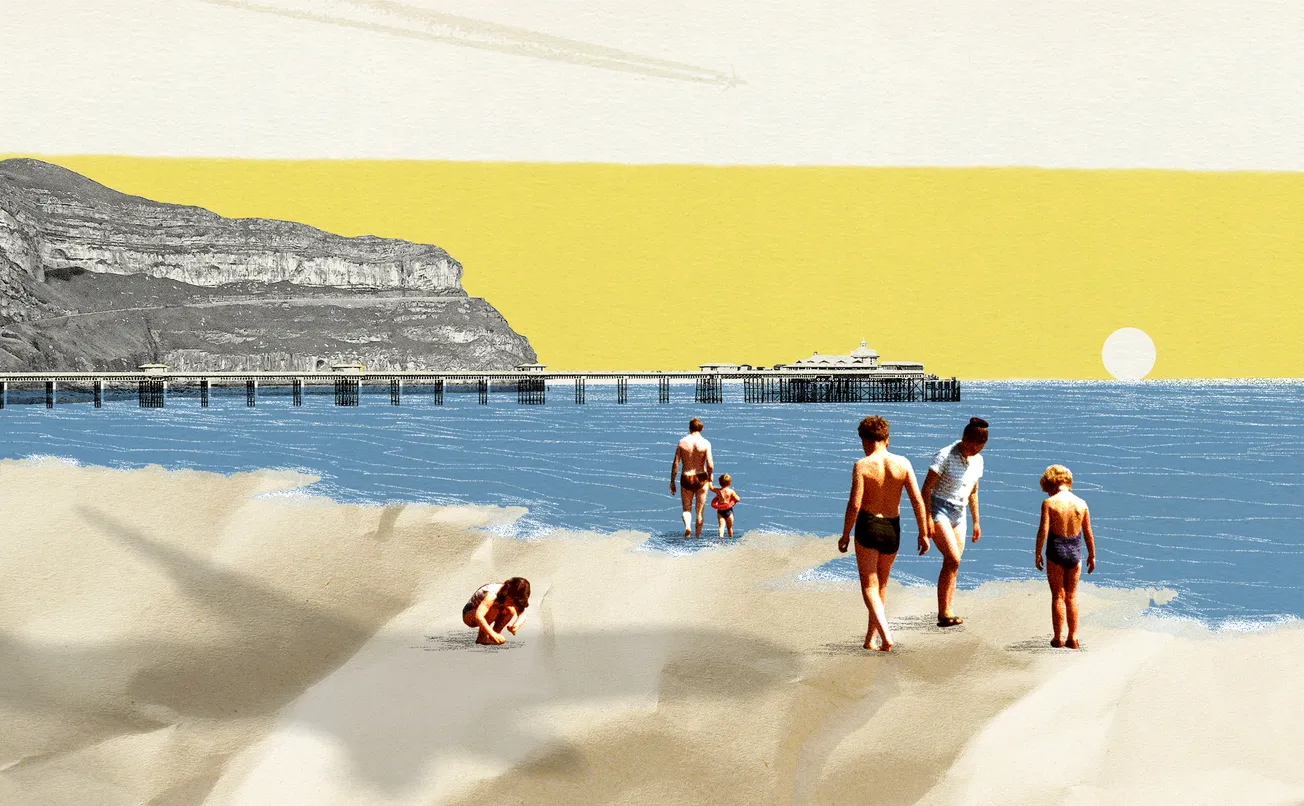
The North Wales coastline once thronged with Liverpool tourists, from Talacre to Aberdaron. What’s it like in 2026?
Welcome to The Post, the quality newspaper for Merseyside and the Liverpool city region. Sign up today and get two completely free articles per week delivered directly to your inbox.
That means a Monday briefing with cultural tips, top stories and everything else you need to know, and a weekend read diving deep into a subject, whether that’s lost department stores of local yore or bungled political promises. No muss, no fuss, just good journalism: click below for more.
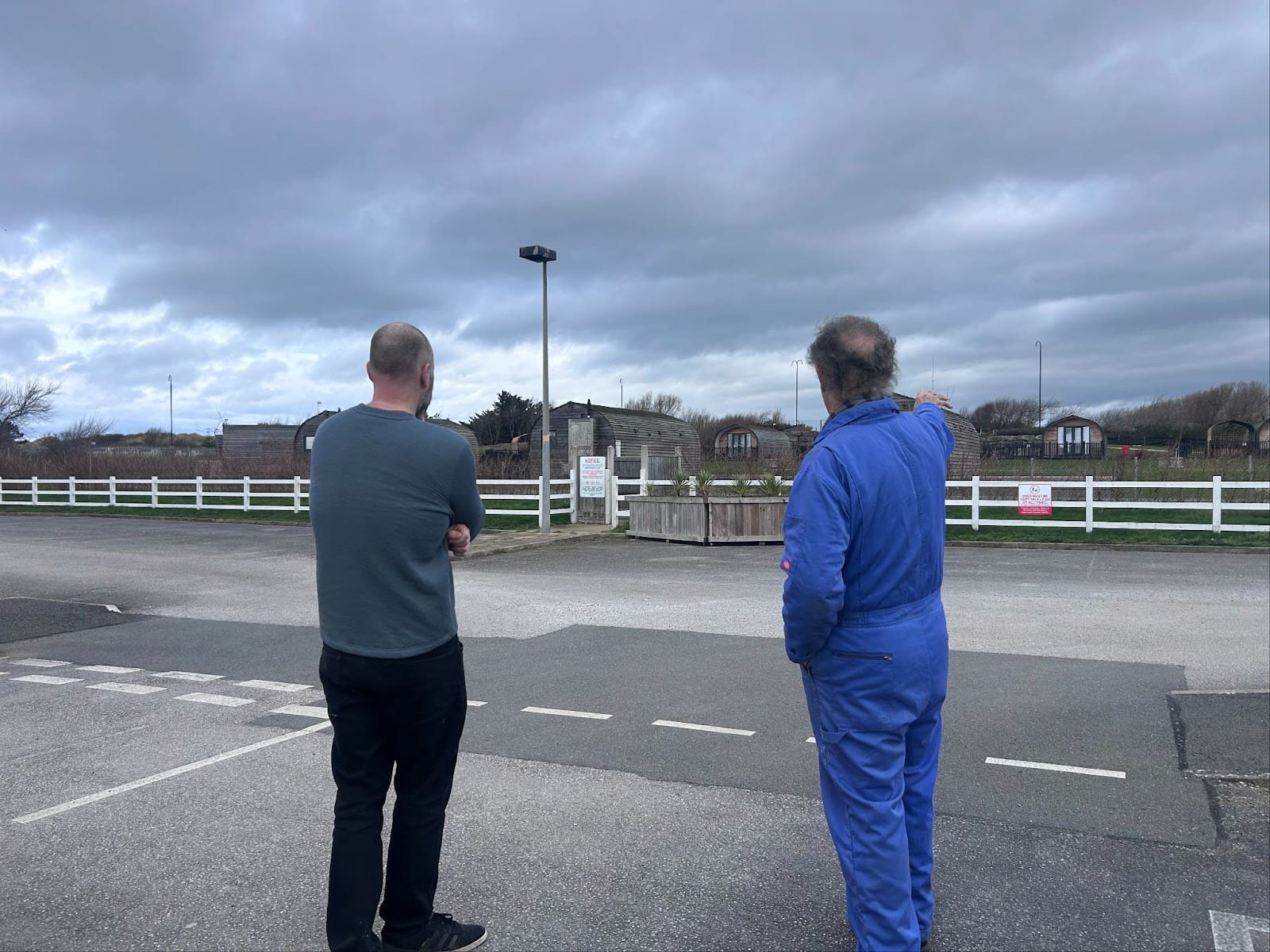
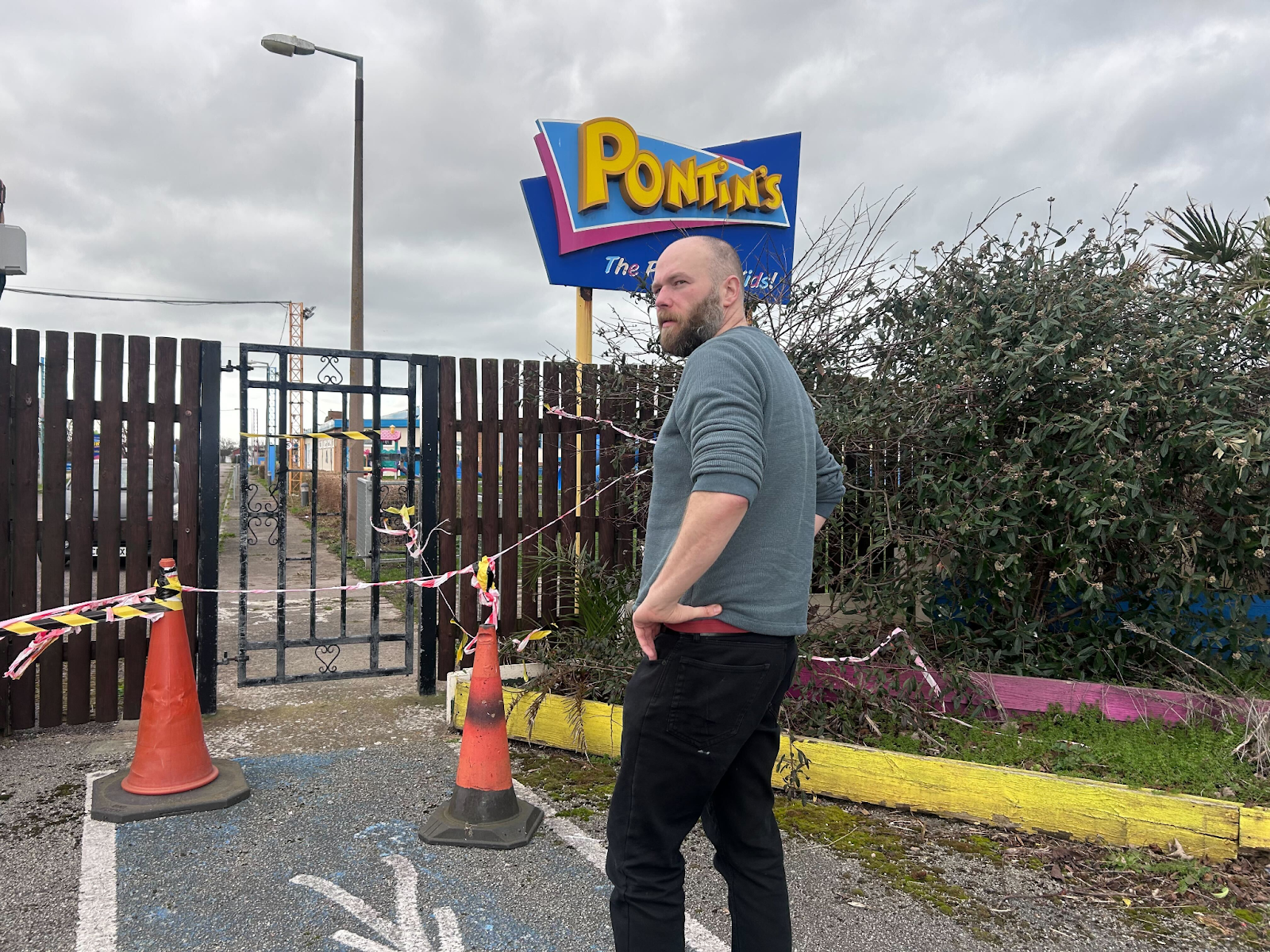
I’m in a big empty car park many miles from home. The sky is a curious slate, heavy with winter’s left-overs. But despite the wind blowing in from the Irish Sea across Ffrith beach, it’s not a cold day, and the air is crisp and fresh. The only sound is the hungry cawing of seagulls.
A man is staring at me. Propped up against a planter, arms folded, he wears navy blue coveralls and preposterously dark sunglasses, his hair slicked back like a Sicilian don. If I had to guess, I’d say he looked in his late sixties. Behind him is a monumental leisure centre dwarfing everything else in sight.
“Get out and talk to him,” Abi says.
It’s not her story, but she has driven me to the North Wales coastline all the way from Liverpool. I really don’t want to — he looks like he could be a person-of-interest in a disappeared-local-journalist case, but honour (and further nagging) demand I step out of the car and cross the asphalt.
I introduce myself and explain that we’re journalists reporting on the seaside towns once reliant on Scouse tourism. The conversation isn’t exactly warm, but after a few minutes I appear to still be alive. The man tells me about how tourist spots have declined, “but now they’re coming back,” he says, pointing to the neat row of glamping pods behind us. They may be empty now, but once spring starts they’ll be bustling with families again.
I soon find out the reason for the man’s initial unfriendliness: viral YouTube videos asking whether nearby Rhyl is Wales’ worst or most dangerous seaside town.
“And a lot of these ‘reporters’ are from Merseyside, I’m afraid,” he says, looking me up and down. I assure him that’s not what we’re here for; I actually have happy childhood memories of Rhyl and the long-lamented Sun Centre swimming baths. He softens somewhat, speaking positively about the local council.
I ask him what it is he does. That’s when the conversation takes an odd turn.
“Why do you want to know?” he says, refolding his arms.
I’m curious, I say.
“Why?”
I don’t really know, I say, silently wondering whether small talk doesn't extend beyond the England/Wales border.
“What do you think I do?”
I guess at maintenance of some sort — perhaps a mechanic?
“What makes you say that?” he says.
I try in vain to peer through the pitiless void of his sunglasses to tell whether he’s putting me on.
Your coveralls, I say, pointing to the little Dickies logo on his arm.
“Are you nervous?” he says.
I say I’m not, feeling like Ray Liotta under interrogation by Joe Pesci — “funny like a clown?” Or that I’m failing some kind of test that I didn’t even know I’d agreed to sit.
I think about an almost identical conversation ten years previously when trying to book in with a Florentine hostelier. Back then, my wife had intervened — dressing down my Tuscan interlocutor with formidable directness. But she’s a 50-mile drive away on the Wirral. I’m on my own.
“I’m the owner,” the man says, pointing to the leisure centre and putting me out of my gathering misery.
I say that must be nice and, stupidly, that I’m glad to have met him.
“You’re nervous,” he says. “Aren’t you?”
Laurence here. Sorry to interrupt your reading and spoil the fact I survived this encounter. (And no, the fact I'm narrating it is no guarantee — have you not seen Sunset Boulevard!?) But to pull off stories like this, it takes lots of planning, shoe leather, digital ink and petrol. Why not support what we do by becoming a fully fledged member? It's just £1 a week for all our weekly editions for the first three months. Get investigations, news briefings, culture rundowns and deep dives into Liverpool’s history straight to your inbox, plus access to exclusive events. To keep The Post reader-funded and ad-free, click below to support us and sign up now.
Breaking from the stare-off, I look over to his leisure centre, silently quoting a verse that inexplicably occurs to me. Look upon my works, ye mighty, and despair…
The car door slams behind me. Abi is walking over, apologising to the stranger for not introducing herself sooner. The man’s whole demeanour changes, and upon receiving a compliment for his coveralls seems positively elated. He even unzips them, takes Abi’s hand and invites her to feel the warmth inside. Noah, as he now introduces himself, tells us all about the millions that have been spent locally, his no-expenses-spared attitude to the leisure centre and holiday park, and the best places nearby to go for lunch.
Over the next few minutes, he transforms from elderly gangster into doting patriarch and employer, and I briefly reflect on how bad I must be with people and whether I should even be in this job.
“My wife and I have been here since the 50s,” Noah says. “That’s 77 seasons,” he tells me, putting my journalistic competence in further doubt. Although business was bad for many years, he’s optimistic about the future. “We open at 2pm,” he says, giving us a few hours to go and see the other sights, and promises to treat us to coffee when we come back. We shake hands and then drive off towards Rhyl.
In the Middle Ages, this region was colonised by an “Iron Ring” of Anglo-Norman castles, from Rhuddlan and Conwy on this coast all the way down to Harlech in Gwynedd. In more recent centuries, it was colonised again, this time by daytrippers from Liverpool and other northern English cities. I’ve come to find out whether what they say is really true: if the golden sands, miniature railways, grand hotels, camping sites and fairgrounds of the North Wales seaboard really were killed off by RyanAir and EasyJet.
Many of you kindly got in touch with your memories. Eric Thomas describes 1960s Sunday School trips from Rock Ferry Baptist Church to Rhyl with mums, aunties (even the real ones) but never dads, clutching pocket money earned by returning bottles to the Alpine pop man, eating sandy jam butties and cider lolly ices and getting three rides worth at the Adventure Park for a threepenny bit. Claire Rider, now a Blue Badge tourist guide, regales me with a sunburnt story of a roadshow along Rhyl promenade in the early 90s when she was a student intern at Radio City, with no fewer than five double-deckers full of Liverpudlians attending. Paula Griffiths remembers cable cars, penny arcades, Redcoats in the theatre, free fair grounds, and Auntie Sheila winning Butlins' beauty competitions. A relative of my wife tells me about getting dragged to Ffrith beach with the Union of Catholic Mothers in “a chara” — a kind of open-topped coach or charabank, Google tells me, although she balks when I show her a black-and-white picture. “How effin old do you think I am!?”
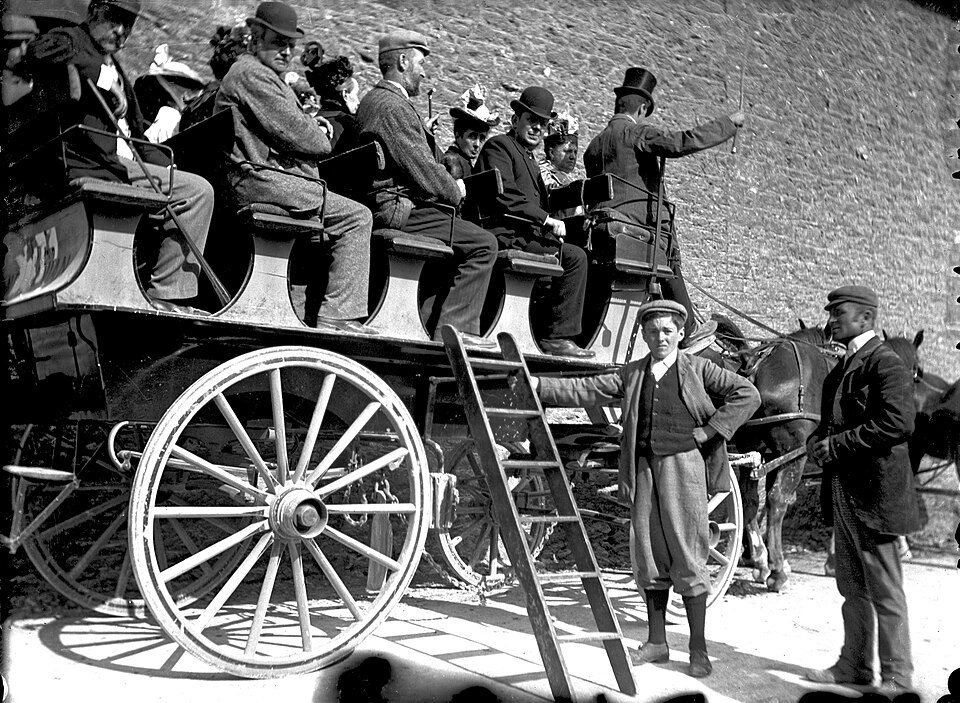
Back in the days when going abroad was something only characters in James Bond films did, the towns altered themselves to meet our expectations, never suspecting “the capital of North Wales” would one day abandon them. But Liverpudlians traded weekends in Rhos-on-Sea for a fortnight on the Costa Del Sol.
Years later, Eric took his kids to Pontins in Prestatyn. “Mightily under-impressed,” he describes their reaction. “I was surprised to see it was all gone. No coconut shies, no rifle ranges, no bumper boats. Just a gravelly expanse of memories, and the ghost of children's innocent laughter,” he remembers.
A few years ago, I visited Llandudno and was struck by its faded but stubborn grandeur, the rows of pastel-coloured Victorian houses and palatial hotel standing firm against the salt winds of the Great Orme. We don’t make it that far this time, but we do find the broken-down Pontins in Prestatyn and “temporarily”-closed fun parks in Towyn. I knock and ring at a B&B in Colwyn Bay to no avail. We pass through Pensarn, where not too long ago I found myself in pursuit of an allegedly unscrupulous solicitor and landlord for one of our sister papers, but there’s no adventure this time.
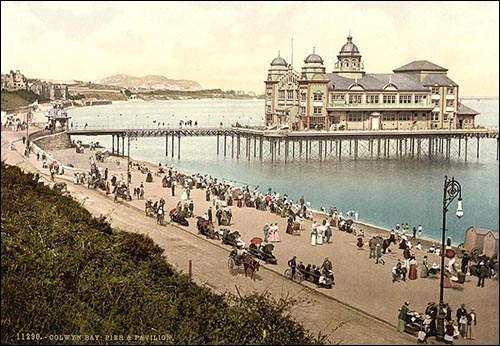
As Noah was keen to point out, we have not come in peak season. But it’s also difficult to imagine some of these places chocker even at summer’s height: collapsed fairgrounds rattle in the Foehn winds that once warmed the coastline, and judging by faded old postcards I find online, piers and pavilions that once looked like sandstone Hagia Sophias are now half-demolished jetties.
The promenades, of course, are lovely, and even in late February the sea at Colwyn Bay is a Mediterranean turquoise. For its part, Rhyl itself does not seem anywhere near as bad as those YouTube videos apparently suggest. The chippy Noah recommended, Les & Rita’s, doesn’t quite serve the world’s best fish I was promised, but the food and service are very good. The woman on the bar says they’ve been open over forty years, and although they don’t get the crowds they used to, she does hear plenty of Scouse accents during the “on” season.
Next door but one is the Sidori Cafe, a family business open since 1910 who still make their own ice cream. The current manager, Maria, has worked there twenty years, and her brother thirty — before then, their mother owned and ran it. Although Maria remembers the town and shop much busier when she was a girl, they still manage to stay open. “This all used to be independents,” she says, nodding up and down at Wellington Road outside. From these conversations, I get the impression that now it’s chains and rental properties, often owned by people who neither work here nor feel any civic responsibility to the place.
Back in Ffrith, Noah graciously makes good on his promise with a couple of lattes. Even though he’s busy, among his employees he seems relaxed and congenial, our first conversation now like some strange dream. The interior of the leisure centre is impressive, clean and modern, serving as a well-stacked sports bar, a pool hall and a bowling alley done out in wonderful neon colours. A few locals drink pints beneath wide-screens playing 80s hits or clack pool balls across the pristine felt tables, but otherwise the building awaits the prophesied return of holidaymakers.
Our host enthuses about the site managers Madji, Claire and the rest of the team, and allows Claire to show us around the silent glamping pods, some of which have been fitted with big outdoor jacuzzi tubs. She tells us of a family who come from all over Britain, renting out four or five pods at any one time — probably the only time they’re all together. I try to imagine the nearby caravan park, currently occupied by two lonely trailers, filled with barking dogs and laughing kids of all ages. It’s a happy thought.
I realise I have no more patience for anti-Rhyl or Prestatyn snark than the inhabitants do. As a New Brightoner, I sympathise deeply — long before I was even born, we lost the largest open-air swimming baths in Europe and the country’s tallest building. When I grew up there in the 90s, it was less than a faded postcard of a town, and in some places it was downright dangerous. Likewise, Rhyl lost its Sun Centre, its Pavillion Theatre and most of its visitors. Youth unemployment is at 22%, twice the national average. Last year, plans for a multi-million pound luxury hotel on Rhyl’s sea front collapsed, and the “ghost hotel” has come to symbolise the town’s struggles — especially since council documents revealed the Welsh Government withdrew crucial funding. Their reasoning? "Changed economic circumstances." You don’t say. As Abi remarks, it’s no wonder people are suspicious of outsiders, even as they’d love to see us return in droves. That ambivalence is palpable.
“This was our Ibiza, our summer holiday, our break from the norm,” Eric Thomas says in an email. “Sad it's gone, but things do change. Immensely glad it was there.”
Do you have fond memories of Welsh holidays? We’d love to hear from you — get involved in the comments below.
If someone forwarded you this newsletter, click here to sign up to get quality local journalism in your inbox.
Remember: It's just £1 a week for all our weekly editions for the first three months. Get investigations, news briefings, culture rundowns and deep dives into Liverpool’s history straight to your inbox, plus access to exclusive events. To keep The Post reader-funded and ad-free, click below to support us and sign up now.
Comments
Latest
A postcard from Colwyn Bay
Fountains, Ffrith and turning the place over
Just what is happening with Peak Cluster’s CO₂ pipeline?
A ‘stitch up’? How Wirral council bungled Big Heritage
A postcard from Colwyn Bay
The North Wales coastline once thronged with Liverpool tourists, from Talacre to Aberdaron. What’s it like in 2026?